adidas has been revamping its running shoe lineup and has released one great shoe after another over the last several years. Whether you’re looking for a comfortable walking shoe or aiming for the podium, there’s an adidas running shoe for you. Today, we’re talking about the Swiss Army knife that is the Boston series.
The adidas Boston model has seen its share of changes over the years, evolving from something you’d reserve for race day to a versatile, do-it-all training shoe. It’s less of an identity crisis and more of a gradual blossom into the beautiful running shoe it was meant to be. Like me, finally outgrowing my weird high school phase into a relatively normal adult.
The last version I got over 100 miles in was the Boston 10, and while that Tinman Elite colorway was pretty sick, the adidas Boston 13 leaves it in the dust. Below, we’ll dive deeper into previous versions of the Boston series and see where the Boston 13 lands.


Our Review Process:
We all have different perspectives when it comes to running. So to give a better, well-rounded review of any running shoe, we have several team members take them out for a variety of runs. The difference in experience, foot shape, and preferred terrain helps paint a better picture than any single person could.
What’s New?
- Updated with 13.8% more Lightstrike Pro midsole foam for a softer and more comfortable underfoot feel
- Re-engineered Energy Rods are more prominently featured, giving them more of a race look
- Revamped mesh upper delivers lightness, breathability, and targeted support
- Lighttraxion outsole with Continental™ Rubber outsole, first seen in the Adios Pro 4, enhances grip at a reduced weight
The combination of Lightstrike and Lightstrike Pro is a beautiful thing, and with 13.8% more of the premium Lightstrike Pro foam, it’s all the more impressive that the Boston 13 lost a bit of weight. Less than an ounce of weight loss may not seem like much, but that weight certainly adds up during long runs.
Something our team was very excited to see was the upper redesign. A common mention from our Boston 12 testers was the collar and tongue running a little thin. It wasn’t a dealbreaker by any means, just a place for improvement. The Boston 13 adds a smidge more padding in these areas, helping to improve fit and overall comfort.

Boston 13 Highlights:
- New engineered mesh upper for lightweight breathability and targeted support
- Layered Lightstrike 2.0 and Lightstrike Pro cushioning
- Glass fiber-infused energy rods (ENERGYRODS 2.0) provide forefoot energy return and dynamic stability
- Lighttraxion outsole with Continental™ Rubber increases grip for no-slip control
- Contains at least 20% recycled content
- Stack height: Men’s 36 mm/30 mm, Women’s 36 mm/28 mm
- Weight: Men’s 9.17 oz/Women’s 7.72 oz
A Deeper Dive:
The newest performance trainer from adidas has plenty to be excited about. Below, we touch on several features that stood out in this update.
ENERGYRODS 2.0
When working hard, you want more from what you put in. ENERGYRODS in the adidas Boston 13 help you get the most from your runs by encouraging a more efficient stride. How do they do this? These glass fiber-infused rods are embedded throughout the midsole, creating a snappy, more responsive experience to propel you forward.
Unlike full or partially plated shoes, these rods move independently with your foot. This avoids an overly stiff structure while more closely matching your natural foot movement.
To sum things up: ENERGYRODS help create more efficient strides to reduce wasted energy during runs. Whether you’re running short or long distances, running more efficiently is always a good thing.
Layered Midsole Cushioning
After extended periods of pounding the pavement, your legs start to feel it. That’s why proper cushioning in a running shoe is important. The Boston 13 features two types of foam, layered on top of each other: Lightstrike 2.0 and Lightstrike Pro.
On the top layer, you have adidas premium performance foam, Lightstrike Pro, offering an extremely lightweight experience with tons of energy return. There’s also about 13.8% more Lightstrike Pro when compared to the previous version.
The bottom layer is made with updated Lightstrike 2.0, helping to boost overall comfort and improve resiliency. With these two foams working together, you get a lightweight, energy-packed experience with a slightly firmer underfoot feel.
Revamped, Lightweight Mesh Upper
One of the few critiques from the Boston 12 was the upper, so we’re happy to see this latest version make some improvements. The biggest change in the upper is found around the heel collar. Focusing more on comfort, this upper features a softer heel and tongue construction with extra padding.
Along with the extra padding, this upper provides your foot with a solid structure that comfortably wraps the midfoot. The mesh material is super lightweight and eliminates heat well with its increased breathability. It has some elements similar to those you’d find on a racing shoe while maintaining the comfort of a daily trainer.
Lighttraxion Outsole with Continental™ Rubber
The adidas Lighttraxion outsole is relatively new to the running scene, introduced first in 2024 in the Adios Pro 4. Combining a lightweight design, extreme durability, and incredible grip, this technology is leading the charge for the next generation of outsoles.
Even more underfoot is what’s now synonymous with adidas outsole, the super grippy Continental™ rubber. Unmatched in traction, this top-tier rubber is strategically used in high-wear areas on the forefoot and heel. With these two technologies combined, you get a monster of an outsole that doesn’t weigh you down.
Durability and Value
If you’ve bought anything at all in the past year or so, you know that prices are generally higher than they used to be. This makes getting a bigger bang for your buck all the more important. This being said, the adidas Boston 13 sits at $159.95, the same price as the Boston 11 and 12 at release.
As a do-it-all style trainer, this price range makes sense if you’re using it as such. To add more credibility to the Boston 13, just take a peek at the Lighttraxion Outsole with Continental™ rubber. As mentioned above, Lighttraxion is a fairly new outsole technology that can only be found in a handful of running shoes. It’s lightweight and ridiculously durable, giving your shoes an even longer lifespan.

Where the Continental™ Rubber Meets the Road Test
Everything we’ve talked about so far helps paint a picture of the Boston 13. The balanced multi-layered midsole, the responsive energy rods, and the super durable outsole that I can’t shut up about; they’re all important pieces to share. That being said, nothing tells a story quite like lacing them up and taking them for a spin.
Several team members (including myself) had the pleasure of trying these running shoes out and were more than willing to talk my ear off about them. There was a range of different distances run, as well as some workouts thrown in to put these things to the test.
The most common mention after testing the adidas Boston 13 was the responsive and energetic feel from the midsole. It’s definitely a touch firmer than the average running shoe, but it has that extra pop that makes you want to pick up the pace. Which makes sense considering the wide range of workouts this trainer can handle. Lightstrike 2.0 and Lightstrike Pro combined with the Energyrods make for one snappy ride. If you’d like a similar shoe with slightly softer cushioning at the cost of responsiveness, check out the adidas adizero EVO SL.
The upper gave us a mixed bag of emotions. The extra padding in the heel collar and tongue was loved all around, but the lacing was a struggle for some. Some reviewers said it fit like a glove, while others said it was a bit too snug.
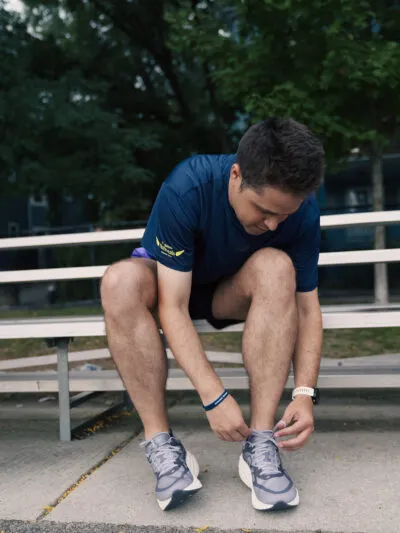
Personally, the only issue I experienced was the lacing. Within the first 2-3 minutes of my first run in them, I learned single knots were not going to be possible. Double knotting my shoes seemed to do the trick, but post-runs I could see them looking a bit looser than at the start.
After a couple of different workouts, I noticed how important an upper’s breathability can be. On an abnormally warm morning, I set out for some 800m repeats. A little after halfway, I could feel the heat pulsing in tandem with my heartbeat; I was struggling. After salvaging what I could from that workout, the thing that stood out most to me was how relatively cool my feet felt.
Pros and Cons
Nothing in this world is perfect, and so, we must share the good with the bad. Here are some things that were key selling points for us and things that made us reconsider.
Pros:
- More lightweight than the average trainer, making it easily work well for a variety of different runs
- Next-generation outsole is incredibly durable and lightweight, giving you plenty of traction without the bulk
- The responsive feel from the midsole and Energyrods encouraged a more efficient and uptempo pace
- Extra padding in the heel collar and tongue improved upon an already solid version of this model
Cons:
- The lacing can be a bit finicky, coming untied if you don’t at least double-knot it
- May feel a bit snug if you have slightly wider feet
- If you prefer super soft, plush cushioning, the Boston 13 will likely feel too firm
Final Thoughts on the Boston 13
Overall, the adidas Boston 13 is a positive, yet subtle update to an already solid running shoe. Its versatility is fantastic and deserves a spot in a runner’s rotation, but maybe have a more cushioned shoe on deck for recovery days.
As always, I recommend trying on a pair for yourself, but if you have slightly wider feet or prefer plush cushioning, this might not be your top choice. It’s close to being true to size, but just a hair narrower.
Our team has collectively added hundreds of miles to this trainer, but ultimately, every runner is different. That’s why we recommend checking out your local Marathon Sports to try them on for yourself. Whether you’re new to running or a seasoned marathoner, you’ll find a wide selection of shoes, apparel, and gear to choose from.