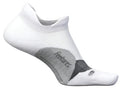
Feetures Elite Light Cushion No-Show Tab Running Socks
Socks
price:$19.00
Free returns and exchanges for 30 days Return Policy







Shoe and Gear Reviews
Shoe and Gear Reviews

Shoe and Gear Reviews
Shoe and Gear Reviews
The best running socks for men should feel comfortable from the first mile through the last. Look for technical fabrics that help manage moisture and dry quickly, rather than cotton that can hold sweat against the skin. A secure fit also helps reduce bunching and friction inside your running shoes.
Cushioning is another consideration. Some runners prefer extra padding under the heel and forefoot, while others like a lightweight, barely-there feel. Our selection of running socks includes different cushioning levels, heights, and designs, making it easy to find socks that suit your running routine.
Daily training socks need to balance comfort, durability, and moisture management. A close-fitting design can help keep the sock in place as your mileage adds up, while breathable materials help manage heat and sweat.
Our Men’s Socks selection offers options suited to daily runs, workouts, and active days. Consider how your socks fit inside your favorite running shoes, since excessive thickness or loose fabric can affect overall comfort.
For long-distance training, running socks for men should remain comfortable as time on your feet increases. Moisture-wicking materials, strategically placed cushioning, and a secure fit can help limit the friction that often contributes to hot spots and blisters.
Your personal preferences and usual running conditions can also impact the sock height you choose. Crew and quarter styles provide additional coverage, while ankle and no-show designs offer a lower-profile option. Runners shopping for other members of the household can also explore our Women’s Socks collection for more running-focused choices.
Cushioned running socks can provide additional softness under high-impact areas such as the heel and forefoot. Compression socks offer a different fit, applying graduated compression along the foot and lower leg.
Our selection of CEP Socks includes performance-focused compression options for runners who prefer a supportive, close-fitting feel. Pay attention to sizing when choosing compression socks, since the intended fit depends on selecting the appropriate size.
Choosing the best running socks for men depends on your preferred cushioning, sock height, fit, and typical running distance. Start by thinking about the conditions you usually run in and how much padding feels comfortable inside your shoes. Lightweight socks provide a cooler, more streamlined feel during warmer runs, while thicker cushioning can keep you warmer and offer additional comfort for runners who prefer more padding underfoot.
Running socks tend to come in a size range based on your running shoe size, so consider sizing and fit when choosing running socks. Socks should fit securely without bunching, slipping, or creating excess material inside the shoe. The right thickness should also leave enough room for your feet without making your running shoes feel too tight.
Material and construction are worth considering as well. Technical fabrics designed to manage moisture can help keep feet more comfortable as your run progresses, while targeted cushioning can add protection in areas that experience repeated impact. By considering fit, cushioning, materials, and your usual running conditions together, you can choose running socks that suit your training habits and personal comfort preferences.
The right number depends on how often you run and do laundry. Having several pairs allows you to rotate clean socks between workouts and gives each pair time to fully dry before its next use.
Replace running socks when you notice thinning fabric, stretched cuffs, worn cushioning, holes, or a fit that no longer stays securely in place. Replacement frequency varies based on mileage, materials, and how often each pair is worn.
Yes. In fact, wearing familiar socks on race day can help you avoid surprises from an unfamiliar fit or feel. Test your race-day socks during training, particularly on longer runs.
Toe socks separate each toe with individual fabric compartments. Some runners prefer this design because it reduces skin-on-skin contact between the toes. Personal comfort and compatibility with your running shoes should guide your choice.
Seasonal conditions can influence your sock choice. Lightweight, breathable socks may be preferable in warm weather, while colder runs may call for additional coverage or insulating materials that still manage moisture effectively.
Running socks can also work for walking and some hiking activities because many are designed for extended movement. For demanding trails or longer hikes, consider the footwear, terrain, weather, and level of protection you need.
Merino wool is used in some performance socks because it can manage moisture and provide temperature regulation. It can be a practical option for runners looking for an alternative to fully synthetic materials.
Most runners can use one properly fitting pair of technical running socks. Wearing two pairs adds thickness inside the shoe and can change how the footwear fits, although some runners personally prefer a double-layer system.
Care instructions vary by material and manufacturer. Check the product label before washing or drying your socks. Following the recommended care instructions can help preserve their shape, elasticity, and performance features.
Price alone does not determine how long running socks will last. Construction, materials, frequency of use, washing habits, and mileage all affect durability, so consider the features and intended use rather than price alone. However, some brands do offer a lifetime warranty, so you don’t have to worry about early wear or material breaking down.