
We know how frustrating it can be to find the perfect shoe, only for the brand to make significant changes with the next upgrade. Shoe brands are always innovating, and these new, modern technologies make their way into running shoe upgrades of popular models.
But when a shoe has a loyal fanbase, it isn’t always necessary for each new upgrade to completely reinvent the wheel. Sometimes, all a model needs is some small, minor updates to improve the overall running experience, without creating an entirely new feel.
This is exactly what HOKA did with the Arahi 9. The Arahi has been one of our favorite stability running shoes for years. Since the very first version, the Arahi wasn’t like the other stiff, bulky running shoes on the market. It reinvented stability, offering refined support with dynamic and lightweight overpronation correction.
The Arahi has seen some changes over the years. But HOKA knew what worked in the Arahi 8, keeping the fan-favorite features while incorporating some key improvements and upgrades.
In this HOKA Arahi 9 review, we’re going to take a look at the newest Arahi and all the features it has to offer, from the established, well-known elements to the new updates. We’ll dive into the highlights, detail our road test results, and offer some comparable options on the market today to help you make an informed decision about your next running shoe.


Hoka Arahi 9: A Quick Overview
Curious about the newest Arahi specs and details? Here’s a brief rundown of what you can expect from the Arahi 9.
- A moderate cushion stability shoe designed for mild- to moderate- overpronators
- Stack height: 39/31 mm (M), 37/30 mm (W)
- 8 mm heel-to-toe drop for men’s, 7 mm for women’s
- Weight: 10.06 oz (M), 8.22 oz (W)
- Enhanced H-frame technology provides soft, dynamic support
- Midsole is composed of a dual-density, compression-molded EVA foam
- Late forefoot metarocker promotes smooth transitions
- Engineered mesh upper provides additional structure and support around the foot
- Super abrasion rubber, podular outsole boosts grip and durability
- Available in standard, wide, and extra-wide widths
- Price: $155
A Closer Look at the Arahi 9
Now, let’s dive into each of the features we mentioned for a better understanding of how the new Arahi feels and performs.
H-Frame Technology
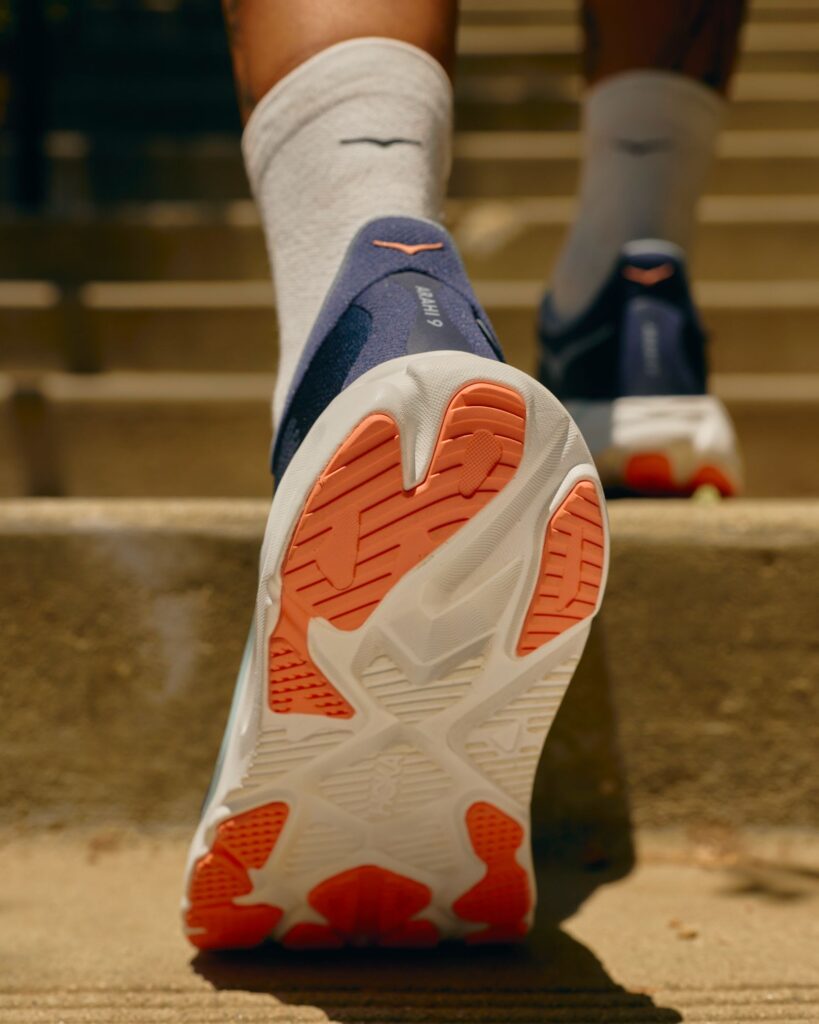
One of the most distinct features in any HOKA stability shoe is the unique support technology. In the Arahi 9, this takes the form of a dense, H-shaped section of foam called an H-frame.
This open H-frame design is softer than its predecessors, creating balanced landings that still support the foot and reduce overpronation. It supports both the medial and lateral sides of the foot, ensuring there’s no excess movement or rolling throughout your runs.
Compression-Molded EVA Foam
This H-frame technology is paired with HOKA’s proprietary compression-molded EVA cushioning. The dual-density design in the Arahi 9 provides balanced landings that blend support and softness. As the firmer foam in the top layer delivers more control and stability, the plusher bottom layer keeps you feeling comfortable through each step.
The Arahi 9 keeps the stack height around the same as the Arahi 8, maintaining a sleek, moderate-cushion underfoot feel that doesn’t veer into overly plush territory. There’s enough cushion to support you through all your casual, everyday training miles, but you still feel stable, secure, and connected to the ground.
Redesigned Upper
The Arahi 9 was a “quiet update”, meaning it incorporated more subtle, incremental redesigns than major overhauls. However, there is one key change found in the 9th iteration: a redesigned upper.
The Arahi 9 switched from a double jacquard mesh upper to a lighter, more breathable engineered mesh upper. The mesh is flexible, with a tighter structure along the medial side for additional arch support.
With this new upper, you’ll also find more stretch and overall width. The toe box and midfoot have more give and stretch, accommodating a wider range of athletes. And with standard, wide, and extra-wide widths available, the Arahi offers sizing for all different foot shapes, sizes, and widths.
Value and Longevity
The Arahi 9 did go up in price, increasing from $150 to $155. And while there weren’t too many changes, we do think many runners and walkers will find the more premium fit and feel worth the extra $5.
The shoe did increase in weight, now weighing in at 10.06 oz for men’s shoes and 8.22 oz for women’s. While this is relatively lightweight for a stability shoe, this increase – paired with a midsole foam that prioritizes stability and reliability over energy return – means the Arahi 9 isn’t the most versatile shoe around. But if you’re on the market for an everyday trainer that offers cushioning, comfort, and support, it’s a fantastic option.
With this dependability, you can also enjoy long-lasting use thanks to a super abrasion rubber outsole. The podular design improves flexibility, and the resilient rubber ensures you won’t run into issues with early wear.
Road Test Results
As a long-term HOKA wearer, I’m always eager to see what the brand puts out next. I’ve run, walked, and worked in several iterations of the HOKA Clifton, Bondi, and Arahi, so I had a solid basis for what I expected when I slid the Arahi 9 on for the first time.
The redesigned upper and fit were immediate standouts compared to the Arahi 8. The engineered mesh was flexible and stretchy around the foot, although there was still plenty of structure with the tighter mesh along the medial side. The Arahi has also tended towards a narrow fit, but my standard 6.5B size felt much roomier in the toe box. This extra space felt great on longer runs, and I enjoyed having more room for toes to splay out.
Overall, the majority of the upgrades and changes are in the upper. Underfoot, the shoe felt very similar to previous iterations. There’s a similar stack height, and the reliable compression-molded EVA foam delivered the same comfort and cushioning our review team has come to expect from the shoe.
While many HOKA shoes are known for their plush softness, the Arahi has always been one of the firmer options in the brand’s lineup. The 9th version is no exception, as the H-Frame technology creates a denser platform under both the medial and lateral sides of the foot. The H-shaped foam was enhanced to be slightly softer than before, and the softer landings were particularly noticeable through the forefoot with each toe-off.
During long, easy mileage, the shoe geometry played a major role in ensuring smooth, effortless strides. There’s a subtle forefoot metarocker that guides you forward without feeling overly pronounced or unstable. The dual-density foam also keeps you moving forward in comfort, offering soft landings with superior support and stability.
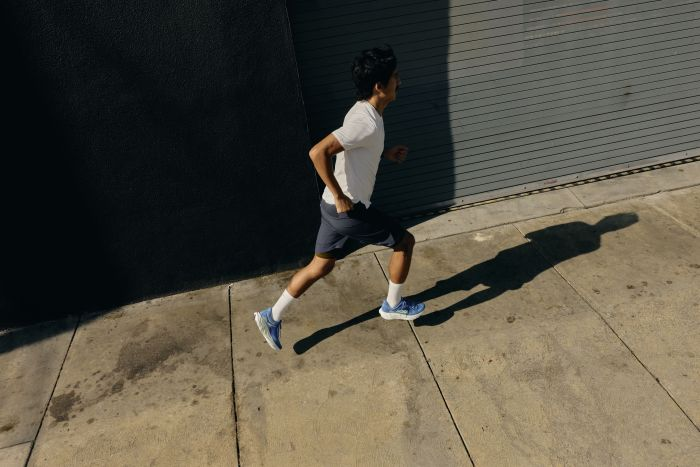
In general, our review team found that the Arahi worked best on long runs, easy miles, or casual walks. The model is truly renowned for its support and dependability, which promotes a more neutral alignment for mild or moderate overpronators. With that, it doesn’t offer a ton of bounce or energy return for more uptempo days. This limits its versatility, making it a better choice as an everyday trainer as opposed to a do-it-all running shoe.
Not every shoe is going to be the fastest, lightest, and most energetic on the market. But sometimes, you just need that extra support, cushioning, and comfort. And when that’s what you’re looking for, the Arahi 9 is a great choice. If your arches roll inward on runs, or you simply don’t want to think about your form while cruising during longer mileage, the Arahi might be the shoe for you.
Arahi 9 Pros and Cons
At Marathon Sports. We get asked a lot about what the “best” running shoe is. And as much as we wish there was an easy answer, the truth is there’s no single running shoe that’s the best option for every walker, runner, and athlete out there. Everyone is different, with differing support needs and preferences.
So as you shop around for running shoes, it’s important to take all the pros and cons of each individual model into account. Here are some of the upsides and downsides we noticed throughout our Arahi testing.
Pros
- H-frame technology provides holistic support for overpronation without feeling overly stiff and bulky. The redesigned system is also softer than before for more comfort throughout each stride
- New upper construction features a lightweight engineered mesh that blends stretch and structure for maximum comfort
- 7-8 mm drop combined with subtle metarocker geometry helps reduce pressure and create smooth, natural transitions
- Dual-density EVA foam creates a well-balanced ride that’s stable and supportive
Cons
- Weight increased from 9.8 oz for men’s shoes and 7.7 oz for women’s to 10.06 and 8.22, respectively. While it’s still lighter than many other stability shoes, you may notice these extra ounces when you start to get tired during long runs
- Not the most exciting shoe to run in – the focus on support and reliability results in limited energy return and bounce
The Arahi 9 vs the Competition: How Does it Compare?
Stability shoes have come a long way in recent years. While brands used to depend on stiff medial posts for support, most support models have shifted to softer, more dynamic corrective technology. The Arahi 9 is one example of a modern stability shoe. But if you need support for overpronation, you have a couple of other options that could work for you as well.
If you want a little more versatility in your running shoe, the Asics GT-2000 15 is a solid option. Like the Arahi, it has a non-intrusive guidance system that supports your feet while maintaining a streamlined design. The GT-2000 also has similar cushioning levels to the Arahi. However, the trampoline pod in the forefoot does create more spring and bounce compared to the Arahi, making it a bit more suitable for uptempo days as well as longer mileage.
The Saucony Guide 19 also falls in that same moderate cushion stability shoe category. Saucony’s unique Centerpath support system feels a bit softer underfoot than HOKA’s H-Frame system. Ultimately, both shoes feel protective, cushioned, and supportive for your daily workouts and recovery miles.
The Arahi 9 is fantastic for mild to moderate overpronators, but if you need a little more support and impact absorption, the HOKA Gaviota 6 might be a better choice. The max cushion, max support design ensures your feet are protected and cushioned with every step. And while the Arahi has a bit of a narrower fit, the Gaviota’s wide toe box ensures a more natural feel with optimal comfort on long runs.
The Finish Line: Arahi 9 Final Thoughts and Recommendations
Support shoes have come a long way in recent years. They’ve moved on from the super stiff, blocky trainers with unforgiving medial posts to deliver more holistic, flexible support that doesn’t compromise on comfort. And one of the first shoes to excel in this area was the HOKA Arahi.
The Arahi 9 continues this legacy, using the brand’s unique H-frame technology to support your feet while maintaining a cushioned, comfortable, lightweight ride. Any previous Arahi fans will be happy to hear that HOKA didn’t start from scratch with this newest upgrade. It maintains the overall feel of the Arahi 8, with some minor updates to improve your comfort and running experience.
The Arahi 9 is available now at your local Marathon Sports store, so swing by today for a free personalized fitting and to try on the newest HOKA update for yourself.
HOKA’s motto is “fly human fly”, and at Marathon Sports, we want to help you find the perfect running shoe to help you do exactly that. With the right shoe, gear, apparel, and nutrition, you’ll be prepared to fly through all your training runs with happy, comfortable feet.