One of the best things about running is that everyone has their own unique goals and individual journeys. Whether you’re a beginner runner just trying to get in shape, a long-time athlete looking to build mileage, or a speedy elite runner trying to PR at their next race, every runner has their own distinct reason and purpose for getting outside and running.
But no matter where you’re at in your running journey, there are some key tools and running products that will benefit any runner. A good pair of shoes is the most notable, but the right nutrition, apparel, and recovery gear are also crucial pieces of the puzzle.
There’s also an often overlooked piece of equipment to help improve your training and reach your goals – a good heart rate monitor (HRM).
Throughout your training, not every run should be at the same intensity. It’s important to include a mix of easy pace recovery runs, progression runs, tempo runs, and more to build your fitness and create the most efficient training plan possible.
Different types of runs often require a different level of effort, exertion, and intensity, and that’s where a good heart rate monitor comes into play.
Choosing the right heart rate monitor is often an overlooked part of training, and therefore isn’t as common or talked about as buying other tools, like a new pair of running shoes. With that, it’s not a surprise that many runners don’t have as much insight as to what features to look for and how they can choose the right monitor for them.
If that sounds like you, you’re in good company. And don’t worry – you don’t have to go about choosing and learning how to use a heart rate monitor on your own. At Marathon Sports, we don’t just know running shoes. We also stay up to date on all the latest running and fitness technology, so we can help you make the best informed choices about your training needs.
In this ultimate guide to heart rate monitors, we’ll go over some of the key features to look for to help you choose the best heart rate monitor for you, how to use heart rate monitors to elevate your training, and some of our top picks that you can find on the market today.
Why Buy a Heart Rate Monitor?
Running is one of the most innate, instinctual sports out there, so you may be wondering if a heart rate monitor is really necessary or beneficial.
The truth is, while it ultimately comes down to your individual training needs and goals, there are several different ways a heart rate monitor can improve your training.
But before we dive into all the pros, let’s take a closer look at what a heart rate monitor actually is.
As the name suggests, a heart rate monitor measures your heart rate, in beats per minute, throughout exercise and other daily activities. These wearable monitors can come in the form of a chest or wrist strap and use sensors to detect heart rate and determine overall intensity and effort throughout a workout.
Here are just a few ways heart rate monitors can improve your training and workouts:
- Moderate and control workout intensity – When you’re in the midst of a tough training block, it’s important to use slow, recovery run days to actually recover. Heart rate monitors can measure your effort and exertion levels and help you know when it’s time to relax and slow down to get the most possible benefits from recovery days.
- Monitor your training and fitness progress – With a heart rate monitor, you’ll have access to real time data and feedback for each run. This extra information and fitness insight will help you adjust your training plan and goals to ensure you’re staying in your target heart rate zone and effort level throughout any type of run.
- Prevent overtraining – Nearly every runner is guilty of overtraining or pushing themselves too hard at one point or another. With a heart rate monitor, you can more easily manage your efforts and use real, tangible data to adjust your intensity or pace and prevent overtraining and common overtraining-related injuries.
Many casual runners may think that only serious elite athletes can benefit from these metrics, but that couldn’t be farther from the truth. Beginner runners can measure effort and progress to help determine the right time to increase mileage, and runners of any level training for a race can use this insight to improve their training and set themselves up for success on race day.
If you’re new to heart rate training, however, it can be difficult and overwhelming to know exactly what features and elements to look for in a heart rate monitor.
Keep reading for a deep dive into how to choose a heart rate monitor and what features to keep an eye out for when choosing the best heart rate monitor for your needs.
How to Choose the Best Heart Rate Monitor for You
Ready to take the leap and buy a heart rate monitor to improve your training? Here are some tips and tricks to help you find the best option for your needs.
Consider the Type of Heart Rate Monitor
Heart rate monitors come in a few different styles, most notably a chest strap and wearable wrist or forearm strap.
Chest straps are the most common form of heart rate monitor. These chest straps use electrodes to measure activity and detect and process heart rate data.
There are a few upsides and downsides to using a chest strap. Chest straps use eclectic signaling for remarkable accuracy, especially compared to other heart rate monitoring devices. When you’re using heart rate data to inform your training, having accurate, precise information is crucial. With a heart rate chest strap, you can feel confident knowing the information is more reliable and accurate.
However, using a chest strap isn’t always convenient. Some runners may find them bulky, uncomfortable, or unnatural to use throughout runs. They’re also less convenient than smaller wearable heart rate monitors. If you’re looking to measure your heart rate throughout the day, not just on runs, you may want to consider a smaller wrist or arm strap.
Arm or wrist straps use optical sensors to measure blood flow and heart rate throughout activity. While this method is slightly less accurate than its chest strap counterpart, it offers plenty of heart rate data and information in a small and convenient package. If you’re just starting to venture into the world of heart rate training and are concerned about a bulky chest strap, a small wrist or arm wearable should still get the job done.
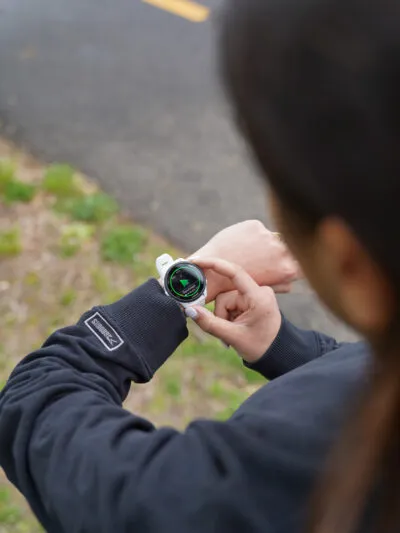
Finally, if you’re looking for a wearable that can do it all, many fitness watches or rings today are capable of measuring heart rate and providing some fitness insights to help you adjust your training. While this heart rate monitoring isn’t quite as reliable or comprehensive as the information from a heart rate strap, these wearable monitors can be a great tool to help you understand your resting heart rate and how it varies throughout the day.


Dive into All the Features
While every heart rate monitor on the market should be able to measure BPM, not every brand and heart rate monitor is created equal.
The exact features you’re looking for will likely depend on a wide range of factors, including your running goals, desired type of workout, and phone or watch compatibility. Here are a few things to keep an eye out for as you’re browsing heart rate monitor options.
Connectivity
These days, it seems like everything is connected through bluetooth, smartphone apps, smart watches, and more. So when you’re looking for a heart rate monitor, be sure to look for something that will connect with your preferred apps and devices.
Many heart rate monitors will use wireless connectivity to transfer your heart rate data into different apps or systems. So if you use ANT+, Garmin, or any other fitness apps to track your health, look for a device that will easily pair with your preferred systems.
Heart Rate Variability
Heart rate variability refers to the amount of time between each consecutive heartbeat. These intervals offer a range of insight into health and well-being and can play a huge role in determining how your body is recovering from a workout and reacting to stress.
High HRV has been shown to be an indicator of positive well-being and good mental and emotional health. This HRV data can help determine if there are other elements at play throughout your training that need to be addressed, such as needing more sleep, better stress management techniques, or extra rest days.
Not every heart rate monitor is comprehensive and accurate enough to provide this HRV tracking. If you’re interested in this element of heart rate and health monitoring, keep an eye out for a heart rate monitor with the ability to determine HRV.
Water Rating
Heart rate monitors can be a great tool for any activity, from weight lifting to running to swimming. But if you’re planning on using a chest or wrist strap in rain or water, you should look into its water rating.
Some monitors are fully waterproof, while others may handle up to a certain amount of rain or water pressure. Make sure to consider what activities you’ll be primarily using the heart rate monitor for and find a water rating that suits your needs.
Battery Life
Every runner knows that having your technology die on you in the middle of a run is no fun. That’s why before you make a purchase, you should always take a closer look at battery life. Be sure that, before buying a heart rate monitor, the battery life will meet your needs and be able to withstand even your longer workouts.
Heart rate monitors also have some key differences in how they get their charge. Some are rechargeable, while others have replaceable batteries, so make sure to consider how you want to keep your heart rate monitor running.
Find a Monitor that Suits Your Budget and Needs
While it can be tempting to go with the most high-end, comprehensive heart rate monitor on the market, consider your individual needs and what you’ll be using the heart rate monitor for.
If you’re just venturing into heart rate training, a simple chest strap compatible with your favorite fitness app will likely do the trick. These less expensive base models will help you navigate training and understand how you should adjust your effort levels throughout each workout.
However, if you’re looking for more in-depth insight into your health and heart rate, or need specific features such as waterproofing, HRV data, and more, you may need to look into some of the more advanced heart rate monitors out there to suit your needs.
Price is also a key factor to keep in mind. Heart rate monitors come in a huge price range, all depending on accuracy, detailed insight, durability, and more. While some options can come with a price tag upwards of $150, these will also be the more advanced and inclusive options. Any runners looking for a standard heart rate monitor will have several options under $100.
How to Incorporate a Heart Rate Monitor in Your Training
Once you’ve picked out the best heart rate monitor for you, it’s time to start incorporating the monitor and all your new health insights into your training.
But what exactly does that look like?
When you take your new heart rate monitor out of the box, you’ll want to start by connecting it to your favorite workout and fitness apps so you can make the most of the real-time data and benefits.
Most heart rate monitors on the market today use bluetooth connectivity to pair with your preferred fitness tracking apps. So before getting started, make sure your HRM is paired up with a phone or smartwatch for the most effective usage.
Putting your heart rate monitor on will look different for every model and type of monitor. For adjustable chest or arm straps, you’ll want to adjust the size until it fits snug against your skin without feeling tight, constrictive, or uncomfortable.
Once your HRM is connected and comfortable, you’re ready to get started and start taking advantage of all the health data and insights.
As you set out for your run, this monitor will send real-time updates and heart rate information to your phone or watch. And while there are a lot of ways this can play into your training, here are just a few of the ways you can incorporate this information and use it to your benefit:
- Keep recovery runs easy: One of the most common ways runners use HRMs during training is to ensure they’re getting the most out of their recovery runs. If your heart rate is too elevated or showing too much exertion on easy runs, it’s a good sign to slow it down and truly focus on keeping recovery runs at an easy effort.
- Measure your effort during tempo runs: Tempo runs, or threshold runs, are a key part of many training plans. These “comfortably difficult” runs are meant to be at 80-90% of your maximum effort to build speed and endurance throughout training blocks to better prepare you for race day. Heart rate monitors are a great tool for measuring your effort throughout these runs and ensuring you’re exerting the right amount of energy for the most efficient tempo run possible.
- Moderate your training and recovery: While heart rate monitors are most commonly used while running, the information they send throughout the day can also be incredibly helpful. Resting heart rate can be a good indicator of overall fitness and recovery, and an elevated resting heart rate may mean it’s time to slow down and take more time to recover to prevent overtraining.
Whether it’s increasing effort during tempo runs or ensuring you’re getting the most out of your recovery runs, heart rate monitors can help improve your training, fitness, and recovery throughout your training. If you’re looking for a new tool to help you reach your running goals, incorporating an HRM could be the right choice for you.
Our Top Heart Rate Monitor Picks
Finding the best heart rate monitor for you in a growing technology market can feel overwhelming. That’s why we’re highlighting some of our top picks to help you narrow down your options and decide what works best for you.
Here are a couple of our top HRM choices, chosen with a variety of preferences, goals, and runners in mind.
Garmin HRM-Dual Heart Rate Strap
The Garmin HRM-Dual chest strap is a perfect choice for beginner runners or anyone just venturing into heart rate training. At $70, this base HRM model gives you everything you need to track your health and heart rate in real time without the hefty price tag.
The soft, washable chest strap can be adjusted from 25”-52” and weighs less than 2 oz, so you don’t have to worry about a bulky and uncomfortable chest strap weighing you down on runs. The replaceable battery also lasts up to 3.5 years.
While this standard HRM model isn’t the most high-tech on the market, it offers countless features that make it a great affordable option. The strap uses bluetooth and ANT+ connectivity, sending real time updates to the garmin app or smartwatch during any type of workout. And along with real-time heart rate monitoring, the HRM Dual strap also measures HRV for better training and fitness insight.
This heart rate strap has a water resistance rating of 1 ATM, meaning it can handle the water pressure equivalent of a 10 m depth. While this water rating allows for use in rain or snow, it’s not ideal for swimming. This strap is fantastic for runners, bikers, or gym-goers, but swimmers may want to consider a more waterproof option.
Garmin HRM 600 Heart Rate Monitor


Luckily, our second pick – the Garmin HRM 600 – is a durable, high-quality, advanced heart rate monitor option ideal for running, cycling, swimming, and more.
Like the HRM-Dual, this chest strap transmits real-time data to your compatible watch or smartphone app. These insights include accurate heart rate and HRV for fitness and effort tracking.
However, this more advanced option also features a huge range of running dynamics. From ground contact time to step speed loss and more, these expanded dynamics can help you improve your running form for even more efficiency throughout workouts.
Along with these advanced dynamics, the HTM 600 also offers activity tracking, and can even sync this data to the Garmin app without a smartwatch. The HRM connects to a huge range of compatible apps and fitness equipment to track intensity, calories burned, and steps taken throughout your workouts.
Paired with a 5 ATM water rating, meaning it can handle diving or swimming, this activity tracker makes the HRM 600 a great choice for anyone who can’t or prefers not to wear a watch during their preferred training. This can be particularly useful for swimmers, divers, or any athletes that spend time in the water.
The rechargeable battery lasts up to two months, so you don’t have to worry about the strap losing its charge too quickly during workouts. The adjustable strap ranges from 28”-42” and is machine washable for even more convenience.
With all these advanced features, the HRM 600 comes with a higher price tag than some other monitors, ringing up at $169.99. But if you’re looking for a durable heart rate monitor with a huge range of extra features to inform your training, you can’t go wrong with this state-of-the-art Garmin monitor.
Other Wearable Options


You’ll notice that our top two picks for the best heart rate monitors are both chest straps. That’s because chest straps offer the most accurate and reliable data and are one of the best ways to get insight into your heart rate throughout workouts.
However, if you find heart rate straps uncomfortable, or want something easier to sleep in or wear throughout the day, there are some other options to consider.
There are plenty of watches, such as the Garmin Forerunner 170 or Garmin Forerunner 570, that use wrist-based heart rate monitoring to measure your BPM and provide training insights. While watches and other small wearables may not be as accurate as a chest strap when it comes to heart rate, they can be a convenient option for anyone who wants more all-around tracking and monitoring in a smaller package.
Find the Right Heart Rate Monitor for you at Marathon Sports
If heart rate training is unfamiliar to you, we hope this guide has given you a better idea of how you can incorporate heart rate monitoring into your training and what you should keep an eye out for while shopping around.
And if you have any more questions, the team at your local Marathon Sports is here to help. Stop in today to browse the best heart rate monitors around and chat with our dedicated staff about how these monitors can help your training.
With the right tools, whether it’s a simple heart rate strap or advanced smartwatch and HRM combination, you can make the most out of all your runs and set yourself up for success, no matter where you are in your running journey.