When you get into running, it’s common to want to run faster and perform better. After all, it provides extra excitement when you have goals you’re chasing or personal bests you want to exceed. There’s a certain thrill in making it to the finish line faster than you did before.
Many runners can benefit from training to gain extra speed, such as:
- The casual runner who just wants to beat their personal bests and keep their training interesting.
- Those running for health and fitness. Increasing speed and running pace is often a key sign of improving your overall fitness level.
- Competitive runners who want to improve their race times.
- Athletes who want to perform better in their sport or discipline.
- People with limited time who want to shorten their workouts. Speed training tends to take less time than endurance or distance runs.
No matter your goal, this comprehensive guide will cover all the aspects that can contribute to increasing running speed, including training styles, apparel, and daily habits. Therefore, we’ll cover a little bit of something for everyone, whether you’re a beginner, intermediate or advanced. Stick around for all the information.
Understanding Your Baseline: How Fast Are You Running Now?
Before you get into training for speed, it’s essential to have a way to track your progress and know where you’re starting from.
A common place to start is using a running app or the stopwatch on your phone. Several paid and free apps are available that can help you track your running distance and pace using your phone’s GPS. The main issue with this method is pulling your phone out of your pocket while running to keep tabs on your progress can feel clunky.
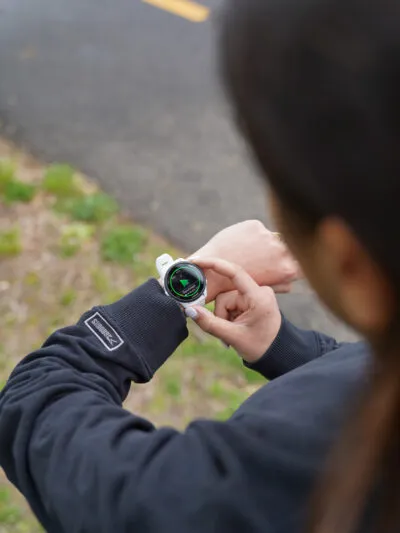
Many runners find that upgrading to a running watch when possible is helpful since it allows you to quickly look down at your wrist while running to get the necessary information. That way, you know if you need to pick up the pace to reach your goal for that day’s training session.
Aside from tracking your pace, running watches provide a lot of other great data, such as:
- Distance
- Heart rate
- Respiration rate
- Hydration
- Calories burned
- And more
All of these are great metrics to gauge your health and performance. Plus, many running watches include safety features like incident detection or allow you to integrate the emergency contacts from your phone in case you get injured or are in an accident. That’ll help you feel a lot safer when you’re out for your run.

Interval Training: A Cornerstone of Speed Development
When you want to improve your speed, you must adapt your training to achieve that goal. Interval training is a great starting point.
The basis of interval training involves running in short, intense bursts, followed by a slower jog, walking, or a rest break. You’d then transition back and forth between an intense burst of fast running and going at a slower pace throughout the workout.
Several studies have shown this method is effective in improving speed.
For example, there was a two-week study conducted on trained trail runners. During that time, the runners participated in three sprint interval training sessions per week, where they performed 4-7 rounds of sprinting for 30 seconds, followed by resting for 4 minutes.
Even though it was a short study, they still had significant improvements in speed after this protocol. The runners improved:
- Their speed by an average of 2.3%
- Peak power by an average of 2.6%
- Decreased their 3,000-meter (approximately 1.86 miles) running times by 6%
- Increased the time they could run at 90% of their max sprinting speed by 42%
Sprinting for 30 seconds and resting for 4 minutes provided great results in this study, but that’s not the only method for building speed. Other interval training protocols can also have great results, depending on your needs or if you just want to switch up your training over time.
Other Popular Interval Training Programs for Running Speed
Other popular methods include 400-meter repeats and fartlek training. Let’s review each to show you how to integrate it into your routine.
400-Meter Repeats
Essentially, 400-meter repeats involve running 400 meters (about 0.25 miles) at a faster pace, followed by running or walking 400 meters at a slower pace for recovery. Here’s how you’d do this routine:
- Before starting the 400-meter repeats, warm up with some stretching and a light jog for 1-2 miles.
- Run 400 meters at your 5K or 10K pace, then do the next 400 meters at a slow jog.
- Repeat that about 6-12 times.
- Finish by cooling down with a slow jog or walking for 1-2 miles.
You’d progress by increasing the number of rounds or how fast you run the 400 meters.
Fartlek Training
Fartlek is a Swedish term that stands for “speed play.” Unlike other types of interval training, in which you go from a sprint to a slow-paced rest interval, a Fartlek is a bit different, as you go from a sprint to moderate-paced running. Therefore, it’s a little more advanced and intense.
To do a fartlek, you’d simply integrate bursts of faster-paced running into your normal runs. For example, you could start running at your typical pace for a few minutes, then sprint for 30 seconds. Afterward, return to your normal pace until you catch your breath and do another 30-second sprint when you feel ready.
The reason why this type of training works is it puts extra stress on your system. As you do this more often, your body will adapt and boost your anaerobic threshold to keep up, which measures your endurance and performance capacity. Specifically, the research states that it increases how much oxygen your body can take in and use, helping you run faster for longer.

Optimizing Your Running Form
When you’re learning how to get started running, it’s important to just start moving and get into a good routine. That said, as you advance and want to start gaining more speed, optimizing your form will help you use the proper biomechanics to take your performance to the next level. Here are some quick tips to improve different portions of your form.
Posture
Adjusting your posture puts your body in a better position to run faster and with a healthier stride.
To improve your posture, start with your head placement. Keep your head high and centered between your shoulders. Many runners find it helpful to look about 20 feet ahead of them when running to maintain the correct head position.
Next, keep your back straight and chest lifted and broad to prevent slouching or leaning too far forward. That said, don’t tense up too much while you’re doing this. Make sure your shoulders are still relaxed for a natural stride.
Lastly, keep your hands loose and arms bent at a 90-degree angle. Avoid holding your hands by your chest, which can cause extra fatigue.
Foot Strike and Stride Length
Try to avoid hard heel strikes when you’re running. That puts a lot of stress on your joints, especially your knees. Many runners find it helpful to think of their heels as the brakes when running. Hitting the ground with your heels too much will slow you down.
Many runners also find it helpful to shorten their strides as they try to run faster. Overstriding, where your foot lands in front of your hip, is inefficient and increases fatigue over time. Instead, aim to have your foot land directly under your hip. It can be helpful to increase your cadence (number of steps per minute) to ensure you’re taking short enough strides.
Avoid Bouncing
It can feel tempting to try to bounce yourself off the ground when pushing for more speed. That said, physically moving your body up and down like this adds a lot of fatigue. The higher you make yourself bounce up in the air, the more shock you’ll have to absorb when you hit the ground. It’ll tire out your legs quicker and can also lead to injuries.
Implement Strength Training for Power and Stability
When you see professional sprinters, you’ll notice they not only run fast but also look strong. That’s because strength training plays a key role in your running capacity.
As your body strengthens, your running strides will produce more force, and you’ll have better muscle coordination and activation. This means it’ll require less energy to run at the same speed, helping you run faster and longer. Plus, you’ll likely start to feel like you can control your form and pace better.
Now you’re probably wondering, what’s a good strength training routine for runners? Here are some beginner, intermediate, and advanced strength training programs you can use at different levels.
Beginner Level
This beginner workout routine consists of four essential bodyweight exercises that will benefit overall running posture and performance. Bodyweight squats and glute bridges enhance lower body power output. Push-ups and planks strengthen the core and upper body, improving posture and stability.
- Bodyweight Squats (3 sets of 10-12 reps)
- Push-Ups (3 sets of 8-10 reps)
- Glute Bridges (3 sets of 10-12 reps)
- Plank (3 sets of 20-30 seconds)
Intermediate Level
Once the beginner exercises feel easy, you can move on to this intermediate program. Here, we’re implementing weights for additional resistance or more challenging variations of exercises into the routine. Plus, bent-over rows are added to build extra strength in the back muscles for more postural support and core stability.
- Goblet Squats (3 sets of 10-12 reps)
- Dumbbell Bench Press or Weighted Push-Ups (3 sets of 8-10 reps)
- Romanian Deadlifts (3 sets of 8-10 reps)
- Bent-Over Rows (3 sets of 8-10 reps)
- Side Plank with Leg Lift (3 sets of 15-20 seconds per side)
Advanced Level
As you get stronger, moving on to more dynamic exercises or ones you can load up with more weight will help you advance.
- Barbell Back Squats (4 sets of 6-8 reps)
- Pull-Ups or Weighted Pull-Ups (3 sets of 6-8 reps)
- Deadlifts (4 sets of 6-8 reps)
- Dumbbell Renegade Rows (3 sets of 8-10 reps per side)
- Plyometric Push-Ups or Barbell Bench Press (3 sets of 8-10 reps)
How Often Should Runners Do Strength Training?
It’s usually recommended that runners strength train 2-3 times per week. To manage fatigue, it’s a good idea to leave two or three days between strength training sessions, especially considering you’re also partaking in a full running routine.
Recovery and Rest for Runners
Dedicated recovery and rest periods will keep you fresh as you go through your running and strength training routine. This also gives your muscles time to heal and grow back stronger for better performance and prevents overuse injuries from soft tissue damage that can accumulate if you don’t give yourself a break.
The amount of rest days you should take each week usually depends on your training level. A good baseline is:
- Beginners should rest at least 2-3 days each week
- Intermediate runners should rest at least 1-2 days each week
- Advanced runners should rest at least 1 day each week
You can also enhance your recovery days by foam rolling and stretching or engaging in active recovery activities like swimming or a light walk. These will keep you active without overly stressing your joints or muscles.
Proper Nutrition and Hydration for Runners
What you eat affects how you feel and recover from workouts. Therefore, eating a well-balanced diet full of whole foods is essential to keep you healthy and feeling good as you train to increase your running speed.
Here are some tips for choosing the right foods to fuel your body for top running performance:
- Make sure you’re eating enough protein. Most research suggests you should eat at least 0.6-0.9 grams of protein per pound of your body weight daily. Enough protein is important to prevent muscle loss in endurance athletes.
- Get a good mix of carbs and fats. At least 20% of your diet should come from fats, and 45% should come from carbs to ensure stable energy production that helps with performance during runs.
- Eat foods rich in micronutrients. Foods like eggs, lean meats, leafy greens, whole wheat, sweet potatoes, and citrus fruits are all high in essential vitamins and minerals that keep your body feeling good and full of energy.
- Consider eating more carbs before hard workouts and more proteins after intense training. A lot of research supports eating 15-75 grams of carbs about 1-3 hours before an intense run to ensure your body has enough energy and then consume about 20-30 grams of protein afterward to enhance recovery.
Additionally, ensure you stay hydrated throughout the day to maintain stamina during runs. Men should drink at least 15.5 cups of water daily, and women should drink at least 11.5 cups.
Plus, on days when you do intense workouts, it’s often a good idea to drink even more than that to replace water lost from sweating.
If you plan to run for 90 minutes or longer, consider carrying water with you. Staying hydrated helps you maintain stamina and speed. You can buy a handheld bottle that’s easy to carry or a bottle pack that allows you to strap a water bottle to your waist if you don’t want to carry one in your hand the whole time. You can also mix in some electrolyte tablets to enhance hydration even more.

Choose the Right Apparel to Enhance Running Speed
What you wear while running can also help you perform better.
A good place to start is selecting the right running shoes. It can be helpful to get a professional gait analysis to ensure you choose the correct shoes for your foot type and natural running stride. That way, you can optimize aspects like choosing the ideal amount of support, cushion, and offset for your needs. Our footwear specialists at Marathon Sports can help with that at our retail locations.
The clothing you wear also impacts your performance. Selecting moisture-wicking tops and bottoms for running will ensure you stay cool and minimize fatigue, allowing you to run faster for longer.
Choosing a good pair of running socks that don’t slide around is also a good idea. This will minimize blisters, which can become painful and impact performance until they heal.
Lastly, some accessories can be helpful, too. On hot sunny days, you might want to consider wearing a lightweight running hat that keeps the sun off your face so you stay cooler. Wearing running sunglasses can also prevent eye strain that could cause mental fatigue during your run.
Get Equipped with the Right Gear to Run Faster at Marathon Sports
Knowing that the right gear is essential in your quest for better running performance, Marathon Sports has running shoes, apparel, and accessories from the top brands in the industry ready for purchase.
You can shop now in our convenient online store and have items shipped straight to your doorstep, or visit one of our retail locations to consult with one of our footwear and apparel specialists. No matter which option you choose, we ensure top-notch customer service each step of the way.