One aspect that makes running so fun is that every runner can personalize their training to their own running and fitness goals. You can track distance and aim to run farther than you did yesterday. You could focus on speed and try to crush your PR at your next race. Or, you can run based on heart rate.
Speed and distance are some of the most common metrics for tracking your runs. But you might be less familiar with this third metric – heart rate zones.
Heart rate training first came onto the running scene in the 1980s. Throughout the early 2000s and into the modern day, more advanced data tracking technology has made heart rate training increasingly common among runners.
And while this technical, data-driven approach to running may sound like it’s something for advanced, elite runners, almost anyone can use it to improve their performance and reach their goals.
Heart rate training is incredibly accessible for all levels of runners. But we also know that this focus on data, numbers, and metrics can sound intimidating. So our Marathon Sports team is here to break it down for you. In this guide to heart rate training for runners, we’ll take a simplified look at what heart rate training is, what heart rate zones look like, and how you can use it to benefit your training plan and performance.
So, What is Heart Rate Training?
Simply put, heart rate training means using your heart rate, in beats per minute (BPM), to guide your runs and pace. Instead of tracking speed or average pace, you’ll aim to stay within a certain heart rate zone that indicates your effort and intensity level.
While running, you’ll notice that not every run feels the same, even if you’re running them at the exact same pace. Different factors impact the effort and energy put into every run, including weather, altitude, temperature, stress level, hydration, and recovery status from your last run. When your body works harder on runs – whether it’s because of pace or a combination of any of these factors – your cardiovascular system works harder, and your heart rate increases.
With heart rate training, you focus more on sustained effort within a certain target zone, as opposed to pace or speed. Real-time heart rate tracking tells you when you need to slow down and give less effort, or speed up and give more effort, based on the type of run you’re doing.
Benefits of Heart Rate Training for Runners
Of course, as with any type of training, you’ll enjoy all the physical and mental health benefits that come from running throughout your heart rate training, including improved cardiovascular health, increased muscle strength, and increased cognitive function. But heart rate training also comes with its own unique set of benefits compared to standard training runs.
Improved Aerobic Base
If you’ve spent time around runners, you’ve likely heard the term “zone 2 runs”. This refers to low-intensity runs where you maintain a relatively low heart rate. Throughout these runs, you should be able to easily hold a conversation. And with heart rate training, these low-intensity runs make up the bulk of your weekly mileage.
With a focus on keeping your heart rate low and intensity down during easy weekly mileage, you’re also helping to build a foundation for your aerobic health and endurance. You’ll strengthen the heart muscles and improve your overall heart and lung function, laying the groundwork for your body to handle longer, higher-intensity workouts.
Reduce Injury Risk
Ever accidentally push the pace on a recovery run or exert too much energy on what was supposed to be an easy day? We’ve all been there. But with heart rate training, you can make the most of your recovery and reduce your risk of injury.
Running based on heart rate zones instead of pace is all about listening to your body. When your heart rate is too high, it’s a sign to slow things down and let your body recover the way it needs to – something that isn’t always easy to do based on pace.
Staying in lower heart rate zones helps your body truly recover after hard workouts and helps prevent overuse injuries caused by overtaxing your body.
Personalize Your Training
As we mentioned, everyone has their own unique running and fitness goals. For some people it’s about running faster, for others it’s about running farther, and for others it’s just about getting outside and moving.
But no matter what your goal is, heart rate training can help you easily personalize your running plan for your individual needs. The heart rate zones all have unique benefits, ranging from helping you build speed and endurance in lower zones to improving speed and power in higher zones.
Easily Track Progress
Exact data, such as heart rate training, offers one of the clearest pictures of how you’re improving and progressing towards your running goals.
When you first start on your running journey, your zone 2 runs may incorporate some walking with a slower pace to keep your heart rate low. But as you build strength and endurance, you’ll find it takes less effort and energy to run at the same speed you once did.
This won’t always be the case, and some days you may need to slow down or take it easy because of outside factors. But in general, heart rate training offers a great way to see measurable improvement over time.
How Do I Find My Maximum Heart Rate?
Heart rate zones are based on your maximum heart rate. There are a few different ways to calculate your maximum heart rate, but the most popular – and simple – is 220 minus your age.
Every athlete is different, and different factors may affect your resting and maximum heart rate. But overall, this formula gives you a general estimate of your maximum heart rate to base your heart rate zones on.
Heart Rate Zones: Summary & Function
Before diving into heart rate training, it’s crucial to know and understand the five distinct heart rate zones. With a solid understanding of the zones and intensity levels, you can adapt your workouts and recovery for better performance and results.
Zone 1: 50 to 60% of Maximum Heart Rate
Heart rate zone 1 refers to low-intensity active recovery. You should be in zone 1 – 50-60% of your maximum heart rate – during warm-ups, cool-downs, or light-intensity physical activities.
Zone 1 is the basis of active recovery and building an aerobic foundation. It helps your muscles repair after a tough run, keeping you feeling your best for your next runs and workouts. Throughout this active recovery, you should be able to hold a full conversation without feeling out of breath. This can include a brisk walk or light cycling.
Zone 1 Key Benefits:
- Improves blood circulation to boost muscle recovery after more high-intensity workouts
- Builds aerobic base and endurance with less risk of injury and overtraining
- Low physical strain on the body
Zone 2: 60 to 70% of Maximum Heart Rate
Zone 2 training is all about going slow and steady. Your heart rate will be slightly elevated, but your breathing should still feel controlled, and you should be able to speak in full sentences.
In simple terms, the second heart rate zone includes low-to-moderate intensity activities. While zone 2 activities differ based on your individual fitness level, they often include easy runs, brisk walks, outdoor or treadmill incline walks, and other forms of light cross-training.
For most athletes, zone 2 training should ideally make up the bulk of your everyday mileage. Many athletes even follow an 80/20 training rule, which refers to the idea that 80% of training should be in the low-to-moderate zone 2 exertion level, and 20% should occur at a higher intensity level.
Once again, every athlete is different, and you should adapt your training plan to your own individual goals. But for many runners, zone 2 training offers a fantastic way to get outside and build endurance without overexerting your system and muscles.
Zone 2 Key Benefits
- Spending more time at a steady pace helps build endurance over time
- Improves cardiovascular fitness and aerobic capacity for stronger foundational fitness
- Increases VO2 max for improved heart and lung function, helping your body work more efficiently at higher-intensity efforts
- Less stress on joints reduces overtraining and impact-related injuries
- Offers an accessible, sustainable workout option for anyone just getting started on their running journey
Zone 3: 70 to 80% of Maximum Heart Rate
As you increase into a more moderate effort, you’ll reach heart rate zone 3, 70-80% of your maximum heart rate. You should still be able to speak at this effort level, but sentences may become a bit more difficult and broken.
Runs in zone 3 should be comfortably hard. You’ll feel more fatigued during zone 2 runs, but you shouldn’t be pushing yourself to the absolute limit. For example, uptempo daily miles and interval training typically fall into zone 3 training.
Zone 3 offers some similar benefits to zone 2, and you should balance these more moderate zones throughout your training to improve endurance and overall fitness.
However, zone 3 is a middle ground in heart rate training, and you may want to avoid spending too much time here. You don’t get quite the same recovery benefits as zone 2, or the speed and power benefits of more intense zone 4 workouts, so make sure to balance out zone 3 runs with both lighter and more intense workouts during your training cycle.
With that, zone 3 running offers some unique mental benefits to prepare you for race day. Interval or tempo runs can push you past your usual comfort zone, building the mental toughness and resilience that will come into play while racing or during higher-intensity efforts.
Zone 3 Key Benefits
- Improves aerobic capacity to help build a base fitness
- Starts incorporating both fast- and slow-twitch muscles for balanced improvement in both endurance and power
- Delivers more efficient calorie and fat burn
- Prepares you mentally and physically for race day conditions
Zone 4: 80 to 90% of Maximum Heart Rate
Zone 4 training combines duration and intensity for a challenging, high-intensity workout. During these runs, you’ll likely feel more out of breath, and talking will become increasingly difficult.
Most endurance training activates slow-twitch muscle fibers, which are ideal for low-intensity, long-distance efforts. But at zone 4, you’re running closer to your maximum sustainable pace. Your body starts to tap into fast-twitch muscle fibers, which, over time, helps build your speed economy and reduce fatigue at progressively faster efforts.
This high-intensity training, such as tempo runs or speed workouts, can place more stress on the body and take more time to recover from than runs in lower heart rate zones. While training, most runners will want to aim for about 1-2 zone 4 runs a week.
Zone 4 Key Benefits
- Raises lactate threshold, causing less fatigue during high-intensity efforts over time
- Incorporates both slow and fast-twitch muscles to train both speed and endurance
- Increases VO2 max for more efficient oxygen use during runs
- Builds overall strength and power for sprinting or more sustained hard efforts
Zone 5: 90 to 100% of Maximum Heart Rate
When you’re at your maximum effort level or all-out sprint, you’re likely in zone 5. You can only hold this maximum effort for a short amount of time, and by the end, you may find you’re gasping for breath or unable to speak more than a few words at a time.
As you’re sprinting and oxygen supply is depleted, your body switches from using aerobic to anaerobic energy and uses stored energy to maximize intensity in short bursts.
Zone 5 training should only make up a small percentage of your weekly mileage – aim for 1 or 2 workouts a week that land within the higher intensity zones 4 or 5. This all-out workout places a lot of pressure on your joints and cardiovascular system, and often requires a few days of recovery to shake off the soreness and fatigue.
However, there are also a lot of reasons to incorporate zone 5 runs into your training. Sprinting workouts and other high-intensity workouts are the key to building speed and power to help you excel on race day.
Zone 5 Key Benefits
- Activates fast-twitch muscles, which in turn build speed and power during races and other high-effort workouts
- Improves lactate threshold, helping you go faster and further before fatigue sets in
- Takes less time than endurance runs for a more time-efficient cardio workout
- Builds mental toughness to help you push through soreness and fatigue at your next race
- Improves oxygen intake and overall cardiovascular fitness – when paired with ample recovery time for maximum benefits
How to Track Heart Rate
So now you know how to find your maximum heart rate and what the different heart rate zones look like. But how do you actually track your heart rate and use this information during your runs?
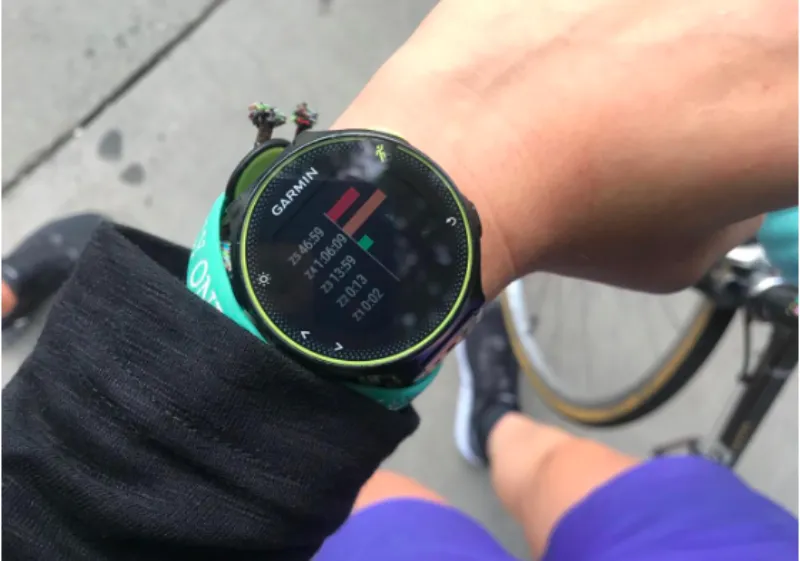
One of the easiest ways to keep track of your heart rate zones is with a smartwatch. Both Coros and Garmin offer lightweight, high-quality watches that can monitor your heart rate as you run.
With many smartwatches, you can customize the display screen to show your current heart rate during exercise. With a glance at your wrist, you’ll easily know your heart rate data and whether you need to increase, decrease, or maintain your effort level to reach a targeted heart rate zone.


Other wearable devices can collect your heart rate data and other metrics throughout your run for insight into your effort. Wrist straps or chest straps provide accurate data from every run and can send this information to compatible devices. Some wearables, such as the Garmin HRM, can even detect your max heart rate from your training and performance.
No matter what technology you use to track your heart rate, you’ll gain real-time information to help shape your runs and workouts. You can also look back at your heart rate, pace, and other metrics to adapt your training plan and make the most of your runs and recovery time.


The Finish Line: Incorporate Heart Rate Training Into Your Routine
One of the aspects we love most about running is how simple and innate it is. All you need is a good pair of running shoes, and you’re all set to hit the road or trail and complete your run.
But when you have a specific time, distance, or fitness goal in mind, heart rate training might just be the next step to help you reach it. Every heart rate zone has its own unique benefits. But by incorporating different zones into your weekly routine, you can enjoy a more well-rounded training plan that improves performance, reduces injury risk, and aids in recovery.
If you’re not sure how to get started, or need a tool to track your heart rate data, the team at Marathon Sports has your back. We have watches, bands, and heart rate monitors that can provide all the data and metrics you need for effective heart rate training. Our experienced staff is also ready and eager to answer any running questions you may have. Swing by your local store today to find the tools and resources to keep you feeling and performing your best on every run.