You might think that a flexible design and high stack heights don’t mix when it comes to running shoes. And most of the time, you would be right. With so much foam, high cushion shoes tend to be stiffer and less bendy than more barefoot-inspired, minimal running shoe counterparts.
However, in early 2025, Brooks attempted to merge the freedom and flexibility of minimalist shoes with the protection and shock absorption associated with a high stack height. Thus, the one-of-a-kind Glycerin Flex was born.
Brooks focuses on consistent and reliable comfort in its core running shoe models. So at Marathon Sports, we were excited to see the brand step outside of the box with a brand new shoe. And considering the Glycerin Flex is unlike anything else in the running world at the moment, we were even more eager to test it out and see how this flexible high cushion shoe performs throughout different runs.


Our Review Process
Any completely new shoe brings up a lot of questions: Where does the shoe fit into a running shoe rotation? How does it compare to the established shoes from the same brand? And is it the right shoe for me?
As a brand new model, our team couldn’t wait to put the Glycerin Flex to the test to answer these questions for ourselves. So we laced up the Glycerin Flex for a variety of different runs. Over all types of runs, we gained a better understanding of the Glycerin Flex’s place in Brooks’ running shoe lineup.
Throughout this review, we’ll cover the Glycerin Flex’s unique design elements, how these elements perform on runs, and how the shoe compares to other popular models in the running world today. Through our own in-depth research and testing, we’ll provide you with the insight you need to help determine if the Glycerin Flex is the right fit for you and your feet.
Brooks Glycerin Flex: Some Fast Facts
Before we start scrutinizing the ins and outs of the Glycerin Flex, let’s take a quick look at the shoe’s specs and more technical details:
- High cushion, neutral daily trainer with max flexibility
- Stack height: 36 mm/30 mm
- 6 mm drop
- Weight: 9.1 oz (M), 8.0 oz (W)
- Midsole constructed from nitrogen-infused DNA Tuned foam
- Midfoot FlexZone technology and podular forefoot design promote natural movement throughout the gait cycle
- Breathable knit upper makes the shoe even more flexible and lightweight
- Rubber outsole on the forefoot and heel increase durability and traction
- Sustainably made – designed with 62.8% recycled material in the upper
- Price: $169.95
A Deep-Dive into the Brooks Glycerin Flex
Now that we’ve highlighted the key specs and details, let’s take a closer look at how these different features come into play in the Glycerin Flex.
Ultra-Flexible Design

As the name suggests, Brooks’ goal with the Glycerin Flex was to provide a flexible ride that allows the feet and body to move naturally. When we picked up the shoe for the first time, we were able to bend it right in half with no difficulty, so we can attest that the brand succeeded in this goal.
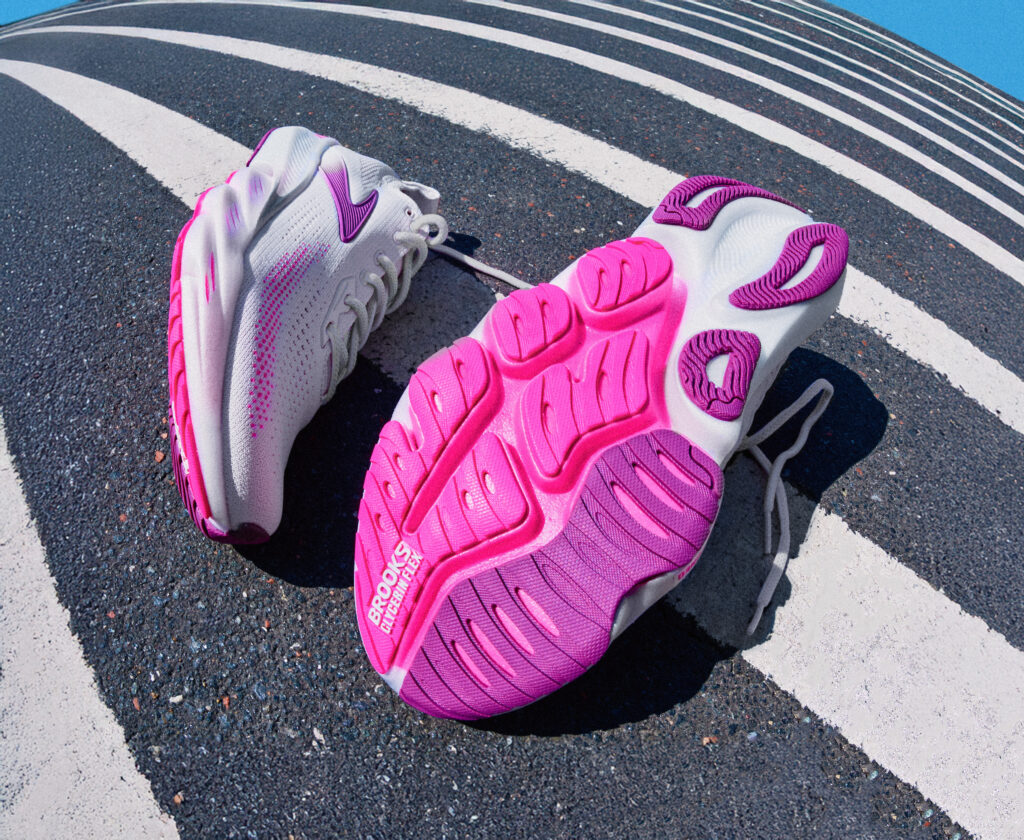
The Glycerin Flex is so bendy, despite all the cushioning, in part due to the unique FlexZone technology. This technology incorporates a large flex groove throughout the midfoot that allows your feet to move naturally as you transition through each stride.
Along with the main groove in the midfoot, the Glycerin Max also incorporates deep flex grooves and a podular design in the forefoot for even more natural movement and freedom during runs.
DNA Tuned Midsole Foam
Brooks took inspiration from barefoot running shoe designs with the Glycerin Flex’s lightweight construction and flexible feel. But that doesn’t mean the shoe sacrifices its plush cushioning and protection underfoot.
The unique segmented midsole is made from DNA Tuned foam, a nitrogen-infused cushioning designed to deliver a balanced feel and smooth, effortless transitions. The foam uses large cells in the heel for maximum plushness, with smaller cells in the forefoot for responsive and energetic toe-offs.
With 36 mm of foam in the heel and 30 mm in the forefoot, the Glycerin Flex is by no means a low cushion shoe. The springy foam provides plenty of shock absorption, and the high stack height means the shoe can easily tackle long runs and daily miles.
High cushion shoes can often lack the responsive landings and smooth heel-to-toe transitions that make a daily trainer more versatile. However, in this shoe, the flexible design and low 6 mm drop work together to promote exceptional stability, groundfeel, and bounce. So if you’re looking for a high cushion shoe that can handle more uptempo days, the Glycerin Flex is a great choice.
Upper Construction and Fit
Flexibility is the main theme in the Glycerin Flex, so you likely won’t be surprised to hear that the upper was also designed to be as airy, breathable, and flexible as possible.
The upper is made from an almost sock-like flat knit material, with lots of ventilation around the foot for max comfort and breathability. Like the midsole, the upper is designed to move naturally with your feet as you walk or run, so you can enjoy full freedom of movement.
Despite the more barefoot-inspired feel, the upper still provides a snug and secure fit around the top of the foot. And while the shoe fits true to size, the toe box is relatively tapered and narrow. The Glycerin Flex isn’t yet available in a wide width, so if you prefer more wiggle room in your forefoot, you may want to consider sizing up.
Overall Geometry and Construction
Geometry plays a key role in giving the Glycerin Flex its signature bendy and natural feel. The Flex grooves and deep segments in the midsole all allow the shoe to bend and move with your feet for ultimate freedom and comfort with each step.
But the Glycerin Flex also incorporates other design choices meant to improve your running experience and create more flexibility and stability in a high cushion shoe.
While Brooks shoes generally have a high heel-to-toe offset, the Glycerin Flex features a low 6 mm offset. This lower drop places your feet in a more natural position, working alongside the flexible midsole to keep you connected to the ground underneath you.
The wide base adds even more stability to the Glycerin Flex. This flared midsole design provides extra confidence and security with each landing, bringing just a touch of support to the flexible and responsive cushioning.
Value and Versatility
The Glycerin Flex is the latest addition to the Brooks Glycerin family. And while the shoe may not be quite as established as other shoes in the Glycerin series, it’s proven itself to be one of the most versatile and lightweight Brooks options out there.
While the Glycerin and Glycerin GTS both provide more plush cushioning, the platforms in these shoes are bulkier and more inflexible, resulting in overall heavier and less adaptable shoes. At only 8 oz for women’s shoes and 9.1 oz for men’s, the Glycerin Flex is significantly lighter and more agile than its more established Glycerin counterparts, so you can easily use it as a daily workhorse shoe for nearly any type of run.
The Glycerin Flex rings up at $169.95, putting it around the average price for a high cushion shoe. But with so much versatility – and a rubber outsole for extra durability – you’ll likely find the Glycerin Flex provides unmatched value for your money.
Road Test Results
Running shoe trends are constantly changing. From minimalist barefoot shoes to maximalist high-cushion shoes, at Marathon Sports we’ve seen it all and closely followed the ebbs and flows in the running shoe world.
With the Glycerin Flex, Brooks seamlessly blended a high stack height with a flexible, barefoot-inspired design to deliver a distinctive underfoot ride. And our review team at Marathon Sports couldn’t wait to lace up this new one-of-a-kind model and take it for a spin.
From the second we slid the Glycerin Flex on our feet, there were a few immediate standout features. The flat knit upper provided a breathable, almost sock-like fit around the foot, offering all the immediate step-in comfort you could want in a cushioned daily trainer. Everything about the shoe – from the soft upper to the springy midsole unit – felt lightweight and flexible.
As we put the Glycerin Flex to the test throughout long runs, relaxed daily miles, and speedy uptempo days, this flexible design really came into play. The FlexZone technology truly helped the shoe move and flex through each stride, driving effortless transitions and maximum freedom of movement throughout the gait cycle.
Like the other members of the Glycerin family, the Glycerin Flex has a high stack of reliable and bouncy DNA Tuned foam that effectively absorbs shock to keep you feeling fresh during runs. However, unlike its counterparts, the Glycerin Flex uses a segmented midsole design to reduce weight, promote natural movement, and help you feel connected to the ground with every step. Paired with the 6 mm drop, this design delivered all the groundfeel and sturdiness we could ask for.
Shoes with high stack heights tend to be more limited when it comes to versatility and adapting to picking up the pace, but our review team found that the Glycerin Flex struck a nice middle ground between comfort and versatility. The lightweight, more minimal design prevented the midsole from feeling too bulky, and the responsive foam helped us effortlessly shift into more uptempo paces during runs.
While the responsive foam and grounded design felt fantastic on daily miles and speed days, some runners may find the shoe too hard underfoot on longer runs. While there’s plenty of DNA Tuned foam underfoot, it doesn’t feel as luxurious and plush underfoot as some of the other high cushion shoes on the market today. If you value those soft landings in a running shoe, you may want to look elsewhere.
Even without the plushness found in lots of other high cushion shoes, our review team was impressed with the Brooks Glycerin Flex. In a running shoe landscape where shoes are getting bulkier and more pillowy-soft, the Glycerin Flex offers a distinct alternative that blends lots of cushioning with a low-profile design for maximum comfort and full range of motion.
Brooks Glycerin Flex: Pros and Cons
New shoe models are always exciting to test out and evaluate. We can go in with a clean slate to fully uncover all the pros and cons the shoe has to offer.
So with the Glycerin Flex, we went in with an open mind to gain the best understanding of where the shoe excels, and the features that could use some work. Here’s what we found:
Pros:
- High stack of DNA Tuned midsole foam provides exceptional impact absorption and comfort during daily miles and long runs
- FlexZone technology uses flex grooves and a unique podular design to maximize flexibility and provide a dynamic underfoot feel
- Lightweight, low-profile design allows the shoe to adapt to all types of runs, from speed days to long recovery runs
- Flat knit upper is soft, airy, and flexible for optimal breathability and comfort around the top of the foot
Cons:
- While the upper is stretchy and accommodating, the toe box is snug and narrow. Those who prefer a roomier fit should consider sizing up
- Natural underfoot feel may result in the shoe feeling too stiff for runners who prefer soft cushioning
The Glycerin Flex vs the Competition: Other Options to Consider
Our review team found a lot to love about the latest flexible, high-cushion shoe from Brooks. The shoe thrives when it comes to daily miles, long runs, and even uptempo days, and we appreciated the stable landings and groundfeel the Glycerin Flex has to offer. But we also know that this type of shoe isn’t for everyone. Luckily, if you’re on the hunt for your next running shoe, there are plenty of other options to consider alongside the Glycerin Flex.
Looking for a more traditional running shoe feel with plenty of plush cushioning? Consider trying another option from the Glycerin family, the Brooks Glycerin 23.
With a high stack of DNA Tuned cushioning and a more moderate 8 mm drop, the Glycerin delivers a more traditional high-cushion plush and protected feel that the Glycerin Flex lacks. While the Glycerin 23 is heavier and less versatile than the Glycerin Flex, runners who prefer lots of protective cushioning underfoot will likely appreciate the soft and stable Glycerin.
And if you want another flexible, cushioned daily training option, consider trying out the Topo Phantom 4. Also inspired by barefoot shoes, the Phantom offers a similarly lightweight, cushioned design that promotes natural foot movement. And with a wide, foot-shaped toe box, the Phantom is a great alternative for runners who need a roomier fit.
Final Thoughts: Is the Glycerin Flex Right for You?
Truthfully, the Glycerin Flex is in a league of its own when it comes to flexibility and versatility. With this new high cushion model, Brooks took steps to make the shoe more natural, flexible, and grounded than any of the other shoes in the Glycerin lineup.
This freedom of movement was much appreciated on all types of runs, and our review team could easily see the Glycerin Flex becoming a go-to option for speed days, long runs, and everything in between. While it isn’t the softest shoe on the market, the high stack of foam paired with the flexible midsole construction makes it a fantastic versatile choice that any type of runner, at any skill and experience level, can enjoy.
However, over years and years of spending our time around running shoes, our Marathon Sports team has learned that every runner is so different when it comes to their running shoe needs and preferences. No single shoe works for every runner and walker, so it’s important to get a personalized fitting and try out all the different running shoe options for yourself.
At Marathon Sports, we’ll walk you through our customized Right Fit process and help narrow down your running shoe options to ensure you find the perfect fit for your needs. Whether it’s the Glycerin Flex or some of the other top brands in running, we’ll get you on the right track with the perfect pair of shoes for you.