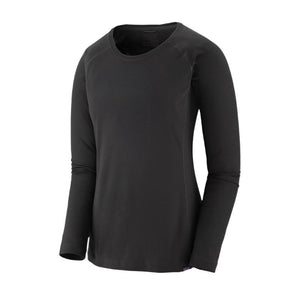
Tracksmith Brighton Base Layer
Women's
Apparel
price:$100.00
Free returns and exchanges for 30 days Return Policy





Shoe and Gear Reviews
Shoe and Gear Reviews

Shoe and Gear Reviews
Shoe and Gear Reviews
The fabric in your running shirt is doing a lot of work every time you head out. Cotton might feel comfortable in the drawer, but it absorbs and holds onto sweat, which means extra weight and friction over longer distances; that is a combination that is best left out of the rotation.
Textiles like polyester and nylon are designed to pull moisture away from your skin and release it quickly, keeping you drier and more comfortable whether you are covering three miles or thirteen.
Fabric weight and construction also affect how a shirt performs in different conditions. Lighter, open-knit fabrics improve airflow on warm days, while denser weaves offer a bit more coverage and warmth when temperatures drop. Learning why running fabric matters before you shop makes it much easier to match what you buy to how and where you actually run.
Choosing between a long sleeve running shirt and a short sleeve comes down to conditions, comfort, and how your body responds to temperature changes as you move. Both have a place in a well-rounded running wardrobe, and knowing when to reach for each one makes every run more enjoyable.
Short sleeves are the go-to for warmer months and high-intensity efforts when your body is generating a lot of heat. They give your skin room to breathe and keep air moving freely, which helps regulate temperature during humid New England summers. If you tend to run warm, a short sleeve will likely be your most-reached-for shirt year-round.
A long sleeve running shirt earns its place when temperatures drop or when you want a little extra coverage on exposed skin. It works well as a standalone layer in cool conditions and fits neatly under a vest or jacket when the weather calls for more layers. Look for thumbholes and flatlock seams to keep things comfortable over longer efforts.
Many runners and walkers keep both options in rotation and let the forecast decide. A short sleeve paired with a light long sleeve gives you flexibility on unpredictable days, which is a common reality in New England. If you want to build out your layering approach, our intro to layering guide is a good place to start.
Women’s running tops are designed with specific construction details that make a real difference in how a shirt moves and feels during activity. Knowing what those details are helps you cut through the options and find something that actually works for how you move:
Women’s-specific running tops are shaped to move with the body rather than against it. Look for a slightly contoured cut through the torso, a hem length that sits comfortably without riding up, and armholes that allow a full range of motion. A top that fits well in motion feels very different from one that fits well standing still.
Details like racerback construction, thumbholes on long sleeves, and reflective elements are not just nice extras. Racerbacks keep straps clear of your shoulders, thumbholes anchor sleeves in place on cold days, and reflective details keep you visible on early mornings or evening runs. These features add up quickly once you are out on the road.
Some women’s running tops include light water resistance or wind protection built into the fabric, which extends their usefulness across more conditions. A top with a bit of weather resistance can stand in for a full jacket on mild days, saving you a layer. Check out our guide on what to wear running in all weather to plan your kit around the forecast.
Technical fabrics like polyester and nylon are the go-to choice. They are lightweight, moisture-wicking, and dry quickly, keeping you comfortable across a range of conditions. Cotton holds onto sweat and should be avoided for runs, hikes, or other outdoor activities.
It should feel comfortable in motion, not just standing still. Look for a cut that does not pull or bunch when your arms are moving, a hem that stays put, and enough room through the shoulders for a full, natural stride.
Absolutely. The same features that make a running shirt perform well on a run, including moisture management, breathability, and a comfortable fit, work just as well for walking. Good technical apparel is for anyone who moves, at any pace.
Fit and fabric are your best tools. A shirt that moves with your body reduces friction, and flatlock seams minimize the contact points that tend to cause irritation over longer outings.
Many people find that having three to five shirts available in their collection gives them enough rotation without constantly waiting on a washing cycle. Having at least one long sleeve and one short sleeve in the mix adds useful flexibility for changing conditions.
Yes. Our running shirts are available online with free standard shipping on U.S. orders over $74.95. We accept returns and exchanges within 30 days. For personalized guidance, visit any of our 32 New England locations for The Right Fit™, our in-store biomechanical fitting experience.
Wash in cold water, skip the fabric softener, and air dry when you can. Fabric softener breaks down moisture-wicking fibers over time, and a hot dryer is harder on technical materials than most people realize.