When browsing running shoes, you’ll come across two main categories: neutral and stability shoes. While neutral shoes promote your natural gait, stability shoes provide additional support and correction for those who overpronate.
In the past, stability was often synonymous with rigidity and bulkiness in running shoes. But Brooks turned stability shoes on their head with its unique Go-To-Support (GTS) system.
Brooks first introduced the GTS system in the original Adrenaline back in 1999. GTS running shoes offer an innovative approach to support. They keep you aligned throughout the gait cycle without a stiff, obtrusive medial post.
Now, 26 iterations later, the Brooks Adrenaline GTS continues to do exactly that. The 26th version isn’t a major redesign. Instead, it refines an already beloved design for a better overall walking, running, or day-to-day experience.
If you want to learn more about the Brooks Adrenaline 26, understand the key differences between the Adrenaline GTS 25 and 26, or determine if this model is right for you, our review team is here to help. In this Brooks Adrenaline GTS 26 review, we’ll dive into all these questions to help you find the best running shoe for your needs.


Brooks Adrenaline GTS 26 Specs and Highlights: A Quick Summary
Looking for a brief rundown on the numbers and tech behind the newest Adrenaline? Here’s everything you need to know.
- Advertised as a moderate cushion stability shoe for everyday miles
- Stack height: 36/26 mm
- 10 mm heel-to-toe drop
- Weight: 10.8 oz (M), 9.6 oz (W)
- Midsole made from DNA Loft v3 cushioning that’s been reformulated for more dynamic toe-offs
- GuideRails support technology reduces excess movement throughout the gait cycle, providing support only when needed
- Engineered air mesh upper conforms to your foot shape and maximizes comfort and breathability around the feet
- New flat knit tongue helps reduce pressure around the top of the foot
- Rubber outsole improves grip and traction during daily mileage
- Available in standard, wide, and extra-wide widths
- Price: $155
A Closer Look at the New Brooks Adrenaline
Specs can give us a good idea of what to expect when sliding a shoe on for the first time. But to get a better understanding of the shoe, we wanted to dive into each feature and element to learn more about how they perform. Keep reading for an in-depth look at the Brooks Adrenaline GTS 26.
Innovative GuideRails Technology
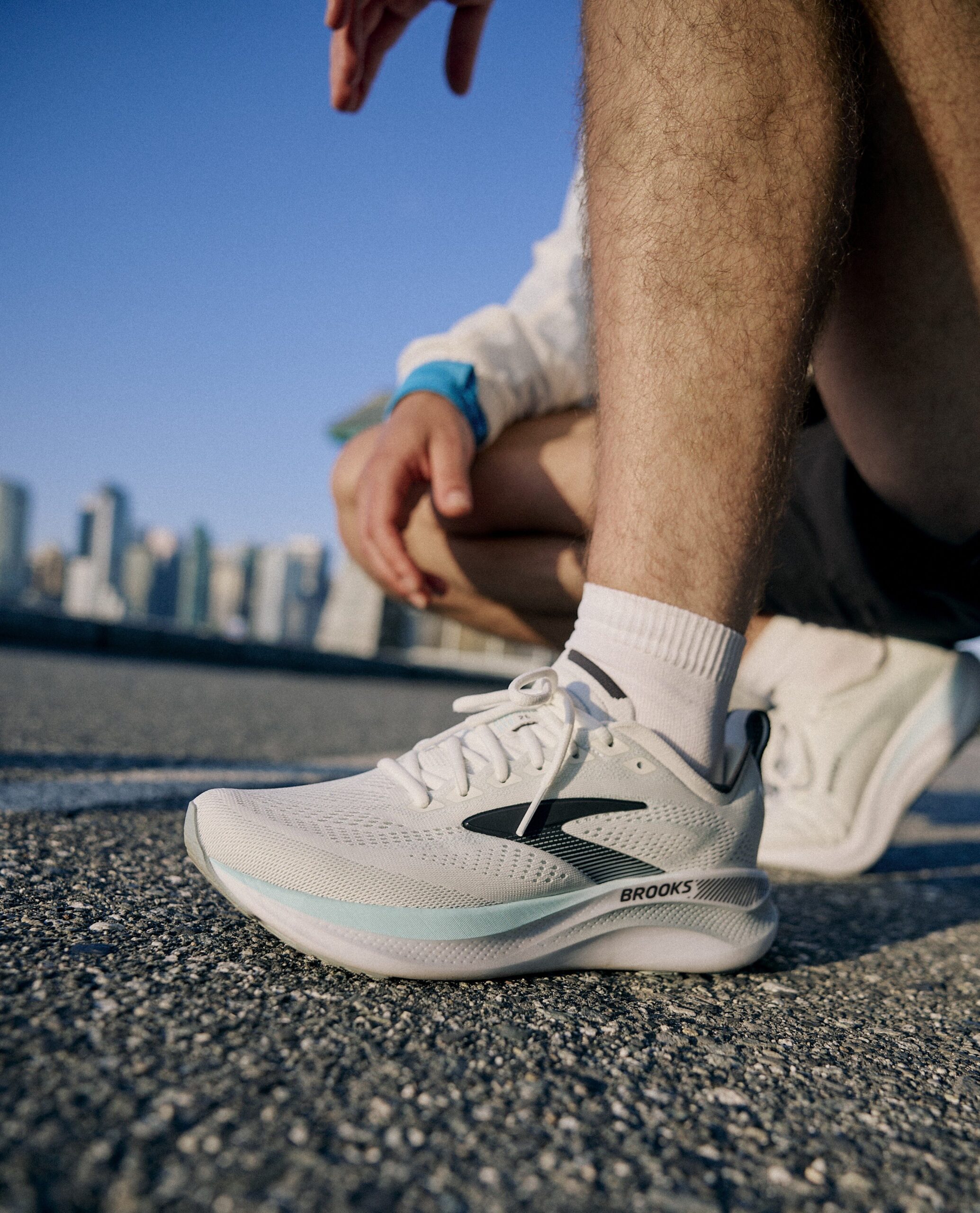
Brooks endorses the Adrenaline as a “Go-To Support” shoe, so it’s crucial that it delivers reliable support that doesn’t sacrifice comfort. Luckily, the Adrenaline GTS 26 delivers with its renowned GuideRail technology support system.
These GuideRails incorporate dense foam on the medial edge and raised foam on the lateral edge. These distinct foam sections act like bowling bumpers, providing support for the heel and arch when needed without overcorrecting or getting in the way of your natural gait.
DNA Loft v3 Midsole Foam
Like its predecessor, the Adrenaline GTS 26’s midsole is composed of DNA Loft v3. This nitrogen-infused cushioning delivers a well-balanced, dependable ride perfect for casual miles and everyday wear.
Brooks did take some steps to improve the shoe’s overall ride with some subtle tweaks to this foam’s formula. It’s more responsive than before, creating more dynamic toe-offs with each stride.
Outside of the re-engineered foam, the midsole is largely the same as the Adrenaline GTS 25’s midsole. The two versions of the shoe have the same stack height – 36 mm in the heel, 26 mm in the forefoot – for a stable, grounded, moderately cushioned ride.
Refined Air Mesh Upper
The Adrenaline’s upper blends structure with flexibility to deliver both comfort and support as you move. The air mesh is light and breathable, and targeted structure helps keep the feet locked in place, even as form starts to falter.
The shoe is moderately cushioned underfoot, but there’s a lot of soft padding throughout the heel and upper. This cushioning provides immediate step-in comfort, as well as added security throughout long runs. The tongue also saw some upgrades. A stretchy, flat knit tongue now wraps the top of the foot, reducing any pressure or hot spots around the laces.
Versatility & Durability
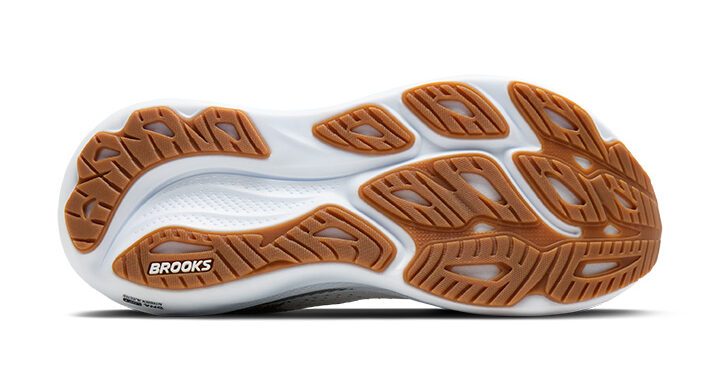
Brooks running shoes have gained a reputation for their durability and dependability, and we’re happy to say that the Adrenaline GTS 26 is no exception. Over 26 iterations, the brand has mastered its long-lasting rubber outsole, so you can enjoy this shoe for all your daily workouts, runs, and walks.
The shoe isn’t the lightest or most energetic on the market, but the reformulated cushioning does add some spring and bounce to each toe-off. Paired with a firmer underfoot ride, the shoe does have some adaptability for more uptempo intervals.
You also won’t be breaking the bank for all this longevity and support. At $155, the Adrenaline is in line with the price point of comparable high-quality moderate cushion trainers.
Road Test Results
Over 26 iterations, our review team has come to appreciate the Adrenaline as one of the most stable, reliable, and consistent running shoes on the market. It’s not reinventing the wheel or breaking records in the modern running world, but for anyone who wants support and structure, you can’t go wrong with the Brooks Adrenaline.

Sliding the shoe on for the first time, the upper upgrades were immediately evident. The air mesh was soft and padded, and the new tongue felt softer and stretchier around the top of the foot. It felt secure, without any immediate pressure points or hot spots standing out.
Even the laces felt more luxurious – the wide, circular laces replaced standard flat laces for more all-around comfort.
The Adrenaline GTS 26 is built for casual, everyday miles, so we did the bulk of our testing during these easy daily runs. And the good news is that this shoe model really excelled during slow, relaxed mileage. As we got tired and form started to falter, the GuideRails provided just enough support without feeling obtrusive or uncomfortable underfoot.
Today, it seems like every running shoe is getting softer, plusher, and more cushioned. But the Adrenaline GTS 26 stays true to its roots, offering a slightly firm, responsive, and stable ride. Runners who prefer a bouncy, spongier feel on long runs shouldn’t expect that from this moderate cushion trainer. If you prefer that softer feel, the Adrenaline will likely feel too stiff.
With that, while we wouldn’t recommend the shoe for maximum protection and softness on long runs, it does lend itself well to some more uptempo or mixed-effort interval runs. The redesigned foam feels slightly more dynamic and springy with each toe off, and the grounded design keeps you feeling stable as you pick up the pace.
Along with testing out the Adrenalines at a variety of different paces and types of runs, we also hit different surfaces to see how the outsole held up across a range of terrains. We were incredibly impressed with the high-coverage rubber outsole and the reliable grip and traction it provided. While we wouldn’t suggest doing technical, uneven trails in the shoe, it can certainly handle gravel, dirt roads, or even light trails.
All around, the shoe feels more structured and traditional than a lot of other running shoes on the market. This is, in part, due to the high 10 mm drop. There’s extra cushioning in the heel, which pads landings and reduces strain in the Achilles, although this high offset may feel unnatural for mid- or forefoot strikers.
Finding the right running shoe depends on a lot of factors, and everyone has different priorities when shopping around. For those who want to maximize stability, support, and dependability, you can’t go wrong with the newest Adrenaline running shoe from Brooks.
Pros and Cons
While the Adrenaline GTS 26 has lots of great features, no shoe is without a few elements that won’t work for everyone. Here’s a summary of the pros and cons we uncovered during our road testing.
Pros
- Brooks made some updates to the DNA Loft v3 midsole foam, creating more energy return as you roll through each stride
- Upper is lighter and more breathable than before, with targeted structure zones to keep your feet secure and locked in place
- New flat knit tongue and plush laces reduce pressure around the top of the feet, especially when feet swell during long runs. More flexibility also creates a more accommodating fit for different foot shapes and sizes
- Well-balanced, moderate cushion midsole design creates stable, firm landings that can adapt to a wide range of runs and distances
Cons
- Stable, grounded feel is ideal for those who prefer a more traditional ride, but it may feel too stiff for those who want more protection during longer runs
- 10 mm drop can feel unnatural for those who don’t heel strike
Similar Running Shoes: How Does the Adrenaline GTS 26 Stack Up?
There are a lot of daily training options out there, so we always recommend testing out different models to find what works best for your needs. Stability shoes have also come a long way in recent years, and more and more brands are offering lightweight stability trainers with mild, non-obtrusive support. So if you’re wondering which shoe is right for you, there are a few comparable options that might also be worth trying out.
First, if you like the GuideRail’s subtle support but want a bit more softness, check out the Brooks Glycerin GTS 23. This higher cushion Brooks running shoe delivers the same holistic support as the Adrenaline, but with a higher stack of DNA Tuned foam underfoot for more plushness and protection during longer miles.
Outside of Brooks, you might want to consider the Asics GT-2000 15. Like the Adrenaline, the GT-2000 offers mild overpronation support, so you can feel stable without an overly rigid arch. At 8.8 oz for men’s shoes and 7.8 for women’s, the GT-2000 is the lighter option between the two shoes, so while the Brooks is more structured and heavy-duty, you’ll likely find the Asics a bit more speedy and versatile.
During our road testing, we also found ourselves drawing some comparisons between the Adrenaline GTS and the Nike Structure. Along with both being on their 26th iteration, both shoes feature a 10 mm heel-to-toe offset, supportive midsole design, and firmer ride.
The Nike has a touch more cushioning all-around – 38 mm in the heel, 28 mm in the forefoot – as well as a more pronounced rocker compared to the Adrenaline. As a result, transitions from the heel-to-toe may feel a bit more natural. But overall, both the Adrenaline and Structure deliver unmatched support and stability, ideal for everyday miles.
The Finish Line: Final Thoughts on the Brooks Adrenaline GTS 26
It’s hard to find a shoe with as many loyal fans as the Adrenaline GTS 26. From casual walkers who want a grounded feel to beginner runners to experienced athletes prioritizing support and stability, nearly everyone can find something to love with this dependable everyday trainer.
The 26th version of these supportive Brooks shoes shares many similarities with its predecessors. Many well-established features are back, including the DNA Loft v3 foam, high drop construction, and GuideRail technologies. There are also some upgrades that, throughout our road testing, improved the overall walking and running experience, such as the reformulated foam and enhanced upper.
Whether you’re set on the Adrenaline GTS or need a gait analysis to determine the best type of shoe for you, our Marathon Sports team is here to help. Swing by your nearest store today for a customized fitting, and walk out with the perfect shoe to keep you walking, running, and moving in comfort.