
Whether you’re an experienced runner with multiple 10Ks, half-marathons, or marathons under your belt or want to start running and get into a routine, it’s common to wonder about the right gear to optimize performance. That’s especially true when new updates to clothes, shoes, and accessories are always hitting the market.
After all, you don’t want to underperform because your clothes are too warm on a hot summer day or if your shoes aren’t built to support your natural stride. So, what should you wear while running?
This guide will help prepare you with all the attire you need to level up your running performance. Stick around for all the details to ensure a great experience no matter where you live or what conditions you’re training in.
Start with a Good Base Wearing Moisture Wicking Tops and Bottoms
When picking out running apparel, moisture-wicking shirts and shorts/pants are an excellent place to start.
Moisture-wicking clothes are a good idea because of a process called thermoregulation when you exercise.
Your body wants to maintain a stable internal temperature. However, when you run or participate in other physical exercises, your body heats up and tries to remove that heat by making you sweat. This process causes water loss and adds fatigue over time.
A lot of research has been done on how to cool your body during exercise for less fatigue and better performance. Researchers have tried cooling solutions like ice vests and neck coolers. However, those are often bulky and uncomfortable, hurting performance in other ways.
Over time, more data shows that a better solution is light, moisture-wicking clothes that keep you cool and comfortable. Moisture-wicking clothes help ventilate and move sweat off your skin to prevent further overheating, which reduces overall fatigue. Combining that with proper hydration will prime you for great running performance.
How to Pick the Right Moisture-Wicking Tops
When looking at moisture-wicking tops, you’ll want to choose between a shirt (short-sleeve or long-sleeve) or a tank top.
Many runners prefer tank tops in warmer conditions since they’ll keep you a bit cooler. However, your shoulders will be exposed, which could make you more susceptible to sunburn in this sensitive area, so make sure you put on sunscreen. Otherwise, you could wear a T-shirt that keeps your shoulders covered.
When it’s a bit cooler outside, you can opt for a moisture-wicking long-sleeve shirt that’ll keep you warmer initially while still helping regulate your body temperature as you heat up while running.
In general, choosing a looser or tighter-fitting shirt depends on personal preference. However, many experienced runners prefer their shirts a little tighter, especially when trying to wick moisture or regulate body temperature.
How to Choose the Right Moisture-Wicking Bottoms
When looking at running bottoms, most runners opt for lightweight shorts during the summer. The length of the shorts depends on personal preference. Longer shorts provide more coverage for less direct sunlight on the skin, whereas shorter lengths allow for a better range of motion during your running stride.
As the weather gets cooler, switching to moisture-wicking pants or tights is a good idea. Most runners prefer their pants a little tighter, which helps keep their stride natural. That said, choose a fit that’s most comfortable for you.

Choose the Right Footwear for Comfort and Support
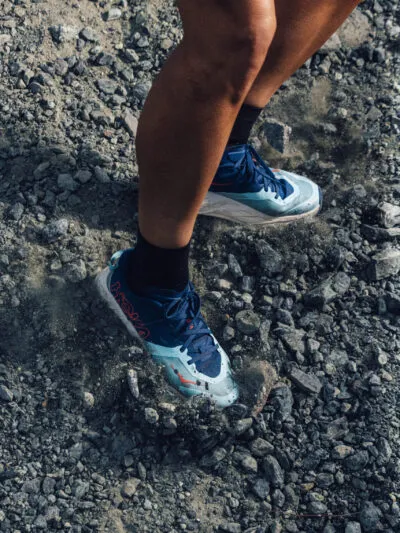
Your running shoes are one of the most crucial aspects to consider when starting a running routine. After all, your feet constantly contact the ground, so your shoes must be comfortable and support a healthy running stride.
Everyone has different feet with varying natural running strides, which is why many types of shoes are on the market to satisfy individual needs.
When selecting the right shoes for your needs, consider size, width, amount of cushioning, support, and offset. For instance, some people’s feet tend to overpronate (roll inward) when they run. In that case, you might need stability or motion-control running shoes that provide more support and help prevent injury.
A professional gait analysis is often a good place to start to determine the correct type of running shoe for your build, foot type, and stride. When you stop in at one of our retail locations at Marathon Sports, one of our footwear specialists can help with this.
Importance of Replacing Worn Running Shoes
Along with choosing the right shoes for your foot type and gait, it’s also important to replace them if they’re getting worn out.
Research has shown that as shoes wear more, their cushioning and support can degrade, causing runners to modify their stride to counteract this. Adjusting the amount of forward lean or plantar flexion due to worn shoes causes joint stress that could lead to injury.
Selecting the Right Socks for Running
Something that often goes overlooked with footwear is your running socks. A good pair of technical running socks can enhance protection, comfort, and overall performance.
Like moisture-wicking shirts and pants, running socks also provide extra ventilation for temperature and sweat control.
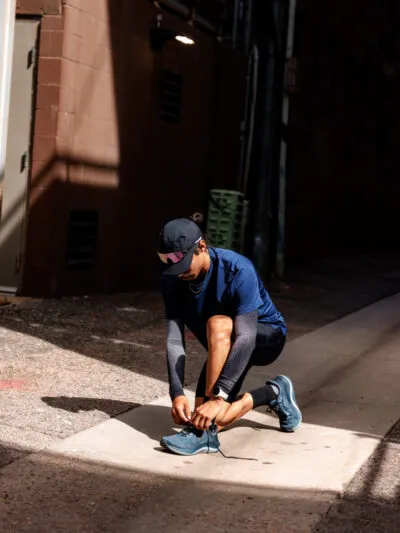
Plus, if you choose quality socks that fit well and don’t move around between your feet and shoes, they’ll prevent annoying blisters that could otherwise build up while running and deter your progress.
Choose the Right Outer Layers as the Weather Changes
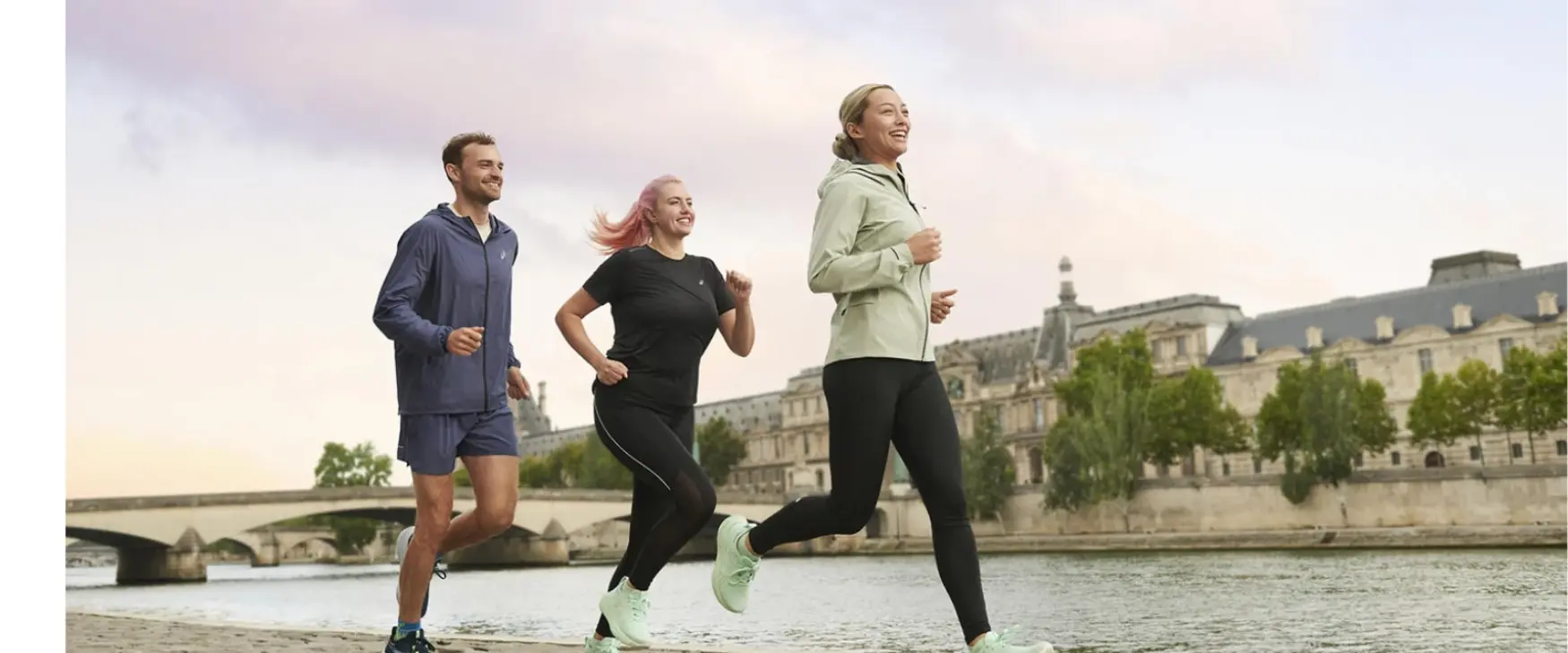
Even when it gets colder or rains, you don’t have to stop running outdoors. Adding a running jacket or hoodie can keep you warm and comfortable during cooler months or dry in rainy conditions.
When looking for a running jacket or hoodie, ensure it’s light and not overly bulky. A bulky winter jacket will inhibit a natural running stride, hurting performance.
Next, ensure the jacket or hoodie you choose protects you from the elements. A hoodie is a great choice to keep you warm on a cool fall or early spring day. However, a weatherproof jacket will be the better choice when there’s wind, rain, or snow.
Most running jackets are weatherproof in the front and breathable in the back, letting moisture escape to help maintain a stable core temperature.
Lastly, if you live in a colder region, consider looking for a thermo running jacket with extra insulation.

Accessories for Different Weather Conditions
Just like jackets and hoodies can help you still get a great run in challenging weather conditions, some additional accessories can also help. Some top accessories to consider are:
- Running hat: When it’s sunny, a baseball cap with a brim can help keep the light out of your eyes and the hot sun off your face. Additionally, a winter hat that covers your ears will come in handy when it’s colder. It’s a good idea to buy hats designed for running since they’re lighter and have extra ventilation to release moisture.
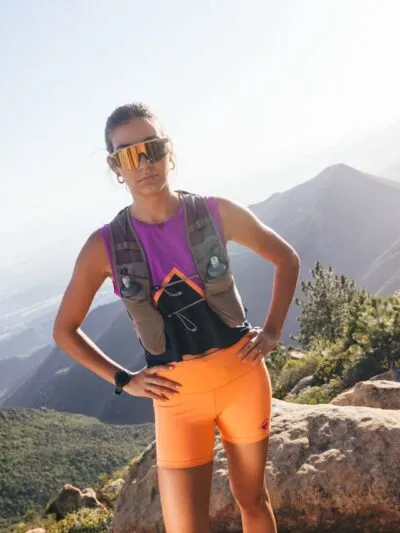
- Sunglasses: If a hat isn’t quite doing the trick to keep the sun out of your eyes, a great pair of sunglasses can help. That said, avoid wearing just any old pair of sunglasses. Ones that are too loose or don’t fit your head right will move around as you run and get annoying, so investing in a pair that fits well is worthwhile.
- Gloves: During cold weather, ensure your hands are warm and covered. Look for light gloves that still provide good insulation for the best results.
Wearable Technology to Track Your Performance and Stay Safe
While some running trails have mile markers to help you track distance and measure your progress, not everywhere you go will. Plus, keeping track of everything on your own can be a hassle, so having technology that does it for you is an added bonus.
You can download an app on your phone that tracks running distance, but it can be a bit annoying since you have to stop running or fumble around trying to grab the phone out of your pocket on the go to see if you’ve met your target mileage yet.
Therefore, a better solution is investing in a convenient running watch where you can just look down at your wrist for the information.
If you’re looking for a good brand, Garmin is a reliable choice for accurate GPS functionality and features to help you stay on top of your progress. Most can even help you track more than just distance, including your heart rate, respiration rate, hydration, and more.
Most Garmin running watches also have safety features like incident detection in case you get injured or are in an accident. You can even equip it with emergency contacts from your phone to contact someone if you need help.
Get All the Running Apparel You Need at Marathon Sports
When you need the right gear to optimize running performance, Marathon Sports has you covered. We carry all the running apparel mentioned in this article from the top brands in the industry.
Whether you stop in at one of our retail locations in Connecticut, Massachusetts, Rhode Island, and New Hampshire or buy through our convenient online store, we can be your first and only stop as you gear up for a new running routine.