
Running is one of the most comprehensive and all-encompassing workouts you can do. On just a short run, you’re engaging nearly every part of your body, from your feet to your core to your shoulders and everything in between.
While running may engage all these muscles, countless runners skip the strength training and workouts needed to strengthen the whole body and help you improve your runs.
At Marathon Sports, we understand the temptation to avoid the gym or weight room and stick to pounding the pavement on runs for your workouts. Running is fun and accessible, and switching up your typical routine to add another form of training can feel inconvenient and unnecessary.
But the truth is, if you’re skipping strength training in your running routine, you may actually be hurting your health and running performance. Strength training, also referred to as weight training or resistance training, is crucial for runners looking to optimize their performance on runs and prevent injuries throughout training.
If you’re wondering why strength training is so important, how runners should incorporate it into their routines, and what exercises are best for runners, this guide is for you. Keep reading for the ultimate guide to everything runners need to know about strength training.
What Exactly is Strength Training for Runners?

When you hear the term strength training, you may picture gym rats consistently at the gym lifting heavy dumbbells. But for anyone whose primary workout is running, strength training can look very different.
Running uses a combination of muscles to propel you forward and maintain proper running form. Your legs push you forward and absorb shock with each step, your core keeps you aligned and in the most efficient running position, and your shoulders and arms swing back and forth to propel you forward.
Strength training for runners is geared around strengthening specific muscles used for running and building a foundation that improves power, endurance, and efficiency on tough runs.
While this strength training can sometimes involve gym equipment such as barbells, many exercises can be performed with just a pair of dumbbells, a resistance band, or even your own body weight.
What are the Benefits of Strength Training?
If you’re already set in a running routine, you may be hesitant to break up your schedule and add a new form of exercise to your training plan. But even adding just one to two sessions a week of strength training can have some major benefits when it comes to your running performance and health.
Here are a few benefits to consider when you’re debating if strength training is really worth your time.
Prevent Common Running-Related Injuries
Runner-specific strength training can result in major benefits related to coordination, stability, running posture, and functional strength, all of which are crucial when it comes to preventing running injuries.
Muscles play a key role in keeping your body aligned and preventing overpronation and other improper alignment. Building leg and core strength will help keep your body better aligned on runs, which in turn will reduce stress on joints and bones with every stride.
Strong muscles also play a crucial role in absorbing shock. Running is a high-impact activity, and over 80% of runners have experienced some form of running-related injuries. Consistent strength training can reduce this risk of injury by building muscles that limit the impact on your joints throughout runs.
Improve Endurance and Running Performance
Whether you’re a beginner runner looking to build endurance or an advanced runner looking to shave time off a PR, strength training has some proven performance-related benefits that can help you reach your running goals.
Stronger, more powerful muscles will require you to expend less energy on runs and keep you moving forward with less fatigue and soreness. Along with helping you run faster, strength training has been shown to improve your aerobic capacity and build endurance for longer runs.
See Overall Health Benefits
While strength training has plenty of benefits specifically for runners, there are also plenty of health benefits that overlap with everyday life.
Strength and resistance training has been shown to improve cardiovascular health, reduce blood pressure, and even promote bone development and overall skeletal health.
Improve Running Economy and Efficiency
Being an economical and efficient runner means you can preserve your energy and use less oxygen as you reach certain speeds or distances on a run. As a result of improved running economy, runners can run farther and faster with less fatigue and exhaustion.
Research shows that strength training is a fantastic way to become a more economical runner and, as a result, build your speed and endurance. Building strength will drive improvements in running cadence, coordination, running posture, and more, so you can focus on building endurance and optimizing your performance.
No matter how long you’ve been running or what your running goals are, strength training is so important to incorporate into your routine. With the right strength program, you can reach your running goals and become a stronger, faster, more efficient runner.
The Best Strength Training Exercises for Runners
Now you know why strength training is worth adding to your running routine. But what exactly does that look like, and what exercises should you be doing?
One of the best aspects of running is how simple and innate it is. You don’t need any fancy or complicated equipment – all you need to do is lace up your shoes and go for a run.
The good news is that strength training can be just as simple. Plenty of the best exercises for runners involve using your own body weight or just a pair of dumbbells. While the gym will have all the equipment you need, most strength training workouts can be done from the comfort of home.
If you’re not sure where to start with strength training exercises, we’ve got your back. Here are 6 of the best strength training exercises to try to improve your running performance.
Squats
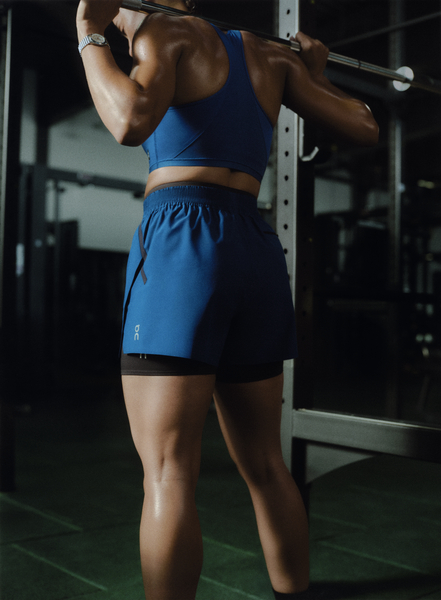
Your leg muscles take the brunt of the impact as you run, so your strength training should often focus on building these lower body muscles. One of the best exercises to target all these areas is a squat. Here’s how you properly complete this exercise:
- Stand with your feet hip-width apart.
- Hinge at the hips and knees and lower your hips towards the ground as if you were about to sit in a chair. Keep your arms out in front of you and focus on keeping your back straight and core engaged.
- Continue to lower your body down until your knees are bent to a 90-degree angle and thighs are parallel with the ground.
- Keeping your heels planted firmly on the ground, push yourself back up to a standing position.
- Repeat this movement as many times as desired, typically 15-30 times for strength training.
- For a greater challenge, you can add a barbell on your shoulders to build even more muscle mass and work your back, shoulders, and core.
Walking Lunges
Walking lunges are another great way to build strength in your glutes, hamstrings, quads, and hips. This dynamic exercise can be done either with just your body weight or with dumbbells for an extra challenge.
- Stand with your feet hip-width apart. Make sure you have at least a few yards of empty space in front of you.
- Take a large step forward with your right foot. Making sure your torso is upright and core is engaged, slowly bend both knees and lower your back left knee towards the ground. If you’re using dumbbells, keep your arms by your side holding the weights. If not, you can keep your arms by your side or hands on your hips for stability.
- Lower your body until both knees are at a 90 degree ankle and the left knee is slightly above the ground.
- Press through your right heel and keep the right foot firmly planted on the ground as you lift the left leg and swing it forward. Take a large step forward with the left foot and repeat this movement on the other side.
- Continue these alternating lunges for the desired distance.
Step-ups
Just like walking lunges, step-ups can be completed with your own body weight or with dumbbells for a more challenging workout. This exercise offers a comprehensive workout, strengthening everything from the calves to hamstrings to core.
- Stand with your feet hip-width apart in front of a sturdy elevated surface. This surface can range in height depending on your comfort level. Beginners may want to use a stack of mats, step stool, or smaller plyometric box, while advanced athletes can use weightlifting benches or a larger plyometric box.
- Stand with your back straight and arms at your side. If you’re using a dumbbell, make sure to keep your arm muscles engaged with each step.
- Place your right foot on the box and step up, straightening the right leg and bringing the left foot up to the step. As you straighten the right leg, keep all your weight on the right foot and the left elevated above the bench.
- Take a step back onto the floor with your left foot and bring the right leg back down to meet it on the floor.
- Repeat this rep an even amount of times on each side.
Planks
This next exercise is perfect for building the core and back muscles needed to maintain good posture and form on runs. And the best part is you don’t need any specialized weights or equipment. Here’s how to do a plank:
- Lie face-down on a mat or the floor.
- Placing your elbows directly under your shoulders and arms parallel to one another, lift your body weight up onto your elbows and toes.
- Make sure to squeeze your glute muscles and keep your core engaged. You should focus on keeping your muscles braced and your body in a straight line.
- Hold for 30 seconds to a minute.
Another great aspect of planks is how many variations you can do. Beginners can modify the exercise and keep their knees on the ground. Once you master the plank, you can add side planks, straight-arm planks, and shoulder-tap planks to your routine to work different muscle groups.
Glute Bridges
Glute muscles are crucial when it comes to running. They’re responsible for stabilizing lower body muscles and keeping you aligned. That’s why you won’t want to skip out on glute activating and strengthening exercises such as glute bridges.
- Lie on your back on a mat or the floor and place your arms by your side with palms down on the floor.
- Bend your knees so the soles of your feet are on the floor, about shoulder-width apart.
- Slowly raise your hips up until you form a straight line from your shoulders to your knees. As you lift, make sure you’re squeezing your core and glutes and keeping your back straight.
- Once you reach the top of this bridge, continue squeezing your core and hold this position for 10-20 seconds.
- Slowly lower your hips back down to the floor. Repeat as many times as desired.
Glute bridges also have a huge number of variations to up the challenge or work different muscles, including weighted bridges, single-leg bridges, and banded bridges.
Tricep Dips
Targeting the lower body muscles used for running is so important for running-specific strength training. But you also don’t want to make the mistake of forgetting about your upper body. Strengthening your arm muscles, shoulders, and back can help you maintain proper running form and propel you forward on runs so you can be faster and more efficient.
One way to work these upper body muscles is with some tricep dips. Here’s how you complete this exercise:
- Find a sturdy chair or weight-lifting bench. Sit on the edge of the bench and place your palms down on the bench, around shoulder-width apart.
- Walk your legs out in front of you and fully extend them, lifting yourself off the bench and placing your weight on your hands and heels.
- Keeping your legs straight out in front of you, slowly hinge at the elbows and lower your body towards the ground.
- Lower yourself down until your arms are at around a 90-degree angle.
- Hold for a few seconds, and then slowly raise yourself back up and straighten out your elbows. Be sure to avoid completely locking your arms at the top of the repetition.
- Repeat as many times as desired.
Strength Training: Frequently Asked Questions
If you’re new to strength training, you likely have a lot of questions about what it looks like to actually incorporate strengthening into your schedule. Here are the answers to some frequently asked questions to help you make these changes to your running routine.
How Often Should I Strength Train?
Most running experts suggest that runners should be doing strength training 2-3 times a week. However, how often you strength train truly comes down to your individual needs, preferences, and abilities.
We know at Marathon sports that every running journey is unique and every person has their own individual goals. We also know that schedules can get busy, and it’s not always easy to fit two full strength sessions into a hectic week.
If necessary, start out with a quick and simple 20-minute at-home session once a week. While 2-3 sessions may be ideal, adding any strengthening can go a long way in reducing injuries and improving performance.
When Should I Complete My Strength Training Sessions?
When you complete your strength training sessions is entirely dependent on your individual goals and preferences. While the most important factor is just getting a strength training session on your schedule, there are some key considerations when it comes to timing.
Athletes who aren’t training for any races and are primarily focused on strengthening and building muscles will likely get the most out of their workout if they complete strength training before cardio.
However, runners who want to enhance their running performance with some strength training will see the most benefits if they complete a strength training session after a run. Research shows that running directly after a strength workout, in the same training session, may actually limit the positive benefits of strength training for runners.
If optimizing your running performance is your priority, you should consider adding in strength training post-run. If you have a long run or difficult workout planned, you don’t want to be dealing with fatigue and soreness from a pre-run strength workout. Typically, you’ll see the best results if you run first, take a few hours to recover, and then complete your strength training session.
You also want to make sure that you’re still taking time off to rest and recover from both running and strength training. Strength training on your rest days can leave your body feeling fatigued and prevent you from fully recovering from runs. Try to combine running and strength training days to ensure you still get plenty of recovery time.
How Difficult Should Strength Training Be?
Once again, this answer comes down to your own individual goals. If you’re between races and want to focus on building muscle, you should prioritize slowly and safely adding weights and increasing the exercise difficulty throughout your sessions.
For most runners, strength training should be challenging but achievable. If you’re using weights or resistance, you should be able to complete your desired amount of reps while maintaining proper form and keeping your muscles engaged. Weights, amount of reps, and workout frequency will look different for everyone, so find a routine that works for you and focus on consistency and proper form.
You also don’t have to add heavy weights or sign up for a gym to effectively strength train as a runner. There are plenty of bodyweight exercises you can incorporate at home after a run that will be just as effective and beneficial.
Incorporate Strength Training into Your Routine
For runners, strength training often looks completely different than it does for body builders and avid gym-goers who use heavy weights and lots of gym equipment. Running-specific strength training is a great tool that can enhance your running performance, prevent overuse injuries, and help you become the best runner you can be.
With this guide, we’ve highlighted why strength training for runners is so important, what exercises you should try, and answered some common questions about strength training sessions. Now that you know what this strength training for runners looks like, you’re ready to try it out for yourself.
And don’t worry if you still have questions about strength training for runners. Our running and footwear experts at Marathon Sports are here to guide you every step of the way. Whether you have questions for experienced athletes or need to pick up some workout shoes and apparel, the dedicated team at your local Marathon Sports is here to help.
Armed with the right gear and knowledge about strength training, you’ll have everything you need to reach your goals and have a fun and healthy running journey!