A good pair of running shoes is the most essential piece of equipment for any runner. From beginner runners tackling laps around their neighborhood to elite athletes taking on long-distance races, everyone needs a pair of shoes that works for their individual needs and running goals.
Running should be fun and simple – it’s one of the best parts of the sport. But unfortunately, finding the right running shoe isn’t always so easy.
Choosing the perfect shoe for you can feel overwhelming. There are so many options out there, and the choices are constantly growing. When shopping for shoes, you’ll likely come across countless unfamiliar terms and running shoe technologies. So how do you narrow it down and find what will work best for you?
Our team at Marathon Sports is here to help. Throughout this guide on how to find the right running shoes, we’ll attempt to simplify the process. We’ll cover all the features to consider when trying on running shoes and answer some frequently asked running shoe questions. By the end of this complete guide to running shoes, we hope you’ll have a better understanding of what might work for you and all your running needs.
Top Running Shoe Features
Drop, stack height, foam, stability. These are all terms you’ll likely come across when browsing running shoes online. But what do they actually mean?
Keep reading for an in-depth look at running shoe features that may play a role in choosing the right running shoe.
Stack Height
Stack height refers to the amount of cushioning between your feet and the ground when you put on a running shoe. Typically, this includes the total combined amount of material between the outsole, midsole, and insole.
Stack height is measured in millimeters and can range from barefoot-inspired and minimal (0-25 mm stack height) to max cushioned shoes (40+ mm).
Minimal stack height shoes, for example the Topo Fly-Lite or Altra Escalante, keep your feel closer to the ground throughout runs or walks. Low-stack-height, or low cushion, shoes tend to feel more stable, offering more ground feel and connection underfoot.
On the other hand, max cushion shoes like the Hoka Bondi focus more on delivering plush cushioning and maximum shock absorption underfoot. There’s more immediate step-in comfort and protection throughout the course of a run. With that, you can usually expect less sturdiness and ground feel in these higher stack shoes.
And if you’re looking for something in between, a moderate cushion shoe offers protection and shock absorption while keeping the shoe lightweight and your feet a little closer to the ground.


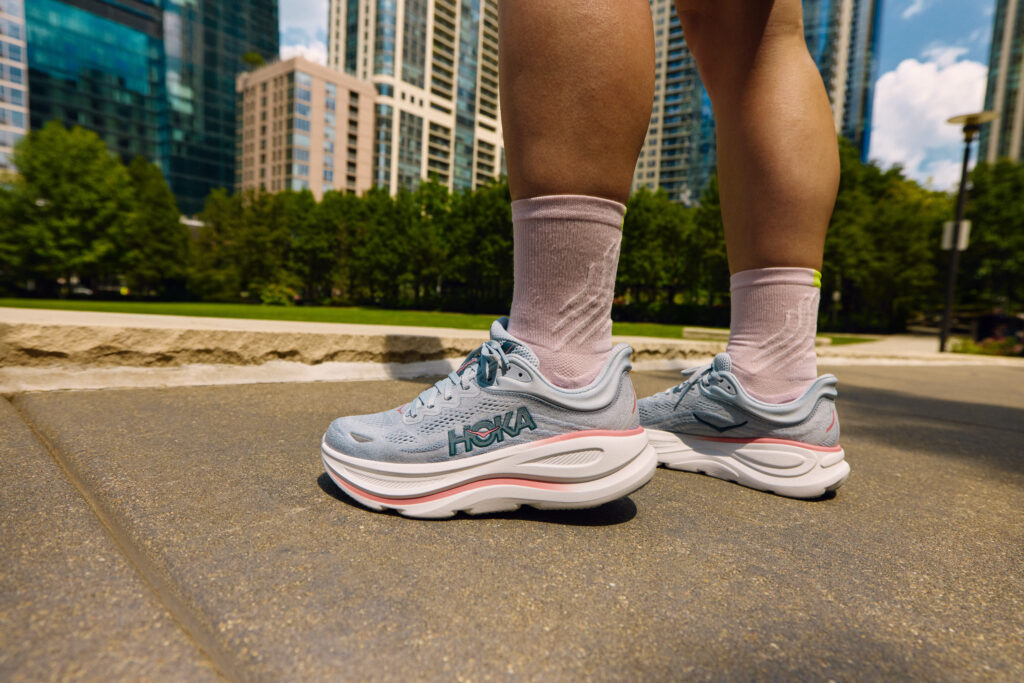
While deciding what stack height and cushion level is right for you, the choice ultimately comes down to your preferences and what you’ll be doing in the shoe. If you prioritize soft, plush landings or are looking for a shoe that will keep your legs and feet protected during long runs or recovery runs, you’ll likely want something in the moderate-to-high stack range.
On the other hand, some runners prefer feeling the ground under their feet or want a more balanced shoe that can handle gym workouts, more uptempo paces, and more. If that sounds like you, a lower stack height might be the better option.
Type of Cushioning
While stack height determines how much material is underfoot, the type of cushioning plays a major role in determining how the shoe actually feels and performs during runs or workouts.
Here’s a quick rundown of some running shoe foams to know:
- EVA Foam: One of the most common midsole foams, often found in traditional daily training shoes. Tends to be soft, reliable, and durable, but can lack bounce and energy return.
- TPU Foam: A soft, durable foam with more responsiveness than traditional EVA foam. It’s lighter than EVA foam, but not quite as light or bouncy as super shoe foams.
- PEBA Foam: A premium, lightweight foam commonly used in elite racing super shoes. It’s less durable than other foams, but delivers a light, ultra-responsive, bouncy ride ideal for faster efforts
These are three of the most prevalent foams in running shoes, although every brand takes its own approach to cushioning to deliver a distinct feel. Some brands will use a blend of foams, while others will rely on a subset of these foams (such as TPEE or ATPU, two TPU subsets) to deliver the desired ride and energy return.
You’ll also see running shoe foams referred to as “supercritical”. This means that a standard polymer foam, such as EVA, TPU, or PEBA, was infused with nitrogen or carbon dioxide during the manufacturing process.
Supercritical foams offer more energy return and a lightweight, airy feel. Incorporating supercritical foam can make a traditional running shoe feel more dynamic, bouncy, and energetic with every step.
Like stack height, the right cushioning for you depends on your preferences and current training needs. Anyone searching for a daily trainer for everyday miles will likely want a more durable, dependable foam like EVA or TPU, while those looking for a dedicated race shoe will lean towards a springy, more responsive PEBA or ATPU foam.
And while most brands use some combination of these types of cushion, don’t expect shoes from different brands in the same category to feel identical. Every shoe takes a distinct approach to cushioning, using its own blends and formula to provide a comfortable ride.
Drop
Drop, or heel-to-toe offset, refers to the difference in the amount of foam in the heel and toe of a shoe. For example, if a running shoe has a stack height of 38/30 mm, it has an 8 mm heel-to-toe drop.
This running shoe feature is something that most athletes won’t have to pay attention to, and many won’t even notice in their running shoes. However, if you’re dealing with some injuries or are looking for a shoe that works with a specific running gait, it’s a feature you may want to consider.
Here’s a rundown of what you can expect from different types of heel-to-toe offsets.
Zero Drop Shoes
Zero drop shoes mean the heel and forefoot are completely level. Many zero drop shoes are barefoot-inspired, pairing the zero drop design with a low stack height to deliver a stable, grounded feel. However, higher cushion shoes such as the Altra Torin can also be zero drop.
There are some important benefits to zero drop shoes. They can help strengthen foot muscles, improve ground feel and balance, and promote natural alignment.
However, zero drop shoes aren’t for everyone. This balanced design places more strain on the calf and Achilles throughout the stride, shifting the workload from the knees and hips to the lower leg. If you have a history of lower leg injuries, or tend to land on your heels, a zero drop shoe may not provide enough protection.
Low Drop Shoes (1-4 mm)
If you like the idea of a zero drop shoe but don’t want to jump in all at once, you might want to try a low drop shoe.
Shoes with a drop of 4 mm and below still help build foot strength and promote natural strides. While your feet aren’t completely level, this low drop still helps you feel connected to the ground.
The benefit here is that, if you’re coming from a higher drop shoe, these don’t have as much of an adjustment period and can help strengthen your feet and lower legs with less strain.
Moderate Drop Shoes (5-8 mm)
Moderate drop shoes make up the bulk of running shoes on the market today. The slightly raised rearfoot delivers cushioned heel landings without feeling uncomfortable or unnatural for mid- or forefoot strikers.
Everyone is different, but for many beginner runners, a 5-8 mm offset is generally a good starting point. It doesn’t shift the strain or workload too far in either direction so you can enjoy natural landings and balanced impact throughout each stride.
High Drop Shoes (9 mm and above)
Many shoe brands tend to be moving away from high 9+ mm offsets and shifting towards more natural, moderate drops. Even models with a 12 mm drop historically, such as the Mizuno Wave Rider, seem to be shifting towards a mid-range 8 mm drop to promote more natural strides.
With that, you likely won’t see too many running shoes in that range. But that’s not to say there aren’t good options out there in that category.
High drop shoes are ideal for anyone looking to relieve some strain in their shins, calves, or Achilles. It won’t strengthen the lower legs over time in the same way a low drop will, but if you’ve been dealing with some consistent pain in these areas, a high drop shoe could provide some short-term relief. Anyone who heel strikes will also likely appreciate the extra cushioning in the rearfoot.
In general, the running shoe offset that works for you will likely depend on your preferences, past injuries, and running style.
Neutral vs Stability
Most running shoes fall into two categories – neutral and stability shoes.
Neutral shoes are designed for runners and walkers with a neutral gait, meaning their arches don’t roll inward excessively. As neutral runners roll through their stride, the pressure moves evenly inward from the outer edge, pushing off through the forefoot and big toe.
Neutral shoes allow your feet to move naturally, without changing your gait or alignment. There are no added corrective stability elements, resulting in a shoe that tends to feel softer and more flexible.
Overpronation results when the foot rolls inward excessively throughout the gait cycle. The arches and ankles collapse, placing more pressure on the inside edge of the feet. This misalignment can lead to pain and discomfort throughout the entire body, starting in the feet and going up through the knees, hips, and backs.
Stability shoes are designed to keep you in a more neutral alignment to combat these issues, especially during repetitive movements such as running and walking. Every brand has its own individual approach to stability, ranging from subtle guiderails to firm, more prominent medial support.


So how do you know how much support you need in your running shoes?
The easiest way is to stop by a local running store for a gait analysis. Our experienced Marathon Sports team will watch you walk and run to determine your support needs and point you in the right direction.
There’s also a way you can learn more about your gait at home. Flip your favorite pair of running or walking shoes over and examine the wear pattern. If the wear is primarily on the inside edge of the shoe, you may need more support. If the wear pattern is in the middle or outside of the shoe, you likely have a neutral gait or are supinating – landing on the outside edge of the foot – while running.
Terrain
Another question to ask yourself when browsing running shoes is where most of your running takes place. There are a few running shoe categories, and the best choice for you depends on your preferred terrain on walks or runs.
- Road running shoes are ideal for anyone who sticks to paved paths and roads on their runs. While they have an outsole for grip and durability, the outsole tends to be smoother and flatter for maximum comfort on hard surfaces.
- All-terrain shoes excel across multi-terrain runs, gravel roads, or packed dirt trails. These shoes generally have minimal lugs that provide some off-road grip without feeling too aggressive.
- Trail running shoes are for runners drawn to rough and rugged terrain. More aggressive lugs deliver superior grip on slippery, uneven terrain, and durable uppers protect your feet from debris. Trail shoes work best for hikers or anyone who does most of their running on uneven, technical surfaces.


The good news is, at Marathon Sports, we’ve got your back no matter where your runs take you. We have some of the top road, trail, and all-terrain shoes around so you can find a shoe that meets all your needs.
Carbon Plate vs No Carbon Plate
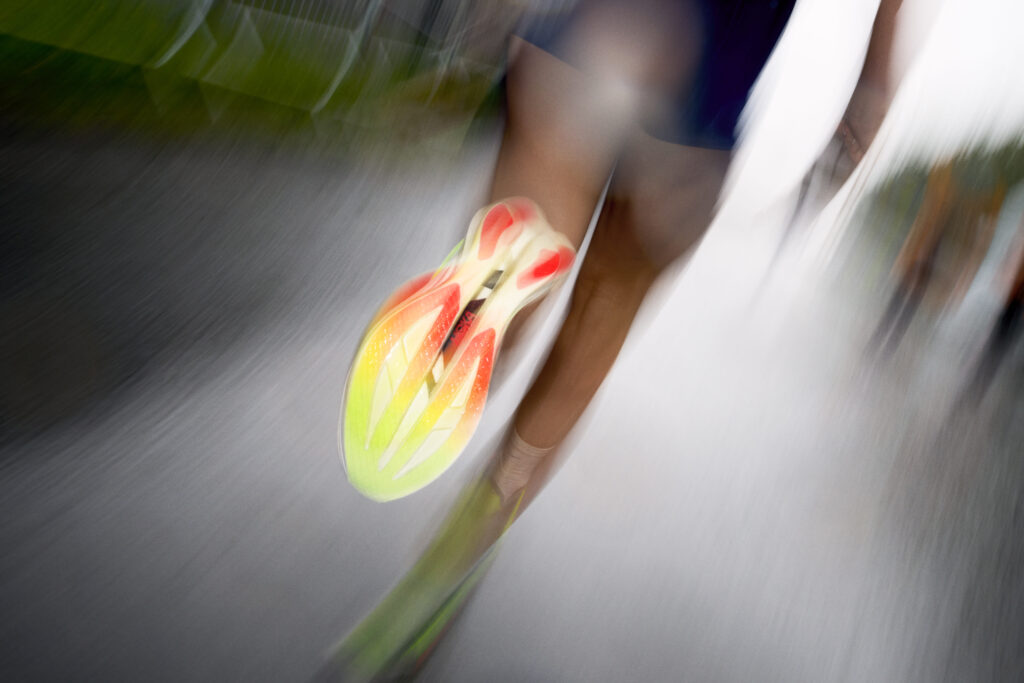
Carbon plated shoes are a relatively recent running shoe phenomenon, but they’ve taken the running shoe world by storm. These plates are becoming increasingly prevalent in race day shoes, offering maximum propulsion, momentum, and energy return in every step.
Runners looking for a fast race day shoe to help them pick up the pace might want to consider a carbon plated shoe. These speedy shoes pair an energetic carbon plate with a responsive foam to help you conserve more energy as you race towards the finish line so you can reach all your race day goals.
These racing shoes can be fun and dynamic to run in, but the truth is, not everyone benefits from adding a carbon fiber plate to their rotation. If you’re a beginner runner, or your marathon goal is simply to cross the finish line, a plated shoe may cause more harm than good. They can be unstable, less durable, and can even weaken some of your stabilizing muscles over the course of long hours on your feet.
If you want that extra pop on race day but aren’t sure a carbon plated shoe is for you, you may want to consider a model with a nylon plate or a non-plated super trainer instead.
Finding the Right Running Shoe: FAQs
How Should Running Shoes Fit?
When you head out on a run, you don’t want to be worrying about black toenails, rubbing in the heel, or any other hot spots or pressure. Ensuring your running shoes fit correctly is the key to preventing any of these issues.
With running shoes, it’s incredibly common to size up from your usual day-to-day shoes. Feet tend to swell when you’re standing, walking, or running, so it’s crucial to have enough space around the forefoot for your toes to move around. Generally, you should have around half a thumbnail to a full thumbnail of space between your longest toe and the end of the shoe.
Width and foot shape are also important considerations. Some brands and models tend to run more snug and narrow, while others offer a more spacious fit. Some brands, such as Altra and Topo, even boast a wide, foot-shaped toe box for maximum toe splay.
Throughout the heel and midfoot, the shoe should feel secure and snug, without feeling too tight or constricting. There also shouldn’t be any distracting movement or rubbing in the heel as you run or walk. You may sometimes need to play around with different lacing methods to ensure a perfect lockdown.
We suggest getting some exact measurements at your nearest Marathon Sports using the Right Fit process. This will help determine what running shoe width would work best for you, and whether you might find a tapered or rounded toe box more comfortable.
Should I Consider Insoles Too?
Even with the right cushioning level, support, drop, and more, running shoes still aren’t customized to your feet. It’s common that the factory sockliner that comes in the shoe doesn’t quite provide the fit and support your arches need to prevent fatigue and keep you comfortable.
This is where inserts can play a key role. Inserts can provide a more personalized fit, replacing the standard insole with a low, medium, or high arch profile that fits the shoe to your feet.
Insoles from brands such as Curex, Superfeet, Powerstep, and Aetrex help absorb shock and support your feet to reduce fatigue and injury risk. While the shoe itself provides the right amount of cushioning and stability, these insoles can be the final step in maximizing your comfort and taking each run to the next level.
What is a Running Shoe Fitting?
We hope this guide offers some insight into what exactly to look for and consider when browsing running shoes. But every model fits and feels different, so even with this information, it can be hard to shop for shoes online or on your own.
This is where Marathon Sports comes in. You don’t need to worry about what shoes are neutral or stability, what the drop of every shoe is, and all the other nitty-gritty details. Our footwear experts will help you every step of the way to ensure you end up with the perfect fit for all your needs.
Finding your ideal running shoe starts with the Right Fit process. To start, we’ll get you on the 3D foot scanner. This gives us some exact length and width measurements, a pressure map, arch profile, and other key data points.
Once the scan is done, we’ll watch you walk barefoot for a better idea of your gait and support needs. We’ll determine if a neutral or stability shoe is right for you and how much/what type of support could benefit you.
Throughout this entire process, we’ll also get to know you and all your preferences and needs. We’ll talk through your injury history, where you’ll be running, what type of training you’ll be doing, and anything else that could point us in the right direction.
We know this can all sound intimidating, but no matter where you are in your running or fitness journey, our team is ready and excited to help. This Right Fit process will ensure you find the right shoe, whether you need something for walking, running, gym sessions, casual walks around town, or anything in between.
Every personalized fitting is also completely free and doesn’t require an appointment, so swing by any Marathon Sports location at your convenience to get started.
I Have a Running Shoe Model I Already Like – Can I Just Stick With Those?
We’ve all heard the saying, “if it ain’t broke, don’t fix it”. So if you have a pair of running shoes that keeps you feeling healthy, happy, and injury-free, there’s absolutely nothing wrong with sticking with those shoes or something similar.
However, if you haven’t been fitted for shoes in a while, it never hurts to get fresh measurements and ensure that the model still works for your running gait and training needs. Models also update every so often, so it’s always worth trying out the newest iteration to test out the changes and upgrades.
Research also shows that feet can flatten, grow, and change shape and size over time. So while you might inevitably end up with your trusty running shoe brand or model, it’s important to reevaluate to ensure you’re still in the right size and width.
The Finish Line: Find Your Perfect Running Shoe at Marathon Sports
Finding the perfect running shoe for you isn’t always easy. We hope that with this guide, you feel more confident and prepared as you start shopping around for the right shoe.
There are a lot of factors to consider when buying running shoes. From the types of workouts you’ll be doing to the terrain you’ll be running on to your own individual preferences, gait, and support needs, every element comes into play as you start sifting through the options and trying out new models.
All this insight can help point you in the right direction. But the best way to find a running shoe is in person, at a specialty running store, where you can ask any questions and test out all the shoes for yourself. With the Right Fit process, the Marathon Sports team can help you narrow down the choices, try out every option, and ensure you’re leaving with the best shoe to help you reach your fitness goals.