Marathons are a true test of grit, endurance, and resilience. No distance is easy to run, but 26.2 miles can feel like a daunting task, no matter your experience level or pace.
Without the right preparation, running a marathon can feel even more challenging and overwhelming. Luckily, when you have a good marathon training plan, the distance feels a lot more manageable. The right training plan will help you get from the first step to the start to the finish line while staying healthy, happy, and injury free.
You won’t be ready to take on a full marathon overnight. Building the strength and endurance you need to take on the distance can take weeks or months. But don’t stress – the dedicated footwear and running experts at Marathon Sports have got your back.
We’ve put together your guide to training for your next marathon. Whether it’s your first time taking on this challenge or you’re an experienced marathon runner, these training tips and tricks will help you reach your goals and make the most of your marathon training block.
Running a Marathon: A Quick Overview of the Distance
Before we dive into how to train for a marathon, we need to cover a couple of the basics about the marathon distance. If you’re wondering how long a marathon is, or if you should consider signing up for one, you’re in the right place.
A marathon is 26.2 miles, or 42.2 km. The modern marathon dates back to the 1896 Olympic games, although back then it was only around 25 miles. The 26.2 mile marathon was standardized in 1921, and that distance stuck.
The distance running landscape has changed quite a bit since the marathon first started. More and more people are signing up and completing this long distance challenge. And while the distance always remains the same, every marathon looks completely different.
There are the popular major marathons that boast screaming spectators along every mile. There are small local marathons with a low-key community atmosphere. There are even marathons that take you along scenic trails if you prefer to go offroad.
Why Run a Marathon?
No matter what type of marathon you prefer, deciding to run a marathon comes with some huge benefits. Here are just a few reasons to consider signing up for one:
- Challenge yourself: Running a marathon is no easy task. Whether you simply want to cross the finish line or reach a new PR, marathons help you challenge yourself and accomplish your fitness goals
- Enjoy physical health benefits: Long distance running is a fantastic way to improve your overall health and fitness level. It’s been shown to improve your heart health, benefit your immune system, and keep your body and muscles strong, all while increasing overall endurance
- Gain mental health benefits: Along with all the physical fitness benefits, long distance running can actually improve your mental health. Research shows the running has the potential to reduce stress and anxiety levels, as well as build resilience and mental toughness
- Earn an unparalleled sense of accomplishment: There’s nothing quite like crossing the finish line after battling through 26.2 miles. Along with the medal and bragging rights, you’ll have an unmatched sense of pride and accomplishment. You’ll know that you can push through any obstacle or discomfort and come out stronger on the other side.
These are only a few of the reasons to consider signing up for a marathon. Everyone is on their own running journey with their own motivations and reasons for running.
But whether you’re tackling your first marathon or are a long-time marathon runner, having the right training plan is crucial for making it to the marathon finish line.
This guide on how to train for a marathon will cover all the tips and tricks you need to know before diving into marathon training. We’ll highlight a training plan example, as well as some helpful guidelines to keep in mind throughout your training journey.
How to Train for a Marathon: A Complete Guide
Feeling overwhelmed with marathon training? You aren’t alone. Running 26.2 miles can feel incredibly intimidating, especially if it’s your first time tackling the distance.
We’re here to break down what training looks like so you know exactly what to expect once you have a marathon on the calendar.
How Long Does Marathon Training Take?
As with many parts of marathon training, there’s no one-size-fits-all answer as to how long training takes. The length of training and other elements of marathon training depend on several factors, including your base fitness level, schedule, marathon goal, and more.
However, you can generally expect marathon training to take about 16-20 weeks. While more advanced athletes with a strong running base will likely lean more towards a 16 week training block, beginners should give themselves around 18-20 weeks to allow for a safe, gradual increase in mileage.
What Type of Runs Should Training Include?
No matter what experience level you’re at, when you’re browsing how to train for and run a marathon, you’ll likely come across the same elements and types of workouts in every training program. Here’s your guide to the main components of a marathon training plan:

Long Runs
One of the most consistent features of every training program is the weekly long run. Once a week, you should complete a long run at a relatively relaxed pace.
This long run will gradually increase in distance, allowing you to build endurance and aerobic fitness. The longest long run should be about 3-4 weeks before race day, and you should aim to complete at least one 18-22 mile run depending on your marathon goals and comfort level.
Base Runs
Easy and relaxed base mileage should make up the bulk of your training. This consistent mileage helps you recover and shake out your legs after long runs or speed days, all while building up your fitness level and running economy.
Tempo Runs
Tempo runs, or threshold runs, refer to runs where you sustain a difficult yet controlled pace. Typically, this pace is about 25-30 seconds slower than your usual 5K pace.
You should feel like you’re pushing yourself, but not exerting maximum effort to the point where you’re gasping for air. As these runs improve your aerobic capacity, they’ll also prepare you mentally for pushing through fatigue and discomfort on race day.
Speed Days
This is where you’ll see the most variation in training programs depending on running goals. Speed days, which can include intervals, repeats, fartleks, and other more intense workouts, are designed to help you move faster and build your muscle strength and stamina.
Runners aiming to hit a certain time should focus on incorporating speed work into their training plan to build up speed and power over longer distances. Meanwhile, runners simply aiming to cross the finish line without a time goal may want to focus more on building consistent base mileage.
Cross Training
It may not be a type of run, but we couldn’t leave out cross training as an important element of a successful marathon training plan.
Hitting the elliptical, cycling, or swimming can be used to mimic the cardiovascular benefits of running without the high-impact stress on joints and muscles. If an injury is acting up, or you just need a lower impact recovery day, be sure to incorporate cross training into your plan.
Rest Days
Rest is another crucial component of marathon training. Taking time off from running allows your muscles and joints to recover from stress, impact, and soreness caused by running. And while the actual amount of rest days will differ based on your specific training plan, you should plan to take at least 1-2 complete rest days each week throughout marathon training.
What Should Marathon Training Actually Look Like?
Now that you know what components make up marathon training plans, it’s time to put these elements together to make a plan that works for you.
As we mentioned, there isn’t a single marathon training plan or schedule that works for everyone. You can always adjust a training plan to meet your preferences and current fitness needs.
Here’s just one example of what a beginner plan might look like from esteemed running coach Hal Higdon:
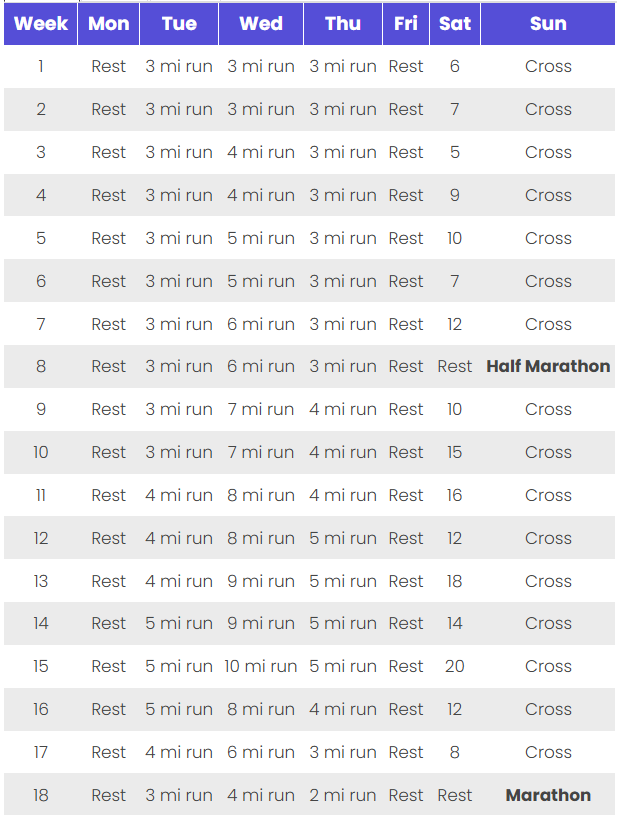
This is one of the most popular, and most beginner-friendly, plans from Hal Higdon. The focus on easy base mileage and gradual build makes this a great choice for runners hoping to finish their first marathon without a specific goal time in mind.
However, this plan can easily be adjusted to fit other schedules and running goals. Those looking to PR or reach a certain goal time at their next marathon should try out a more advanced plan that incorporates more tempo runs, repeats, and intervals, such as this Personal Best plan.
Other Marathon Training Tips
Once you’ve found a training plan that meets your needs, you’ll be ready to hit the ground running. However, as you build up your mileage and work towards reaching that finish line, there are a few other tips and tricks we suggest keeping in mind.
Find a Race that Works for You
Marathons can vary wildly in terms of crowd support, course difficulty, and overall atmosphere. As you’re browsing races, make sure you’re looking for one that makes sense for your running goals.
It’s easy to get caught up in the fanfare and exciting crowd support associated with some of the bigger marathons out there, but the travel and crowds can make these larger races much more difficult logistically. If it’s your very first marathon, consider seeking out a smaller local race to reduce travel and crowd stress.
For some beginner runners, a quieter atmosphere makes a lot of sense. But if you’re running for the overall experience and crowd support, a large race with lots of spectators probably makes more sense for you.
Everyone is different, so be sure to do your research to ensure you’re signing up for a race that will help you reach your running goals.
Don’t Forget about Nutrition and Hydration
If you’ve spent any time researching marathon training, you’ve likely heard of the dreaded marathon “wall”. This “wall” refers to the point where your body has used up its primary fuel, causing fatigue and lack of energy. Runners typically “hit the wall” around mile 18-20 in the marathon.

Fortunately, there is a way to prepare yourself to prevent this fatigue and exhaustion. Properly fueling throughout the race will provide your body with the carbs it needs to maintain its energy level and keep moving.
Energy gels and chews provide a quick source of carbohydrates that can help sustain your body during long periods of movement. And while it’s suggested to use nutrition every 30-45 minutes throughout long runs, make sure to practice this timing with different types of nutrition throughout your training block to determine what works best for you.
Some races even hand out fuel at aid stations, so take a look at what brand is provided and be sure to practice with that type of nutrition if you want to limit the amount of fuel you carry with you on race day.
Most marathons will also have plenty of aid stations supplying water or electrolytes along the course. But throughout training, make sure you’re staying hydrated and replenishing electrolytes, especially if you’re training in warm weather. Try a convenient and lightweight running vest, belt, or handheld water bottle to ensure you stay hydrated throughout longer runs.
Get a Customized Running Shoe Fitting
Running is a high-impact activity, and your legs and feet take a beating over the course of marathon training. One way you can prevent injuries and reduce this impact is with the right pair of running shoes.
The best way to determine what shoes will work best for you is with a personalized fitting at Marathon Sports. Our dedicated team will analyze your gait, talk through your preferences, and use your feedback to find a shoe that works best for you and can carry you from training runs to race day.
Don’t Skip Strength Training
Another great way to reduce impact-related injuries is to incorporate some strength training into your training program. Strength training can include weights and strengthening exercises at the gym, or even body weight exercises such as squats and lunges you can do from the comfort of your home.
Strength training just once or twice a week can have some major benefits on your running, including increased speed and power, improved running form, and lower risk of injury. On easy run days, try to incorporate some strengthening exercises for the best possible training experience.
Stretch and Foam Roll
Pre- and post-run stretching, along with foam rolling, are great tools to increase your mobility, improve your running performance, and reduce stiffness and injury risk.
Doing some dynamic stretches before heading out for your run will help loosen up your muscles and prepare your body for a workout, improving your performance and reducing the chance of injury or discomfort from jumping into exercise.
When you finish your run, your muscles may feel sore and fatigued. Some post-run static stretching and rolling will help you cool down and allow your muscles to recover faster, keeping you feeling your best throughout every week of marathon training.
Starting Your Marathon Training: Final Thoughts
Training for a marathon involves lots of tough miles and days of pushing through some discomfort. But once you make it to that finish line, you’ll likely find all the long training and grueling workouts well worth it.
If you’ve decided to sign up for a marathon, there are a couple of key factors to consider as you embark on your training. Finding the right training plan, fueling and hydrating, and having the right shoes and gear all go into getting you to that start line. Once you pass that start line, the marathon itself is a celebration of all your hard work and accomplishments.
We hope this guide gives you a better idea of what training might look like for you, whether you’re a first-time marathoner or have a couple under your belt already. But if you still have some questions, our team at Marathon Sports is always happy to help.
The distance running community is wide-spread and incredibly supportive. So when you stop by any of our New England stores, there will always be someone happy to answer your questions and ensure you have all the tools and resources you need to make the most out of your marathon journey.