
Summer training may be heating up, but the next cross country season is right around the corner. And if you’ve been putting in the miles this summer, it may be time for a running shoe refresh.
Whether you’re an experienced cross country athlete or it’s your first season on the team, finding the right running shoes can feel like a daunting task. Cross country often includes runs at a variety of different paces across different surfaces. So how do you find a single shoe that meets all your needs?
If you’re feeling overwhelmed with your choices, don’t worry. Our Marathon Sports has been through this before. We’re excited to help you narrow down the options and find the perfect fit for your fall season.
In this guide to the best cross country shoes, we’ll highlight what to look for in a training shoe, as well as some of the top options that meet that criteria on the market today. While we always suggest going into your local Marathon Sports and getting a complete personalized fitting, we hope this guide simplifies the process and helps you understand what shoes might fit your needs.
What to Look for in a Pair of Cross Country Training Shoe
Before we dive into some of the best cross country shoe options, we want to provide some insight into what exactly a training shoe is and what you should be looking for while shopping around.
Typically, there are two types of shoes you’ll come across throughout the cross country season: everyday trainers and racing spikes.
Racing shoes are low-profile, lightweight shoes meant specifically for race day. They often feature pins or removable spikes that grip the ground and provide traction on muddy, wet, or uneven surfaces. You can learn more about these racing shoes in our guide to the best cross country running spikes.
However, in this article, we’re going to be focusing on everyday training shoes. Daily trainers are more geared towards everyday miles. You’ll be doing the bulk of your cross country training in these workhorse shoes.
Some runners have a shoe rotation, featuring different types of shoes for different paces and workouts. This can mean a lightweight, uptempo trainer for speed workouts, a max cushion shoe for long distances, a dedicated racing shoe, and more.
A shoe rotation can increase the lifespan of your shoes and help optimize your performance, but for most cross country athletes, a single pair of running shoes is perfectly fine.
With that, it’s important to look for a trainer that can handle whatever type of workout you throw at it. Cross country seasons often consist of a combination of speed workouts, long runs, and daily mileage, so a good training shoe should offer a blend of protection and responsiveness.
Many of the best cross country training shoes fall in the uptempo daily trainer category. This has been a growing running shoe category in recent years, with more and more brands offering lightweight, responsive shoes that can handle both long runs and shorter, faster workouts.
Every athlete is different, and the right running shoe for you will depend entirely on your preferences, cross country goals, budget, and comfort level. Typically, you’ll want to look for a lightweight, adaptable, and energetic running shoe. Look for something that has enough comfort and protection for long runs without sacrificing responsiveness and energy return when picking up the pace.
The 7 Top Cross Country Running Shoes of 2026
As we mentioned, your perfect running shoe will depend on a lot of individual factors, so it’s always important to talk to the experts and try out some options for yourself. But if you’re looking for a few options worth considering, our Marathon Sports review team has your back.
We tested out a variety of different daily trainers on all sorts of runs, ranging from uptempo track workouts to long road runs, mimicking the variation of workouts you’ll complete during the cross country season. We narrowed down the options and determined 7 of the best running shoes for the 2026 cross country season.
- Asics Novablast 6
- New Balance FuelCell Rebel v5
- Hoka Mach 7
- Adidas Adizero Evo SL
- Puma Deviate Pure NITRO
- Brooks Ghost Amp
- Nike Pegasus 42
Asics Novablast 6
The Novablast has set the gold standard for uptempo trainers. It’s not only one of the best models in its category, but it’s one of the most popular and beloved running shoe models on the market today. And with a springy ride, lightweight design, and high stack of reliable cushioning, it’s a great choice for any cross country athlete.
The FF BLAST MAX midsole foam balances plush landings with responsive toe-offs, making the Novablast 6 flexible and versatile enough for nearly any type of workout. The trampoline pod and rocker geometry add even more speed and propulsion, helping athletes feel their best and reach all their running goals this season.
Along with the dynamic, performance-focused ride, the shoe is durable and dependable enough to hold up through the entire cross country season. The ASICSGRIP proprietary outsole with AHARLO rubber improves durability while delivering confidence-inspiring grip and security with each step.


New Balance FuelCell Rebel v5
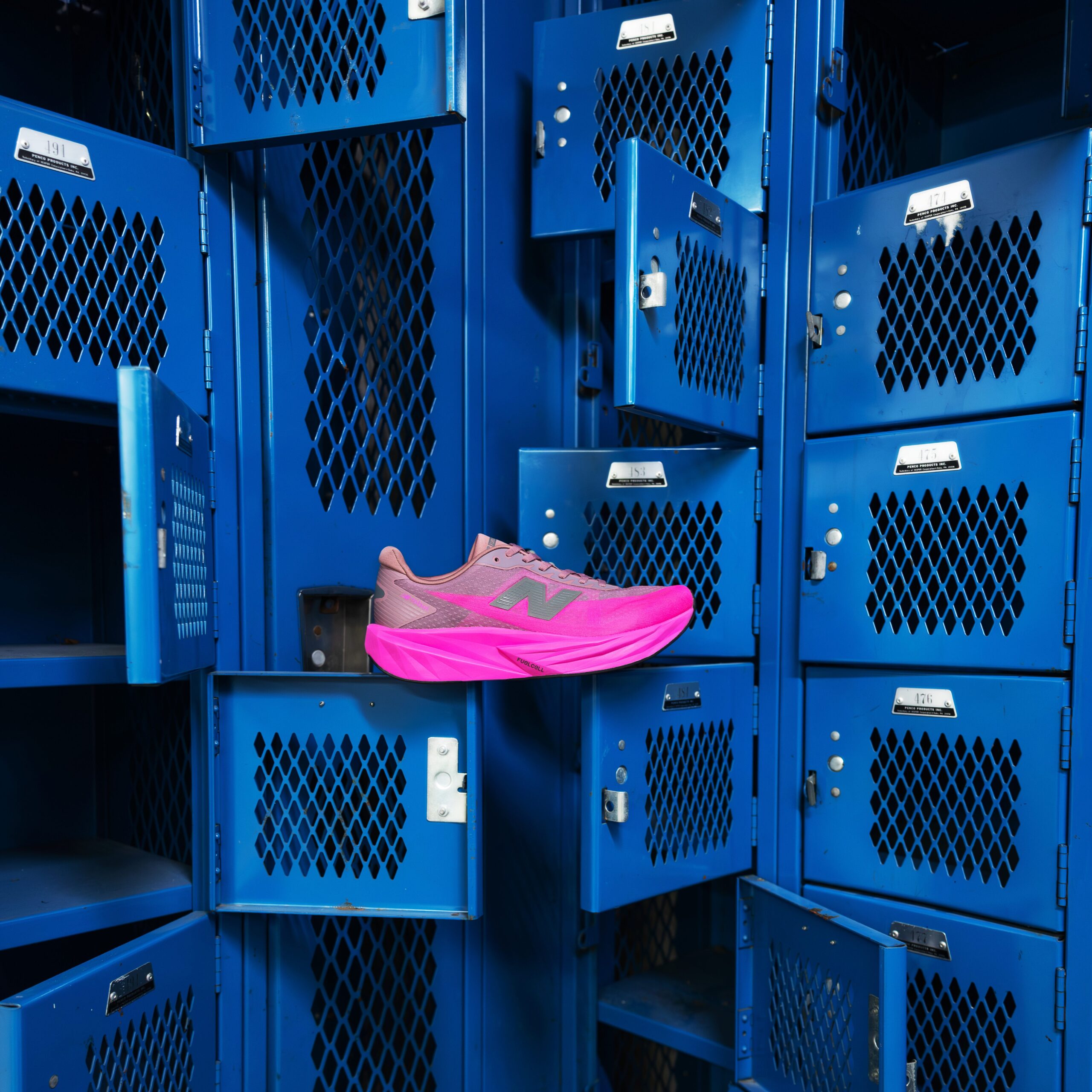
Cross country athletes who want soft cushioning without sacrificing a dynamic ride will likely enjoy the New Balance FuelCell Rebel. The 5th iteration is lighter weight, softer, and snappier than ever for effortless crossover from speedy intervals to relaxed miles.
The PEBA and EVA blend FuelCell cushioning is incredibly soft and responsive underfoot. A FantomFit upper offers a secure, nearly sock-like fit around the foot for maximum comfort from the first to the last mile.
Our review team really appreciated the Rebel’s incredibly lightweight design, especially considering all the protection and shock absorption the shoe offers. At only 6.3 oz for women’s shoes and 8 oz for men’s, it’s one of the lightest trainers around, making it perfect for athletes of all levels who want agile, featherweight shoes for everyday wear.


Hoka Mach 7
Hoka shoes have become well-known among runners and walkers of all ages due to the luxurious cushioning and pronounced rocker geometry. While there are plenty of great training options in Hoka’s lineup, we ranked the Mach 7 as one of the best options for cross country athletes due to its versatile, responsive design.
A high stack of supercritical EVA foam helps absorb shock and impact with each landing without feeling overly soft and spongy. Paired with a rocker geometry and speed-centric upper and tongue design, this springy cushioning lets you easily pick up the pace or enjoy slow, easy mileage.
The 7th iteration of the shoe also saw some durability upgrades. The high-coverage durabrasion rubber outsole ensures longer-lasting use while keeping the shoe low-profile and lightweight.


Adidas Adizero Evo SL
If you’ve spent any time browsing around for running shoes, you’ve inevitably come across the Adidas Evo SL. One of the most renowned uptempo trainers around, the Evo SL incorporates super shoe elements into a daily trainer to optimize performance, propulsion, and energy return.
This training shoe boasts 39 mm of foam in the heel and 32 mm in the toe, but despite the high stack height, it doesn’t feel overly soft or bulky. The full-length Lightstrike Pro foam is super springy and responsive for a fun, dynamic ride.
The engineered mesh around the top of the foot keeps the shoe feeling secure and lightweight, while the Continental and CL rubber outsole provides great traction from the track to the road.


Puma Deviate Pure NITRO
Like the Evo SL, the Puma Deviate Pure is a non-plated super trainer designed to help you take your workouts and training runs to the next level. Weighing in at only 6.3 oz for women’s shoes and 7.8 oz for men’s shoes, this premium trainer is a great option for anyone looking for a super light do-it-all trainer.
The nitrogen-infused NITROFOAM midsole cushioning is the star of the show here, offering an efficient, responsive ride with lots of pop and energy return. It’s a fun and dynamic shoe to run in, something athletes of any experience level can enjoy throughout the cross country season. An engineered mesh upper contributes even more to this lightweight, streamlined, and comfortable design.
Puma’s proprietary PUMAGRIP outsole is also well-known for its grip and traction. Athletes striving for a PR this season will likely appreciate everything this dependable, high-performance trainer has to offer.


Brooks Ghost Amp
The Ghost lineup from Brooks is incredibly well-loved and established. The truth is, you can’t go wrong with any model from this family. The Ghost is a great choice for everyday runs, and the Ghost Max is fantastic when you’re looking for max cushioning and support. But when you want a fast, adaptable shoe for the cross country season, the Ghost Amp is the way to go.
In the Ghost Amp, Brooks introduces DNA HYPE foam, a blend of EVA and PEBA cushioning. The moderate stack height and balanced midsole foam give the shoe a responsive and stable underfoot feel that can easily tackle any effort level or distance.
The foam itself is springy and responsive on its own, and the SpringRamp forefoot technology adds even more forward propulsion with every stride.
Finally, a warped knit upper wraps the foot and adds some additional structure for all-around comfort and support. The Ghost Amp isn’t as soft and flexible as some other shoes on this list, so if you’re looking for max comfort during longer runs, it may not be a top choice. But if you want a lightweight and well-balanced shoe to deliver more forward momentum through any workout, this is a solid option.


Nike Pegasus 42
The Nike Pegasus is more of a traditional daily trainer compared to the more energetic, uptempo trainers on this list. But with 40+ iterations, it’s clear “the Peg” is doing something right when it comes to reliable comfort. It’s one of the longest-standing running shoe models around, and a go-to choice for countless cross country athletes.
As a more standard daily trainer, the Pegasus will be a bit heavier than some of the other options on this list, weighing in at 8.6 oz for women’s shoes and 10.7 oz for men’s. With this higher weight, however, you can also expect lots of durability, consistent comfort, and protection for all your training miles.
The Pegasus incorporates some iconic Nike technology, including a responsive ReactX midsole, full-length energetic Air Zoom unit, and durable waffle pattern outsole. A multi-zoned engineered mesh upper also helps reduce weight and maintain breathability during warm weather training days.
The Pegasus is one of our top suggestions for both new athletes looking for their first cross country shoe and experienced athletes who prefer a more conventional, stable running shoe feel. It’s dependable, versatile, and durable – everything you could ask for from a cross country training shoe.


Finding Cross Country Shoes: FAQ

How Do I Know Which Shoe is Right for Me?
There are a lot of running shoe options, and the models listed above are just a few of the countless choices out there. While we’ve listed some shoes that work for a wide range of foot types and preferences, a personalized fitting in-person at Marathon Sports is the best way to know for sure what works best for you.
Our team will use the Right Fit process to analyze your gait, determine support needs, and learn more about your running history and goals. We’ll bring you some curated options to meet your needs, and you can test out each shoe to find one that feels natural, comfortable, and right for you.
Do I Need Both Racing and Training Shoes for Cross Country?
If you’re going into your first cross country season, there’s nothing wrong with starting with a solid pair of training shoes. Every team and course is different, and your coach will likely inform you if/when you need a separate pair of racing spikes.
That said, there are some major benefits to using dedicated cross country spikes. The removable pins provide more traction than standard running shoes, keeping you safe and secure on tough, trail-heavy cross country courses. They’re also lighter and more streamlined than standard daily trainers to help you move faster.
How Should Cross Country Trainers Fit?
Running shoe sizing can be tricky, especially for middle and high school athletes who may still be growing. Generally, we suggest sizing up about half to a full size from your standard shoe size. When trying on shoes, there should be at least half a thumbnail to a full thumbnail of space between your longest toe and the end of the shoe.
Feet tend to swell during runs, so sizing up allows extra space for toes to splay out and feet to expand. It also helps prevent some common running issues like foot cramping, numbness, and black toenails.
Should I Get a Trail Shoe for Cross Country?
As with many aspects of finding the right pair of shoes, whether or not you need a trail running shoe depends on your individual team and where you typically run.
Many cross country courses cross through uneven, muddy terrain, although racing spikes typically provide enough grip and traction in these scenarios.
Most teams will run across various surfaces, so you may find a dedicated trail shoe too stiff or uncomfortable when you hit the road or track. Instead, you may want to opt for a road shoe that offers effective grip and traction.
If you live in a trail-heavy area, you could also look into all-terrain shoes. These all-terrain shoes offer better traction on packed dirt or trails without feeling overly aggressive.
The Finish Line: Find the Right Fit This Cross Country Season
Gearing up for the cross country season? A good pair of shoes is the single most important piece of equipment you need to get started.
We’ve highlighted a few good options above, but the seven models above aren’t the only good cross country shoes out there. Whether you want to stick with your favorite summer training shoe or try something different, there’s a training model out there that works for you.
We hope you’re getting excited for the 2026 cross country season and all the adrenaline-fueled races, team bonding, and PRs that come along with it. At Marathon Sports, we’re excited to be a part of your running journey and see all you accomplish this season!