When looking for a great pair of shoes, you’ll often see Asics and Nike come up as some of the top running shoe brands. Both are time-tested brands that have been around for decades. And they continue to innovate using modern technology to create high-performing pairs of shoes for varying needs and use cases.
Both brands offer an extensive selection of shoes. So, it can get confusing trying to determine which ones are top performers and best for your training style, natural gait, and foot type.
We’ve compiled several top-notch options in this article in popular categories, and will provide information on how to choose which one is right for you.
Asics or Nike, which is best for your needs? Keep reading to see how the best shoes from both brands stack up against one another.
Everyday Trainers: Asics Gel-Cumulus 28 vs. Nike Pegasus 42
First, let’s discuss some popular daily trainers from these brands, the Asics Gel-Cumulus 28 and Nike Pegasus 42. They’re both well-rounded shoes that can hold up well against various types of training. However, there are a few key differences between the two that you should consider before buying.
Asics Gel-Cumulus 28
The Asics Gel-Cumulus 28 stands out during slow to moderate-pace distance running. Some key qualities we found while comparing it to the Nike Pegasus 42 were:
- Upper: The upper on the Gel-Cumulus 28 feels more comfortable than the Pegasus 42. It has a nice padded heel collar, flexible tongue, and soft mesh material that keeps the foot locked in place while running.
- Midsole: The FF BLAST™ Max cushioning combined with PureGEL™ technology in the midsole provides a very comfortable experience during long runs. However, it’s not quite as responsive as the midsole in the Pegasus 42 during tempo training.
- Weight: The Gel-Cumulus 28 is a lighter shoe, coming in at an average of 9.1 ounces in men’s shoes and 7.8 ounces in women’s shoes.


Nike Pegasus 42
The Nike Pegasus 42 is the more versatile option. It’s responsive for short tempo runs while providing enough padding for distance training. Here’s how it stacked up:
- Upper: The upper on the Pegasus 42 isn’t quite as comfortable as the Gel-Cumulus 28. The Pegasus 42’s upper feels more barebones and lighter, which offers good breathability and flexibility for those who prefer that in their daily trainer.
- Midsole: The ReactX midsole foam in this shoe is highly responsive, while still providing plenty of padding. Paired with a full-length Air Zoom unit, it offers more bounce to each stride, making it great for uptempo training.
- Weight: It’s a slightly heavier shoe, weighing in at an average of 10.7 ounces in men’s shoes and 8.6 ounces in women’s shoes.


Final Thoughts on the Asics Gel-Cumulus 28 vs. Nike Pegasus 42
These are both great daily trainers that will provide high levels of comfort and cushioning during your everyday runs.
The Asics Gel-Cumulus 28 performs better during slow to moderate-paced distance running. It provides soft cushioning to keep your feet fresh as you rack up the miles.
The Nike Pegasus 42 is the more versatile option. You get great responsiveness for uptempo training while still offering enough padding during distance runs.
Stability Trainers: Asics Gel-Kayano 33 vs. Nike Structure 26
Next, we have stability trainers that support runners who overpronate, meaning their feet roll inward excessively. The Asics Gel-Kayano 33 and Nike Structure 26 effectively support overpronation in slightly different ways.
Asics Gel-Kayano 33
The Asics Gel-Kayano 33 uses a responsive stability system that works well for daily miles or more uptempo training. Here’s how it differs from the Nike Structure 26 in key categories:
- Support system: The Gel-Kayano 33 uses a FLUIDSUPPORT system to prevent overpronation. The midsole is layered with a soft foam on top and stable, firmer foam at the bottom and incorporates supportive geometry that works with your changing biomechanics to encourage your feet to bounce back to a neutral position when you overpronate.
- Shock absorption: It provides slightly better shock absorption with the Rearfoot PureGEL technology. The gel leads to softer landings, especially along the heel. It’s a terrific feature for faster paces or long runs where you’re putting more impact on your feet and legs.
- Consistency: The Gel-Kayano 33’s support system is relatively mild and isn’t as consistent or corrective as the Nike Structure 26. Its bouncy feel is great for uptempo training and daily miles, but you lose a bit of control in the process.


Nike Structure 26
The Nike Structure 26 offers a firmer and more consistent support structure. It’s a great fit for slower long-distance training. How does it perform?
- Support system: The Structure 26 has more of a traditional stability shoe feel. It wraps and cups your foot to provide support with a higher inside edge to prevent overpronation.
- Shock absorption: The high stack of ReactX midsole foam provides effective cushioning underfoot and solid shock absorption. However, it’s firmer than the Gel-Kayano’s midsole, and you may feel more impact in this shoe.
- Consistency: The support structure here is much more consistent. It provides firm and stable support in each step. While it doesn’t have the responsiveness of the Gel-Kayano 33, the Structure 26 makes up for it in stability and confidence in each stride.


Final Thoughts on the Asics Gel-Kayano 33 vs. Nike Structure 26
Both effectively support overpronation. The right shoe just depends on your training style and preferences.
The Asics Gel-Kayano 33 is the better option for mild overpronators looking for subtle support. It adds a nice bounce to each step and great shock absorption that’ll help as you pick up the pace, but is less stiff and corrective for severe overpronation.
The Nike Structure 26 is the more stable and consistent choice. It keeps your foot locked in place for excellent stability over long distances.
High Cushion Shoes: Asics Gel-Nimbus 28 vs. Nike Vomero 18
When you want extra cushioning underfoot for recovery runs and low-impact training, the Asics Gel-Nimbus 28 and Nike Vomero 18 are sound choices. How do they compare?
Asics Gel-Nimbus 28
The Asics Gel-Nimbus 28 is a plush shoe that works better for long runs or recovery days. Some key qualities we found during our Gel-Nimbus 28 review were:
- Stack height: The Nimbus has a larger stack height at 43.5 mm/35.5 mm for men’s shoes and 42.5 mm/34.5 mm for women’s. It packs a lot of cushioning underfoot for shock absorption while still offering a light and bouncy feel.
- Responsiveness: The FF Blast™ Plus cushioning in the midsole offers a highly soft and luxurious feel. We were pleasantly surprised by the bounce you get in each step with this one being a high-cushion shoe. However, the shoe works best for slow recovery runs or daily miles.
- Weight: The Nimbus 28 felt slightly lighter overall compared to the Vomero. The men’s weighs in at 9.9 oz, and the women’s weighs in at 8.5.


Nike Vomero 18
The Nike Vomero 18 offers a traditional high-cushion shoe experience with more versatility. Here’s what we found:
- Stack height: It has a similar stack height at 46 mm in the heel and 36 mm in the forefoot. . However, the dual-density ZoomX and ReactX midsole foam gives the Vomero 18 a noticeably bouncier feel.
- Responsiveness: In the Vomero, the high stack height feels extra comfortable on long runs or recovery days. The foam is slightly stiffer and more responsive, giving it more adaptability for both daily miles and uptempo runs.
- Weight: It felt a bit heavier and blockier to us. It weighs an average of 11.5 ounces in men’s and 9.3 ounces in women’s.


Final Thoughts on the Asics Gel-Nimbus 28 vs. Nike Vomero 18
You can’t go wrong with either of these shoes for plush comfort.
The Asics Nimbus is the better choice for overall plushness. You can cruise along during recovery runs and enjoy low-impact training due to the soft cushioning and PureGEL technology.
While it is heavier, the Nike Vomero is the better choice for versatility. You can sink into the soft midsole on long runs while still enjoying some responsiveness for uptempo training.
Speed Shoes: Asics Superblast 3 vs. Nike Zoom Fly 6
Now, let’s pick up the pace. The Asics Superblast and Nike Zoom Fly are both great speed training options with slightly different qualities. Here’s how they both compared during our testing.
Asics Superblast 3
The Asics Superblast 3 is a softer shoe that works better for both daily miles and fast paces. Here’s what we found during our deep dive on the Superblast 3:
- Stack height: The Superblast 3 has a larger stack height at 47 mm in the heel and 39 mm in the forefoot. It packs a lot of cushioning underfoot for shock absorption while still offering a light and bouncy feel.
- Responsiveness: The FF Blast™ Plus Eco and FF Leap cushioning in the midsole offers a highly responsive and energetic ride.
- Weight: The Superblast 3 felt lighter overall. It’s a unisex shoe that weighs an average of 8.5 ounces.


Nike Zoom Fly 6
The Nike Zoom Fly 6 offers a lightweight and versatile option. Some essential aspects to consider are:
- Stack height: It has a lower stack height of 42 mm in the heel and 34 mm in the forefoot. Runners who prefer being closer to the ground will prefer this over the max cushioned Superblast.
- Responsiveness: The Zoom Fly pairs a snappy ZoomX midsole with a carbon fiber Flyplate for maximum energy return on runs. This midsole construction is responsive and dynamic for more speed and propulsion during workouts.
- Weight: It’s slightly heavier overall, but the streamlined design incorporates several elements to reduce weight. The Zoom Fly’s sock-like upper feels lighter and more breathable, and the low-profile upper keeps the shoe feeling agile when you pick up the pace. It’s a great fit for those who prefer a minimalistic feel in their speed shoe.


Final Thoughts on the Asics Superblast 3 vs. Nike Zoom Fly 6
Both are great speed trainers. Your choice depends on your training preferences and needs.
The Asics Superblast 3 is the better option for versatility. The high stack height and springy foam makes it a great choice for both long runs and uptempo days.
The Nike Zooom Fly 6 is a better choice if you’re looking for a dedicated speed shoe. The minimalist design and carbon plate excel at propelling you through speed workouts and faster intervals.
Race Day Shoes: Asics Metaspeed Sky Paris vs. Nike Vaporfly 4
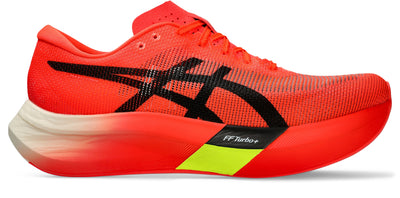
The Asics Metaspeed Sky Paris and Nike Vaporfly 4 are both top-tier carbon-plated race day shoes. There’s been a lot of debate between the two because of how similar they are. However, a few key differences can help with your decision.
Asics Metaspeed Sky Paris
The Asics Metaspeed Sky Paris provides a little more punch and responsiveness. Essential qualities we found were:
- Fit: The Metaspeed Sky Paris fits a bit firmer around the full foot. It keeps the foot locked in place, but some runners may find it too tight for their liking if they have wider feet.
- Responsiveness: This shoe is explosive off the ground and will keep propelling you forward during longer races. We found it was slightly more responsive than the Nike Vaporfly 4 for those who want the most energy return possible out of their shoe.
- Comfort: The Metaspeed Sky Paris isn’t as cushioned and soft as the Vaporfly 4. Instead, it opts for a firmer, rigid feel to help you maintain a fast pace.


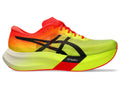
Nike Vaporfly 4
The Nike Vaporfly 4 is the more flexible and comfortable option while still offering plenty of responsiveness during long races. Here’s how it stacked up in key categories:
- Fit: The overall fit was a little roomier in the Nike Vaporfly 4, especially around the heel and midfoot. Some runners will prefer that for more comfort over long distances.
- Responsiveness: While it didn’t feel quite as responsive as the Metaspeed Sky Paris, the carbon plate and ZoomX midsole foam in the Vaporfly 4 still provide plenty of pop off the ground to achieve top speeds. In addition, the carbon-fiber Flyplate sits at a higher angle in the Vaporfly 4 than in the previous model, providing a slightly bouncier and more responsive feel.
- Comfort: The cushioning in the midsole and padding around the upper felt softer and more comfortable in the Vaporfly 4. We found this great for minimizing foot pain during longer races.


Final Thoughts on the Asics Metaspeed Sky Paris vs. Nike Vaporfly 4
These are excellent race day options, and you can’t go wrong with either one.
The Asics Metaspeed Sky Paris is the better fit for runners who want to get as much energy return as possible from their race day shoe. It offers tons of punch off the ground to achieve top speeds.
The Nike Vaporfly 4 is the more balanced option. It still provides plenty of energy return for great race day performances with some extra cushioning and flexibility.
Try on These Asics and Nike Running Shoes at Marathon Sports
We offer a wide variety of Asics running shoes and Nike running shoes at Marathon Sports.
You can stop in at one of our retail stores to try them on for yourself. Our footwear experts can even help you pick the right fit for your needs with a complementary gait analysis to determine key aspects like your level of pronation or the ideal offset for your natural running stride.
Additionally, you can shop on our online store and have shoes shipped straight to your doorstep.
Ready to get started? You can browse our selection today to find the ideal shoes to achieve your running goals.