One of the most common pieces of summer running advice is to stay hydrated. And for good reason – hydration is crucial when it comes to feeling and performing your best during a workout.
But the truth is, maintaining the proper hydration levels is easier said than done. It’s tough to know exactly how much water you should be drinking during a run, when to replenish electrolytes, and how to choose the right hydration tools.
But at Marathon Sports, we’ve got your back. We’ll highlight some tips for staying hydrated and keeping cool and healthy through summer training runs, race day, and beyond.
The Importance of Proper Hydration
Hydrate, Hydrate, Hydrate. You hear it all the time in the running world. But what does that actually look like, and why is it so important?
There’s no one set amount of water a person needs on a given day. A lot of factors influence fluid intake recommendations, including age, height, weight, climate, and activity level. But generally, women should aim to drink around 11 cups of water per day and men should aim to drink around 15 cups.
However, when it’s hotter and you sweat a lot more during summer months, the amount of fluid you need will likely be a lot higher. Staying hydrated is all about balancing out the fluid and electrolytes you lose. Using more energy or sweating more than usual throughout the day means you need to up the intake to replenish fluid loss.
A lack of water or electrolytes can have a major negative impact on your health, well-being, and performance. Here are some examples of what these effects look like:
- Dehydration resulting in headaches, dizziness, cramping, fatigue, and confusion
- Increased heart rate that leads to exhaustion and fatigue during runs
- Decreased blood volume causing strain and pressure on your cardiovascular system
- Impaired cognitive ability – dehydration and fatigue make it easier to lose focus and concentration while running
- Muscle and stomach cramps from lack of fluid and electrolytes; and
- Higher risk for other heat-related illnesses
And lack of hydration isn’t the only danger when it comes to water levels during workouts. It’s actually possible to overhydrate as well. Too much fluid intake can dilute your electrolyte level and lead to nausea, dizziness, headaches, and cramps.
In this guide to staying hydrated while running, we’ll cover some tips and tricks to help you avoid both dehydration and overhydration and keep you running your best.
How to Hydrate: Our Tips and Tricks
Now you know why it’s so important for your health and running performance to properly hydrate. Wondering how to actually put this into practice? Here are our best tips on how to hydrate while running.
Find the Right Hydration Pack
There are a lot of options for hydration packs out there. We know it can be overwhelming choosing the right hydration vessel when you don’t know what you’re looking for.
The right choice comes down to a couple factors, including your capacity needs, fit, and preferred carrying style. Here’s a rundown of the different styles and who should consider each option.
Handheld Water Bottles
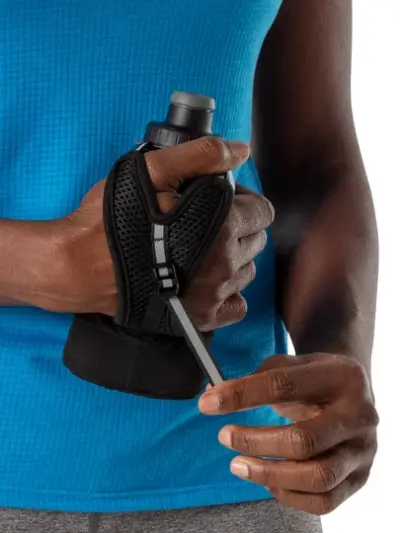
Handheld bottles are often the smallest and simplest hydration solution. These bottles easily slide onto your hand for convenient carrying throughout your run.
The one downside here is that you won’t get as much carrying capacity. Handheld water bottles typically hold around 12-17 oz of water. Some of the larger bottles, such as the Amphipod Hydraform Soft-Tech, can hold up to 20 oz.
Because they often don’t hold us much water, handheld options tend to work best for shorter runs or when you have a place to fill-up along your running route. If you opt for this option, you may want to plan some routes around a water fountain, especially on really hot days or longer runs.
You’ll also be carrying it in your hand throughout your run, so you don’t want something that feels bulky, heavy, or uncomfortable. If you’re looking for a lightweight option, consider a soft flask that will shrink as you use it to eliminate bulk or bounce.
However, if you need a bit more carrying capacity, there are several handheld options that could work for you. Look for handhelds with an outside storage pocket if you need some extra space for keys, cards, or fuel.
It’s also important to consider how a handheld bottle fits and feels in your hand. It should slide on easily and feel snug enough that you don’t have to constantly grip it, but not too snug that it’s cutting off circulation or making fingers feel numb.
Keep an eye out for soft, adjustable straps that you can easily customize to your hand. The bottle itself should also have an ergonomic design that naturally fits in the curve of your hand to maximize comfort and minimize distractions on runs.
Hydration Belt
Looking for the next step up in terms of storage and hydration? You may want to consider a hydration belt.
Belts are a great option for any runners who want to hydrate while having enough room for a phone, keys, wallet, nutrition, and anything else you may need throughout a workout. These will be a bit bulkier than handheld bottles, so we suggest opting for something like this Nathan belt with a no-bounce fit.
There are a few key factors to look for when choosing a hydration belt. Here are just some of the elements to consider:
- Storage/hydration capacity: Some belts are smaller and more low-profile. While this is great when it comes to comfort, it limits the storage space. Consider what you typically bring on runs and look for options that meet these hydration and fueling needs.
- Insulated vs non-insulated: During the hottest summer months, water can quickly warm up throughout a run. If you want cool water for longer, look for a belt with built-in insulation.
- Material: Comfort is key when it comes to wearing a hydration belt. Look for products with a flexible mesh material that will keep you cool and comfortable, even during hot summer days.
- Fit: Hydration belts should be snug around your waist without causing too much tightness or discomfort. Belts with adjustable straps can help you ensure a customized fit that stays secure through all your miles.
You can always test out hydration belts at your nearest Marathon Sports, so we suggest trying them on in person to ensure a snug, comfortable fit and storage that meets your hydration needs.
Hydration Vests
If you’re in it for the long haul, you may want to consider a hydration vest. These vests are bulkier – and often more expensive – than handheld and belt hydration packs. But they also provide lots of storage and water capacity to keep you going throughout long runs.
One key factor to consider is how you want to access your water. Some vests, like the popular Salomon hydration vests, come with two soft flasks, with enough space in the back to fit a full bladder. Other packs come with an included water bladder and straw for easy access to your water.
When choosing a running hydration vest, you want to look for something lightweight and moisture-wicking that will conform to your body without interfering with your freedom of movement. Look for light, breathable materials that won’t hinder your movement, breathing, or overall comfort.
Most vests should offer plenty of storage, but if you’re planning on completing particularly long trail or road runs, make sure there are enough compartments and secure pockets to carry everything you need.

And like waist packs, hydration vests should fit snug and secure around the body. You don’t want any bouncing, chafing, or rubbing once the vest is on and laced up. Adjustable front and side straps should allow you to fit the hydration pack to your body and ensure comfortable hands-free hydration.
Finally, not every pack is created equal for every athlete. Your individual needs will likely depend on what type of activity you’re doing, workout duration, and storage needs.
Elite trail runners with less water access throughout their runs will likely need to focus on storage and hydration capacity, while road runners may want to prioritize a more lightweight, minimal design. It all comes down to what works best for you and will provide enough storage, hydration, and comfort.
Incorporate Electrolytes
You don’t just lose water when you sweat. You also lose electrolytes, minerals like sodium and potassium that help keep your body functioning and balance the fluid in your cells. On shorter runs or in cooler weather, you should get by just fine with water.
But when you’re out for long mileage or in hot weather, try to balance your water consumption with electrolytes. If you’re planning on being outside for an hour or more, or if you’re outside in extreme heat, you’ll lose more sodium and other minerals through your sweat. When the electrolyte supply in your body depletes, you’ll start dealing with cramping, weakness, nausea, dizziness, and other cognitive effects.
The actual amount of electrolytes you lose through sweating depends on a range of factors, such as salt volume in your sweat, age, gender, weight, current temperature and humidity, and even current medications. So while the actual amount of electrolytes you need will vary, a general rule of thumb is to aim for around 300-600 mg of sodium per hour.
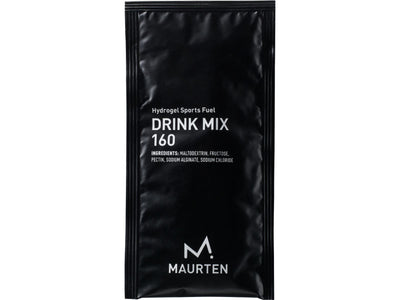
The good news is that there are plenty of convenient drink mixes, energy chews, and tablets designed to make it simple and easy to replenish your electrolytes. Nuun, for example, offers tablets that dissolve in water and are a great source of sodium, potassium, calcium, and other electrolytes and minerals. Maurten has another drink mix option that rehydrates and provides fuel you need for any type of run.
On particularly hot days, we suggest bringing an electrolyte mix on runs to balance out fluid intake and keep your mind and body feeling its best. Or, if you don’t want to carry a drink mix, you can try easy-to-carry SaltStick Fastchews for fast-acting electrolytes.




Timing is Everything
Of course, during the warmer summer months, you want to make sure you’re hydrating throughout your run. But this isn’t the only time to think about your hydration plan. The hours leading up to a run and after a run are just as important when it comes to staying healthy and well-hydrated.
Drinking water in the 2+ hours before a run will ensure that you’re going into the run hydrated and well-balanced. You’ll be putting your best foot forward from the very start of your run to prevent any early dehydration or fatigue. Pre-run electrolytes can also be beneficial in making sure your body is up to the task when it’s time to head out on a run.
During your run, you should aim to consume up to 8 oz of water every 15-20 minutes. Again, while this is the general rule of thumb, you can always adjust to meet your own hydration needs based on your weight, sweat loss, and current weather conditions. Be sure to take slow, small sips of water as you run. Chugging too fast can lead to cramping and quickly dilute the electrolytes in your body.
And proper hydration doesn’t end when your run does. Sipping water, electrolytes, or a sports drink post-run will help replenish all the fluid and minerals lost throughout your workout, all while aiding in muscle recovery to help keep you feeling your best.
The Finish Line: Stay Properly Hydrated This Summer
Our goal at Marathon Sports is to keep your life in motion, even when the sun is beating down and temperatures start to rise. But as you get outside and move this summer, we also want to make sure that you’re staying safe and hydrated so you can feel your best on every walk or run.
With the right hydration pack, electrolytes, and timing, you’ll be more prepared to take on the summer sun and reduce your risk of dehydration, heat stroke, and other heat-related illnesses.
And if you have any other questions, never hesitate to reach out. You can swing by your nearest Marathon Sports to try out some hydration vests, look for electrolytes that work for you, and find anything else you need for summer training. With these tips, you can enjoy happy and healthy summer running!