Too short or too long. Too narrow or too wide. Too tight in the heel or too much excess movement. Finding a perfect fit in running shoes can leave you feeling a lot like Goldilocks.
So how do you know when the fit is just right?
Everyone has different preferences when it comes to running shoes. Some athletes may prefer a more snug, performance-focused fit, while others want as much extra width and space as possible. But no matter your preferences, there are a few key guidelines to follow when trying on running shoes.
It isn’t always easy to know exactly how a running shoe should feel when you put it on and take it for a spin. But our footwear experts at Marathon Sports are here to help. In this guide to how running shoes should fit, we’ll answer the most common questions about running shoe length, width, and overall feel. By the end, we hope you’ll have a better understanding of how the right running shoe for you should feel.
Why Is the Right Fit So Important?
There are a lot of factors to consider when choosing running shoes. Your support needs, mileage, preferred terrain, and injury history all come into play. But no matter the type of shoe you end up with, it’s always important to make sure that the shoe fits correctly.
One reason is simply for your comfort. A too-tight shoe can squeeze your feet, leading to pressure and discomfort. If there’s too much room, your feet will move around, and you won’t feel secure as you run.
There are also some physical pain and injuries that come from ill-fitting running shoes. These include:
- Blisters
- Bruised toes
- Black/bruised toenails
- Heel and ankle instability
- Arch pain
- Plantar fasciitis
- Cramping or numbness; or
- Painful hotspots along the toes, heel, or top of the feet
When you want to perform your best on runs, your feet need to be feeling their best. Shoes that fit just right will help prevent pain and injuries, making your runs more comfortable than ever.
How Should a Running Shoe Fit?
Now that you know why a properly fitted shoe is so important, let’s dive into the features to look for when trying on shoes.
Toe Box Length
Feet tend to swell and shift around while running. Make sure you have enough space in the front of your shoe to accommodate these changes and movement.
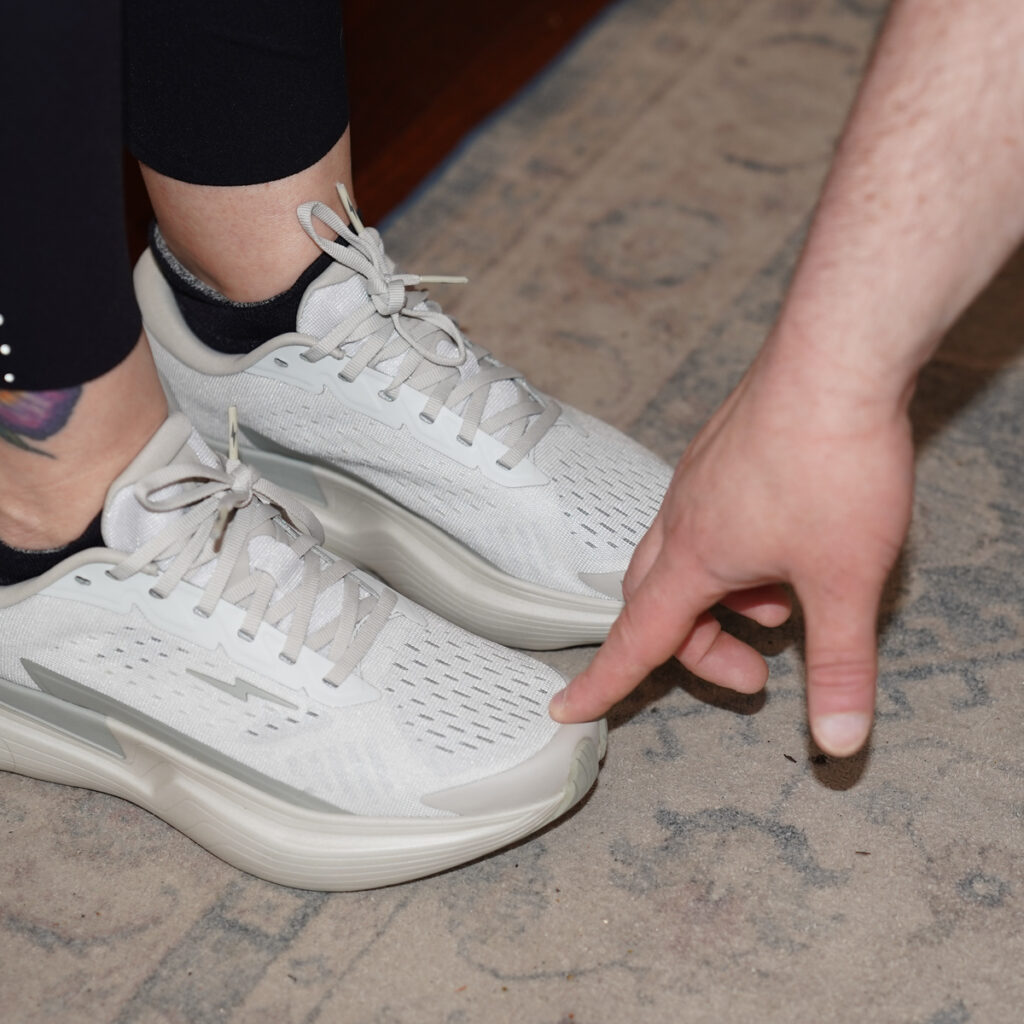
After you put a shoe on for the first time, stand up and tap your heels back against the floor. This should position your feet correctly inside the shoes so you can tell how much room you actually have.
Once your feet are positioned right, you should have about half a thumbnail to a full thumb width of space between your longest toe and the end of the shoe. Make sure you can wiggle your toes around without feeling the end of the shoe.
Midfoot and Heel
While you want extra room in the toe box, the shoe should feel more snug and secure around the midfoot and heel. The upper material should gently hug the midfoot, ensuring a locked-in feel without excess pressure or tightness. The heel should also feel snug and supported. When you step forward, you shouldn’t feel any distracting movement or discomfort in the back of the shoe.
This is where there may be some differentiation depending on preferences and what you’re using the shoe for. If you’re looking for a high-performance shoe, you may want a more supportive, snug fit through the heel and midfoot. But if you’re prioritizing everyday comfort, you might want some extra space and flexibility around the feet.
Width
Feet vary in shapes and sizes. And as a result, shoe widths and shapes vary significantly.
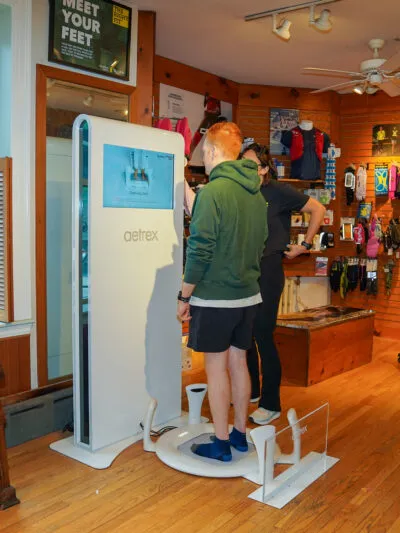
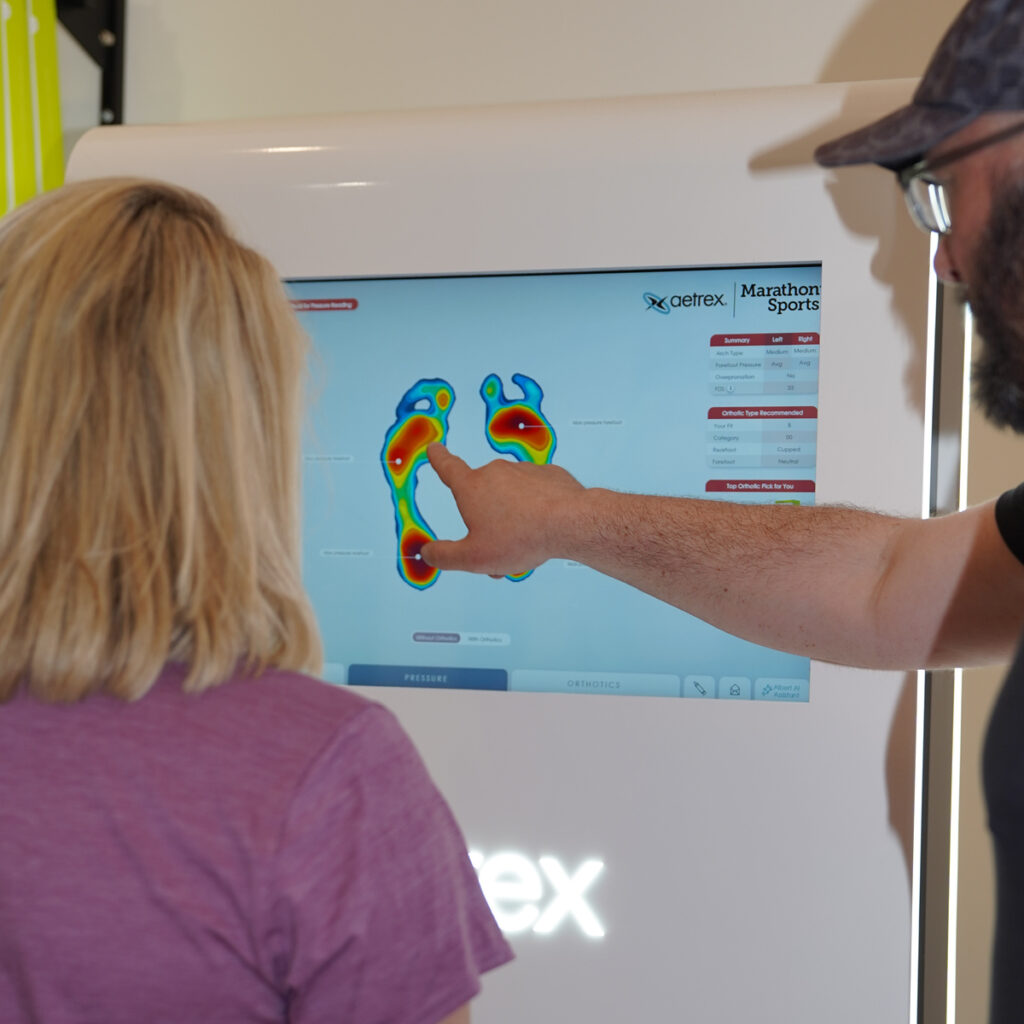
We always suggest getting your feet measured with our Right Fit process to see where your feet land in terms of shoe size and length.
You don’t want to feel like you’re moving side-to-side in the shoe, but there also shouldn’t be any discomfort or pressure around the shoe’s upper material. A too-tight shoe could lead to early wear in the toe box or blisters around the feet.
If you have narrow-to-average width feet, a standard width shoe should suit your needs. For wider feet, you may want to opt for a wide or extra-wide width.
Many runners also have a narrow heel but a wider forefoot. If this sounds like your foot shape, you might want to consider an anatomical, wide toe-box shoe. This design will ensure your heel and midfoot are locked in place, while your toes have enough breathing room.
Running Shoe Fitting Tips
At Marathon Sports, our goal is to find you a running shoe that feels great and fits perfectly. There are a few tips and insights to keep in mind that will help us achieve this goal and help you feel and perform your best on every run.
- Bring all your running gear: While the right shoe should ideally fit with any sock thickness and style, it never hurts to bring your favorite running socks to a fitting to ensure the shoe works with your preferred length and cushion level. Orthotics can also change the fit and feel of a shoe, particularly custom insoles, which may take up more space and volume. We suggest bringing any insoles, toe spacers, braces, or anything else you may wear with the shoes to the store with you.
- Fit to your larger foot: It’s very common to have one foot that’s wider or longer than the other. Our Right Fit process includes a 3D scan that will give us all this information and highlight key differences between the feet. You’ll want to make sure the shoes offer enough space for your larger foot to prevent any numbness, bruising, or cramping.
- Don’t go by numbers: Of course, your standard shoe size can give us a good starting point as we curate shoe options for you. But you’ll want to avoid basing your decision on numbers alone. Brands – and even models within the same brand – can vary by size, and many runners often have to size up to ensure there’s enough natural toe splay. Consider what feels best and most natural for you as opposed to the number on the box.
- Run and walk throughout the fitting process: Shoes can feel great with the first step, but as you walk or run around, hot spots and pressure points can start to pop up. As you’re testing out shoes, move around to ensure there’s no discomfort or immediate red flags with how the shoe fits your feet.
- Shop towards the end of the day: If possible, it’s a good idea to try on shoes after a long day of being on your feet, or after you’ve already gone for a walk or run. Your feet expand over the course of a day, so this ensures there’s enough space for your toes when your feet are at their most swollen.
The Finish Line: Find the Right Fit for You
These tips and tricks can help you know what to look for and how to approach getting fit for running shoes. But you don’t have to memorize everything there is to know about running shoe fit and feel. When you shop for shoes at Marathon Sports, you can put that in the hands of dedicated running shoe experts.
We’ll guide you throughout the entire process, including checking each shoe’s length and making sure everything feels comfortable and natural on your end. We want you to feel confident in your running shoe decision, and we’re happy to answer any questions to help you get there. With a pair of shoes that fit just right, you’ll be ready to start running towards all your fitness goals with healthier, happier feet.