Key Takeaways:
- Measuring Foot Width: Measure the widest part of both feet while standing to get a useful starting point for choosing running shoes.
- Understanding Width Sizes: A foot width chart can help explain shoe width labels, but sizing conventions and actual fit vary by brand and shoe model.
- Finding a Comfortable Fit: Consider both overall shoe width and toe box space, then check how the shoes feel while standing and moving.
How do you know whether your running shoes are the right width? Learning how to check your foot width helps you identify whether standard, narrow, or wide options will best suit your feet.
Measuring across the widest part of each foot provides a useful baseline for your gear, although finding a pair that feels completely natural also depends on shoe shape and unique sizing conventions.
At Marathon Sports, we help runners navigate fit questions that go beyond choosing the right shoe length. From pressure around the forefoot to extra movement inside a shoe, we understand how width affects comfort during training. Our approach focuses on how footwear feels and fits during movement, rather than relying on size labels alone.
In this guide, we’ll explain why foot width matters, walk through measuring your feet at home, show you how to interpret width labels, and share practical tips for choosing running shoes that fit comfortably.
Why Does Foot Width Matter for Running Shoes?
Foot width affects how comfortably a running shoe fits, particularly in the forefoot, where feet naturally spread as you run. Shoes that are too narrow may squeeze the toes or create uncomfortable pressure along the sides of the foot. Shoes that are too wide can allow excessive movement, potentially causing rubbing or instability during runs.
Finding the right width is about more than avoiding discomfort. A suitable fit gives your toes room to move while keeping the midfoot and heel comfortably supported. This balance matters because feet can expand slightly during longer runs, particularly in warm conditions.
Foot shape also varies from person to person. Some runners have a wider forefoot but a narrower heel, while others need additional room throughout the shoe. Understanding these differences can help you interpret width measurements and identify which running shoe designs are worth trying.
How to Measure Foot Width for Running Shoes at Home
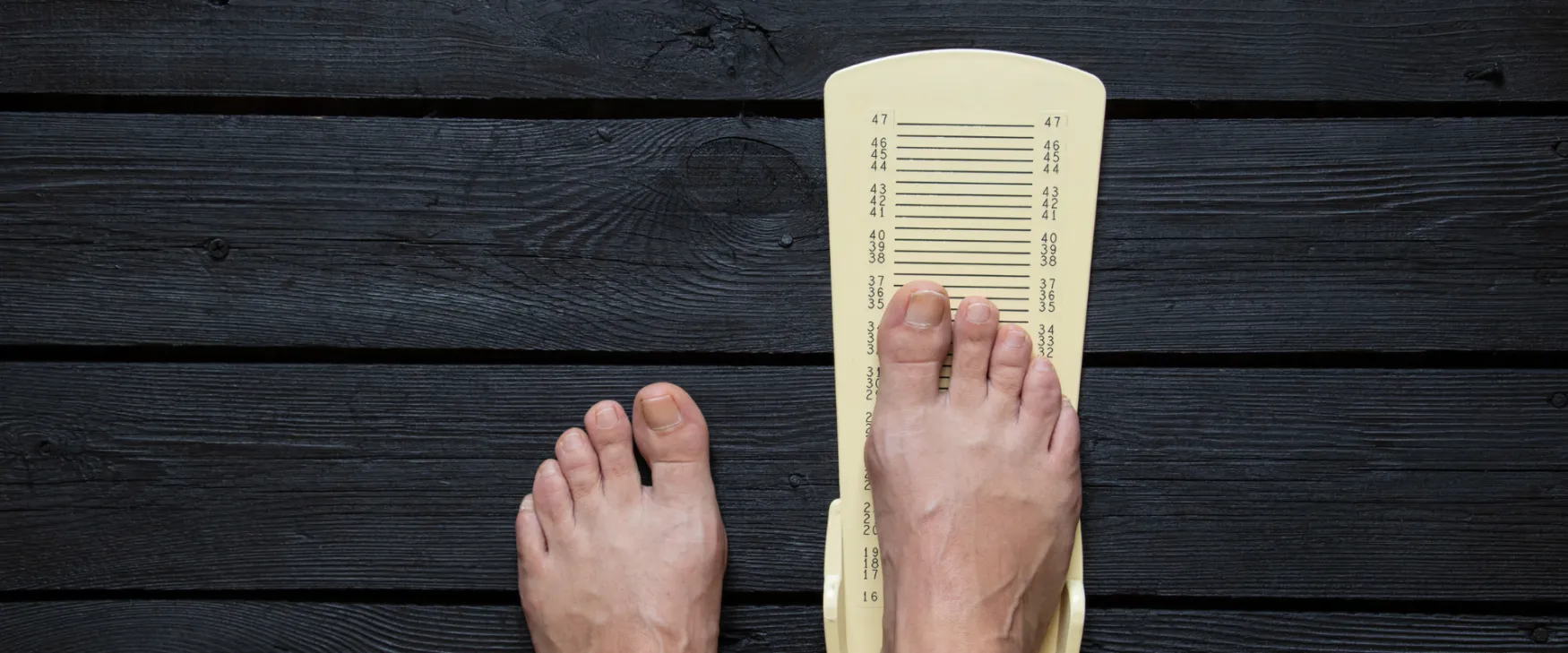
Measuring your foot width at home is straightforward with a sheet of paper, a pencil, and a ruler or measuring tape. For the most useful results, take your measurements while standing, preferably later in the day or after a long time on your feet when your feet may be slightly larger.
Step-by-Step Guide to Measuring Foot Width
1. Prepare your materials. Place a sheet of paper on a hard, level floor. Wear the type of socks you normally use for running, and keep a ruler nearby.
2. Stand on the paper. Position one foot flat on the sheet, with your weight evenly distributed. Avoid measuring while seated, since your foot may spread differently when bearing weight.
3. Mark the widest points. Identify the widest part of your forefoot, usually across the ball of the foot near the base of your toes. Make a small mark on the paper at each side, keeping the pencil upright.
4. Measure the distance. Step off the paper and use your ruler to measure between the two marks. Record the result in inches or centimeters.
5. Repeat with your other foot. Feet aren’t always identical in size. Measure both and use the wider foot as your starting point when comparing shoe width options.
6. Compare your measurements. Refer to a width chart that matches your shoe size and the manufacturer’s sizing system. Your measurement is a guide, not a guarantee of fit.
If you’re wondering “how to measure shoe width,” remember that measuring your foot is more useful for selecting a labeled width than measuring the outside of a shoe. Interior space, upper materials, and shoe shape can all affect how a particular model fits.
How to Find Your Foot Width at Marathon Sports
These at-home measurements can be useful when browsing shoes online. But the best way to truly understand your foot width and what shoe could work best for you is with a visit to Marathon Sports.
Our team members are trained to use the Right Fit process – which includes a 3D scan, visual analysis, and in-depth consultation – to find a shoe that works for your foot shape and width.
The 3D scanner highlights your exact width and measurements, along with percentile measurements. We use this information to determine which running shoe last and width will likely fit your feet and narrow your options. How to Read a Foot Width Chart
A foot width chart helps you understand whether your measurements fall into narrow, standard, wide, or extra-wide sizing categories. Since width measurements vary with shoe length, you’ll need to consider both measurements when comparing sizes.
In US running shoe sizing, common width labels include:
- Narrow: B for men’s shoes and 2A for women’s shoes.
- Standard: D for men’s shoes and B for women’s shoes.
- Wide: 2E for men’s shoes and D for women’s shoes.
- Extra Wide: 4E for men’s shoes and 2E for women’s shoes.
These labels are general conventions, and sizing can differ between manufacturers. To interpret your measurements, locate your shoe length on the brand’s sizing chart, then compare your foot width with its available options.
Keep in mind that shoes with identical width labels may still fit differently. Toe box shape, upper materials, and overall construction can affect how much room your feet have. Use the chart as a starting point, then try on shoes to check for comfortable toe movement and a secure fit.

How to Choose Running Shoes for Your Foot Width
Once you have your measurements, use them to narrow down your choices rather than relying on width labels alone. The right running shoe should provide a comfortable, roomy feel across the forefoot without allowing excessive slipping around the heel or midfoot.
Check Width, Toe Box Shape, and Overall Fit
If standard-width shoes feel restrictive, consider models available in wider sizes. Our selection of best running shoes for wide feet can help you compare options designed to accommodate broader feet.
It’s also important to distinguish overall shoe width from toe box space. Some runners need extra room for their toes but prefer a snugger fit elsewhere. In that case, wide toe box running shoes may be worth considering.
When trying on shoes, check that your toes can move comfortably, the sides of your feet aren’t squeezed, and your heel doesn’t slip excessively. Walk or jog briefly to see how the fit feels in motion.
If you’re unsure which width suits you, an in-store fitting can provide additional guidance. At Marathon Sports, the Right Fit process considers your movement, running routine, and footwear preferences to help identify suitable options.
Final Thoughts
Measuring your foot width gives you a useful starting point for finding running shoes that fit comfortably. While width charts can narrow your options, the shape of each shoe and how it feels as your body moves matter just as much as the size printed on the label.
Keep those numbers handy when comparing shoes, and pay close attention to pressure points, toe room, and heel security during try-ons. Taking a little extra care when choosing your footwear can make a meaningful difference in your everyday running comfort.
Frequently Asked Questions About How to Measure Foot Width
How can I tell if I have wide feet?
You may have wide feet if standard-width shoes consistently feel tight across the forefoot, squeeze your toes, or create pressure along the sides of your feet. Measuring both feet and comparing the results with a brand-specific sizing chart can help you determine whether a wider option is worth trying.
Can I measure my foot width at home accurately?
Yes. Measuring while standing on a flat surface and marking the widest points of your forefoot can provide a useful estimate. For better consistency, measure both feet later in the day and use the same type of socks you normally wear for running.
What is the difference between D and 2E shoe widths?
In common US men’s shoe sizing, D typically indicates standard width, while 2E indicates wide. In women’s sizing, D commonly represents wide width and 2E extra wide. These conventions may vary by manufacturer, so check the brand’s sizing information.
Does foot width change with shoe size?
Yes. Shoe width measurements generally increase as shoe length increases, so the same measurement may correspond to different width categories depending on shoe size. That’s why a foot width chart should account for both length and width.
Should I size up if my running shoes are too narrow?
Not necessarily. Increasing shoe length may provide additional room but can also create excessive space around the heel or toes. If the length already fits comfortably, trying a wider version of the same size may be a better starting point.
Is a wide toe box the same as a wide shoe?
No. A wide toe box provides additional space around the toes, while a wide shoe may offer more room throughout the forefoot, midfoot, and heel. Runners with a broad forefoot and narrower heel may prefer certain toe box shapes over an overall wider fit.
Should I measure my feet with or without socks?
For running shoes, measuring while wearing your usual running socks can help account for their thickness. Thin socks may have little effect, but thicker pairs can influence how footwear fits. Consistency matters when comparing measurements.
How often should I measure my foot width?
Consider remeasuring when replacing running shoes, especially if your current pair feels different than expected. Foot shape and size can change over time, so updated measurements may help you choose suitable width options.