Breathing is one of the most innate things you can do. You likely do it without even thinking about how you’re breathing or the best technique. But when it comes to running, your breathing techniques and best practices can be a powerful tool.
Every runner – from complete beginners to experienced athletes – has been in a position where they feel out of breath during a run or workout. Oftentimes, particularly during easy runs, proper breathing techniques can solve this problem and prevent this gasping for air.
Strenuous exercises such as running can put some extra stress on your body, meaning your muscles require more oxygen to continue working hard. And when you aren’t effectively supplying this oxygen during runs, you’ll likely feel fatigued, winded, and out of breath quicker than usual.
Fortunately, there are some techniques you can use to ensure your body is getting the oxygen it needs to function during runs. Here’s your complete guide on the best breathing techniques to keep you moving forward and help you make the most out of every workout.
Why Is Proper Breathing While Running So Important?
If breathing is so innate, you’re likely wondering why there’s such a focus on the best practices and how to breathe best while running. While there isn’t a single best way to breathe that works for every athlete, there are some methods that can improve the running experience.
Runners who are often easily winded or out of breath may find a lot of benefits from proper breathing tools and techniques. A few of those benefits include:
- Improved athletic performance: Controlled breathing will help more efficiently deliver Oxygen and eliminate Carbon Dioxide from the body throughout workouts. This optimized oxygen delivery can improve your muscle and respiratory function during strenuous exercise, driving better performance and endurance.
- Reduced muscle fatigue and cramping: Proper breathing enhances vital oxygen delivery while reducing lactic acid buildup that causes stitches and fatigue
- Increased psychological benefits: Breathwork can play a major role in improving calmness and focus while at rest, and these mental benefits can easily be applied to controlled breathing during exercises. Regulating your autonomic nervous system helps control stress and improve focus during tough runs and workouts.
- Improved running experience: Many beginner runners find running unenjoyable due to feeling easily winded and out of breath. Proper breathing technique reduces this uncomfortable huffing and puffing, making the entire running and workout experience feel easier and more enjoyable.
As you focus on breathing while running, you’ll likely experience both physical and mental benefits that will keep you moving farther and faster with less effort.
How to Breathe While Running
Now that you have an idea of why you might want to practice effective breathing while running, let’s dive into what that technique actually looks like.
| Technique | Best For | Benefits | When to Use |
|---|---|---|---|
| Nasal Breathing | Easy runs | Filters air, lowers heart rate | Zone 2 efforts |
| Nose In / Mouth Out | Moderate runs | Balanced oxygen intake | Steady runs |
| Mouth Breathing | High intensity | Max air volume | Speedwork, racing |
| Patterned Breathing | All levels | Reduces side stitches | Long runs |
| Belly Breathing | Endurance | Improves oxygen efficiency | Training & daily practice |
Nasal vs Mouth Breathing
During daily mileage or easy runs, research points to nasal breathing – inhaling and exhaling through your nose – being the most effective breathing method.
There are lots of benefits associated with breathing through your nose while running. Nasal breathing:
- Filters and humidifies air better than mouth breathing, providing support and protection to the respiratory system
- Takes in more oxygen with less effort
- Reduces your respiratory rate throughout runs
- Engages and strengthens the diaphragm and respiratory muscles for a more efficient breathing cycle
- Activates the parasympathetic nervous system, which reduces stress and lowers heart rate
Next time you head out on an easy run, try breathing in and out through your nose to enjoy some of these performance and physiological benefits.
Of course, there isn’t just one correct way to breathe during runs. As you exert more effort or pick up the pace, you may find it more comfortable and natural to incorporate other types of breathing.
Many runners find that the best approach is breathing in through the nose and out through the mouth. This method offers the benefits of inhaling air through the nose while allowing you to more quickly expel carbon dioxide.
Breathing technique is often dependent on the athlete and the type of workout you’re doing. While nasal or combination breathing is often the best option for easy-to-moderate runs or steady efforts, you may need to adjust during high-intensity workouts.
Most runners find that as they’re crushing a workout or racing towards the finish line of a race, breathing through the mouth comes most naturally. During harder efforts, breathing in and out through the mouth rapidly provides a higher volume of air and oxygen to support your body and keep it moving forward.

Ultimately, how you breathe while running comes down to your individual preferences and the type of runs you’re doing. However, for daily mileage and steady efforts, consider using nasal breathing or a combination of nasal and mouth breathing to best support your body and make your runs as efficient and enjoyable as possible.
Patterned Breathing

Whether you breathe through your nose, mouth, or a combination of the two, any runner can benefit from incorporating patterned breathing into their workouts.
Patterned or rhythmic breathing is a technique that involves syncing your breath with your running gait. You’ll inhale and exhale for a certain number of strides, resulting in slow, controlled breathing throughout your runs.
While the specific pattern depends on factors such as your running gait, intensity, and breathing technique, it often takes the form of inhaling for 2-3 footstrikes and exhaling for 2 footstrikes. However, you may need to try a few different combinations to see what feels the most natural for you.
Like nasal breathing, these deep, controlled breaths activate your respiratory muscles, which help stabilize your core and improve your running form. This enhanced stability reduces stress on the body and improves oxygen flow and endurance. So if you commonly deal with side stitches on runs, or simply want to improve your stamina and endurance, rhythmic breathing could be the key.
Belly Breathing

Any runners looking to improve their stamina should pair their standard breathing method with belly breathing, or diaphragmatic breathing.
Breathing primarily through your chest can cause short, shallow breaths that leave you feeling like you’re gasping for air. As you run, and even throughout your day-to-day life, fully engaging your belly as you breathe results in better oxygen intake, more efficient breaths, and less fatigue.
Fortunately, diaphragmatic breathing is something that you can even practice at home before you take it to the streets on your run. Here’s what you do:
- Get comfortable. Lie down or find a comfortable place to sit.
- Place one hand on your chest and another on your stomach.
- Take a deep breath and slowly inhale through your nose. You should feel the hand on your stomach slowly rise, while the hand on your chest stays still.
- Slowly exhale through your nose or mouth, letting the hand on the stomach return to its original position.
Once you get the hang of belly breathing on its own, try incorporating it into your easy runs or daily mileage. As you get more used to fully engaging your diaphragm, you should start to enjoy improved lung function and all-around performance benefits.
Breathing While Running: Other Tips and Tricks
Figuring out how to breathe while running is only part of the equation when it comes to optimizing your efficiency and comfort on runs. Here are some other tips and tricks to keep in mind as you lace up your running shoes.
Consider Posture and Running Form
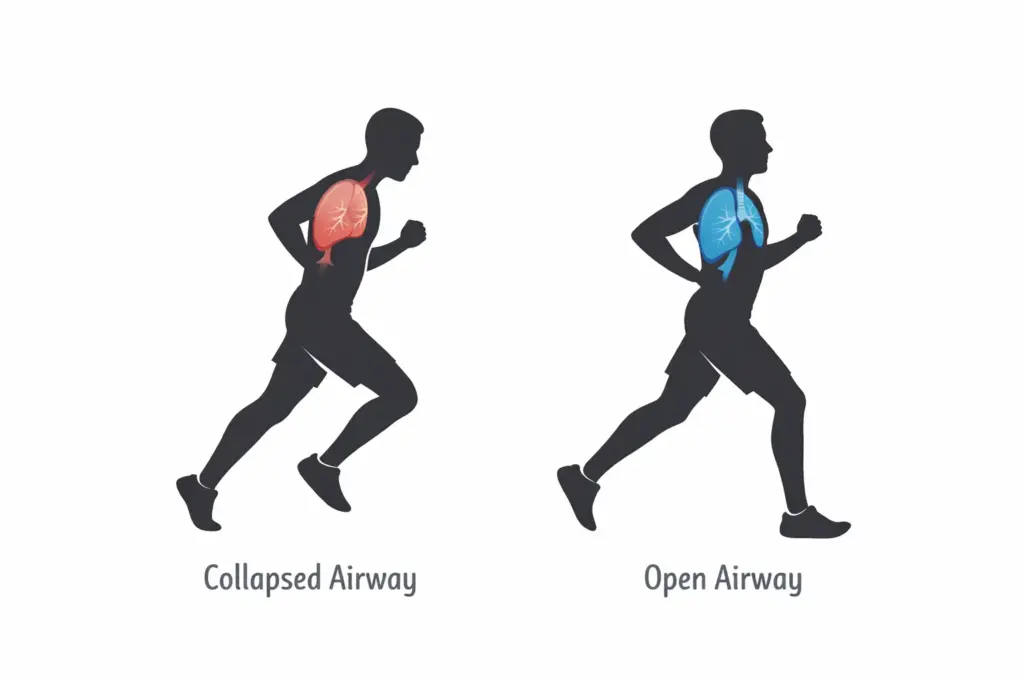
It’s easy to forget about proper running form, especially when you’re feeling drained and exhausted towards the end of a run. But if you feel your body start to slouch and your shoulders start to hunch up, remember that posture can help improve your breathing.
Keeping your chest up, shoulders back, and core engaged allows your lungs to fully expand throughout your runs, allowing you to take in as much oxygen as possible. This upright positioning encourages belly breathing and helps improve your lung capacity.
Don’t Skip the Warm-Up
All too often, runners will struggle with proper breathing on runs because they jump into intense activity too quickly, without a proper warm-up.
Some dynamic pre-run stretches will activate your respiratory system and raise your heart rate, preparing your body to deliver the oxygen your lungs and muscles need during exercise. This can also help prevent side stitches and cramping as you start to exert more effort in your workout.
Take Breaks if Needed
If you find yourself quickly gasping for air on every run, it may be a sign that you’re pushing yourself too hard or not practicing a breathing technique that works for you.
Sometimes, the best thing to do is take a break, catch your breath, and give your muscles and lungs a quick rest. Slowing down gives your lungs a chance to recover and prevents form breakdown that comes with fatigue, giving you a chance to fully focus on your breathing and recovery.
Stick With What Works For You
It’s no secret that every runner is different, with their own unique preferences when it comes to every aspect of running. Whether it’s shoe, terrain, or distance preferences, no two runners are exactly alike.
We also know that the same is true when it comes to breathing methods. While research on breathing techniques is ongoing, you should breathe in whatever way feels the most comfortable and natural for you on runs.
Breathing While Running: Final Thoughts
When it comes to how to breathe while running, there’s no one-size-fits-all approach that works for every runner out there. While breathing only through your nose has plenty of benefits, many people find that a combination of nose and mouth breathing, or simply breathing through the mouth, works just as well.
Ultimately, the best breathing technique comes down to the type of workout you’re doing, your intensity level, and what feels best and most natural for you. Try some of these tips out on your next run and see how it feels. You may even see some improvements in your performance level and stress level throughout workouts.
And if you still have any questions on breathing while running, you don’t have to tackle them alone. The dedicated running and footwear experts at your nearest Marathon Sports are here for you along every step of your running journey. Stop in today to learn more tips and find all the tools you need to keep running and breathing better.