Shin splints, IT Band pain, Plantar Fasciitis, and other foot and leg injuries are unfortunately all too common among runners. After all, running is a high-impact sport, and pounding on pavement can quickly take its toll on the body.
However, while any runner may deal with these stress-related ailments, these injuries are even more common among runners who supinate. In fact, research shows that runners who supinate are significantly more likely to become injured than runners with a neutral gait.
So what exactly is supination, and how can runners with this gait avoid these injuries?
When running, the majority of people’s feet have a slight inward roll as they take each step. When the foot makes contact with the ground, the arches roll in very slightly but there’s no excessive rolling in one direction or the other. These mechanics are referred to as a neutral gait.
Overpronation refers to when the arches collapse, causing the ankles to fall inward with every step. And when the foot rolls outward, and runners land on the outside edge of their feet with every step, it’s known as supination or underpronation. While this can sometimes be caused by high arches, not every runner with high arches supinates. Your running and walking gait boils down to flexibility, muscle weakness, and sometimes just simply your body’s mechanics.
There are many running shoes out there designed specifically to combat overpronation with corrective support or stiff medial posts that prevent the foot from excessive rolling in. But if you supinate, you’ve likely come across fewer shoe options explicitly designed for supinators.
Luckily, there are plenty of shoe options out there that could work for you. Keep reading for a complete guide on what to look for in shoes for supination or underpronation, and which options on the market could be best for your feet.
How to Determine if You Supinate
The first step in determining if you need a shoe to help with supination is figuring out what type of running gait you have.
One of the quickest ways to determine if you supinate is to take a look at an old pair of running shoes. Supination causes runners to place most of the pressure on the outside of the foot when they land. If your running shoe is more worn on the outer edge than the inner edge, it’s likely a sign of supination.
Another common sign of supination is ankle, foot, or shin pain. If you consistently suffer from shin splints, ankle pain, and other common injuries caused by supination, it may be time to evaluate your running shoes and find an option that works best for supinators.
Finally, the best way to truly understand your gait is with a visit to a local running shoe store. At stores such as Marathon Sports, running shoe experts will use a foot scan and visual gait analysis to determine your gait type and find a shoe that will work for you.
What Should Supinators and Underpronators Look for in a Running Shoe?
Unlike stability shoes for overpronators, the best shoes for underpronators often aren’t as explicitly labeled as such. That’s why it’s important to know what features you should keep an eye out for when shopping for running shoes as a supinator.
Here are a few factors to keep in mind when looking for the best running shoe for you:
- Neutral vs stability running shoes: You’ll come across two main types of running shoes while you’re shopping for your next pair – stability and neutral shoes. While stability shoes are designed to prevent overpronation and push your arches and ankles back into a neutral gait, neutral running shoes are more flexible and allow for your natural gait with each step. Supinators will want to stick with neutral shoes to allow for as much pronation as possible and ensure they’re not putting even more pressure on the outside edge of their feet.
- Soft, flexible uppers: Some running shoes come with additional support and reinforcement built into the upper of the shoe to guide each step and prevent excess movement. If you supinate, you’ll want to try shoes with less reinforcement and a softer, more flexible upper to allow for any inward movement.
- Durability: Supination/underpronation places a lot of stress on the outer edge and forefoot of the shoe, so be sure to look for a durable and sturdy shoe that can tackle any run you throw at it. A high-quality construction, durable foam, and an effective outsole will prevent your shoe from wearing out along the outside edge too quickly and causing even more extreme supination.
- Cushioning: Supinating can lead to excessive pressure on the outside of your foot and create strain through the rest of your legs, leading to pain and injuries over time. Look for shoes that have plenty of cushion in the forefoot to distribute this pressure more evenly and ensure plenty of padding and shock absorption on your runs.
- Width: When you land on the edge of your shoe, this outer cushioning will quickly collapse and wear down, causing even more underpronation. Shoes with wider platforms will provide a more stable platform for your feet to land, without your arches and ankles tilting over the edge of the shoe.
Interested in some shoes that fit these descriptions? Keep reading for some of the best running shoes for supination and underpronation in the running shoe world today.
The Best Running Shoes for Supination and Underpronation
Here are 7 of the top running shoes to consider for your next pair if you supinate on runs.
- Asics Gel-Nimbus 28
- Saucony Ride 19
- Hoka Clifton 11
- New Balance FuelCell Rebel v5
- Altra Experience Flow 3
- On Cloudsurfer 2
- Brooks Ghost Max 4
Asics Gel-Nimbus 28


If you’ve run in the Nimbus 26 or 27, the 28 will feel immediately different the moment you land. The heel is deeper and quieter. It doesn’t really hit the pavement, but more so absorbs the road before you even register it. For supinators, who already take more impact on the outside edge of the heel, it’s a great component to have.
The setup underneath is FF Blast Plus foam through the midsole with PureGEL in the heel. That’s 41mm of stack height, 8mm drop. On paper, that sounds like it should feel like a marshmallowy cushioned shoe that’s hard to control, but the platform is wide enough that it just, well, doesn’t. The shoe feels planted. You get the softness without any of the wobble that usually comes with this much foam.
Then there’s the classic Gel-Nimbus comfort on the upper with soft mesh and a secure midfoot wrap that almost feels like it disappears once you start moving. The tradeoff of softness is less abrasion resistance, but if you’re not hitting trail runs every week, you should be fine.
One of the other upgrades our reviewers noted was the ASICSGRIP outsole, which is noticeably better on wet pavement than older Asics Gel-Nimbus models.
Saucony Ride 19


Runners who supinate usually do best in neutral shoes that have good cushioning without forcing the foot into stability. The Saucony Ride 19 fits that profile nicely. It’s definitely stiffer than the previous version, but it’s also a great traditional daily trainer if you don’t mind the added weight.
PWRRUN+ foam with an almost standard 8.5mm drop makes it work for just about any kind of striker. At around 9.3 oz for men, it stays light enough that you won’t notice the weight stacking up on longer efforts.
The upper doesn’t do anything surprising, which is the point. Breathable mesh, a heel pocket that holds without grabbing, enough midfoot structure to keep the foot from sliding around. Nothing more. Saucony clearly decided not to fix what wasn’t broken.
Nineteen versions in, the Ride has earned a certain credibility. The shoe looks clean and has all the DNA that Saucony loyalty has come to love.
Hoka Clifton 11


Hoka shoes are known for three main technologies – a rocker geometry, a cushioned midsole, and an active foot frame. The combination of these technologies, along with several other design features, make the Clifton 11 a top running shoe choice for neutral runners and supinators alike.
Like most Hoka shoes, the immediate stand-out feature of the Clifton 11 is its cushioning. This highly cushioned shoe features a substantial 42/34 mm stack height for men’s shoes and 38/30 mm stack height for women’s. What truly sets it apart is the softness and plushness of the EVA foam in the midsole. This soft yet responsive foam provides a comfortable and cushioned ride that helps every run feel more comfortable and pain-free.
The geometry of the Hoka is another key part of what makes the Clifton feel so smooth on runs. The meta-rocker offers smooth and fast transitions, while the wider base offers some inherent stability to help protect and reduce pressure from every part of your foot.
Like the Ride 18, the Clifton is lightweight, breathable, and flexible, making it a perfect daily trainer or recovery run shoe for supinators.
New Balance FuelCell Rebel v5


Where the Nimbus leans toward plush comfort, the FuelCell Rebel v5 feels quick, bouncy, and a little mischievous. It’s almost a hard shoe not to want to go full speed in, even if your plan was an easy run.
New Balance FuelCell foam has always been lively, but the Rebel v5 really leans into that energy. At roughly 7.8 oz with a 6mm drop, the shoe is noticeably lighter than most trainers on this list, and that lower weight shows up in how easily it turns over when you pick up the pace.
Combined with the flexible ride, it’s a great shoe for runners who supinate.
Up top, the upper is simple and lightweight with a roomier toe box than previous versions. The heel collar has also been improved and feels smoother against the ankle, which helps eliminate the irritation some runners experienced in the earlier model.
Altra Experience Flow 3


Altra shoes always start with the same idea: let the foot spread out naturally.
The FootShape toe box on the Experience Flow 3 gives your toes room to move and stabilize, something runners who underpronate often appreciate, since the outside edge of the foot tends to take more of the load during impact.
Unlike traditional Altra models, the Experience Flow has a 4mm drop instead of zero, which makes the transition easier for runners coming from standard trainers.
Our reviewers noted the subtle rocker, which is particularly nice for long runs. Once you get in the groove with your stride, the shoe gently tips you forward into your next step. It’s a kind of soft, rolling sensation.
The most apparent update is up top. Altra swapped in thinner engineered mesh, so there’s better ventilation. It’s hard to go wrong with better breathability on a daily runner.
On Cloudsurfer 2


On running shoes are everywhere these days, from the gym to elite marathon finish lines and everywhere in between. And if you’re looking for a comfortable and versatile running shoe option from this trendy brand, our reviewers recommend trying out the Cloudsurfer 2.
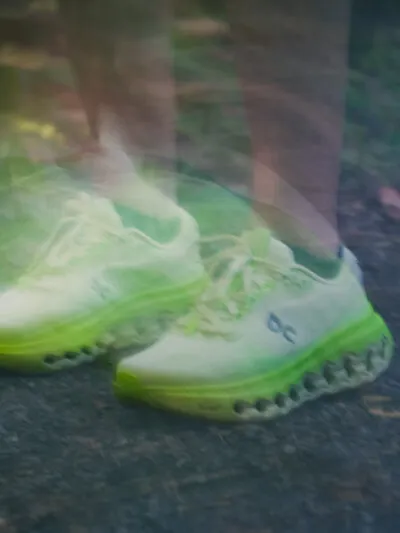
On is most known for its unique CloudTec technology which uses midsole pods to create a soft, cloud-like underfoot experience. In the Cloudsurfer 2, the CloudTec Phase midsole collapses and rebounds with every step. Combined with a responsive and high-quality Helion foam, this CloudTec midsole propels you through every step.
The Cloudsurfer 2 is also fairly light, weighing in at 7.9 oz for women’s shoes and 9.2 for men’s. The lightweight cushion is paired with a cushioned and breathable engineered mesh upper for all-around comfort in any temperature.
With 32 mm of cushion in the heel and 23 mm in the forefoot, the Cloudsurfer 2 does have a higher offset than alternative daily trainers. While this high drop may not feel as natural for some runners, heel strikers will appreciate the extra heel padding on long runs.
Brooks Ghost Max 4


The Ghost Max 4 is essentially all the feel of the regular Ghost with a lot more cushioning underfoot. It’s exceptionally comfortable and could just as easily work as an all-day shoe or a casual walking shoe as it could as a running shoe.
There’s a high stack of DNA Loft foam (around 40 mm in the heel with a 6mm drop). You get a deep cushion with plenty of impact absorption on longer runs. Because supinators tend to land along the outer heel, thicker cushioning helps soften that initial contact with the ground. That means less pain on long runs.
The upper follows the same comfortable formula Brooks has used successfully for years, with breathable mesh and a secure fit through the midfoot. Our reviewers love how comfortable it felt right out of the box, as well as the spacious, accommodating fit throughout the toe box for maximum comfort.
Other Tips for Supinators and Underpronators
Finding a running shoe that works for you is step one in the running journey for supinators. But here are a few other tips and tricks for runners who tend to supinate:
- Play around with insoles: While supination occurs for a variety of different reasons, your arch type could be playing a role. Consider trying out some inserts designed specifically for your arch type to help prevent excess pressure and increase your comfort on runs. Just make sure to stick with neutral insoles without added correction and stability to prevent being pushed further out onto the edge of your foot.
- Visit a specialty running shop: It’s hard to know exactly what your running gait looks like and what tools could help you until you visit a specialty running store and receive a customized gait analysis from trained running shoe experts. At Marathon Sports, our Right Fit Process will help you better understand your gait, and you can try on all these shoes in person to determine what works for your needs.
- Incorporate a stretching routine: Because supination can make you more susceptible to some injuries, it’s crucial to incorporate some stretching and injury prevention into your running routine. Warm-ups before running and cool downs and stretching after will have some major benefits. Make sure to focus on stretching and strengthening areas such as ankles and shins that can often be injured from supination and underpronation.
Supination can be a challenge when it comes to running. But with these tips and tricks – and the right shoes – you can continue your running journey pain-free and reach all your running goals.
Try Out the Best Running Shoes for Supination and Underpronation
Reading about running shoes is great and can help you know what to expect with each model. But it’s impossible to know how a shoe will truly feel on your foot until you try it on and take it for a spin.
At Marathon Sports, we’re here to guide you through the process of finding the perfect running shoe for you. Whether you’re not sure what type of running gait you have or just want to find the best option for supination, we’re here to help. Stop by your local Marathon Sports today to try on the best shoes for supinators and find all the running tools you need for success and injury-free running!